

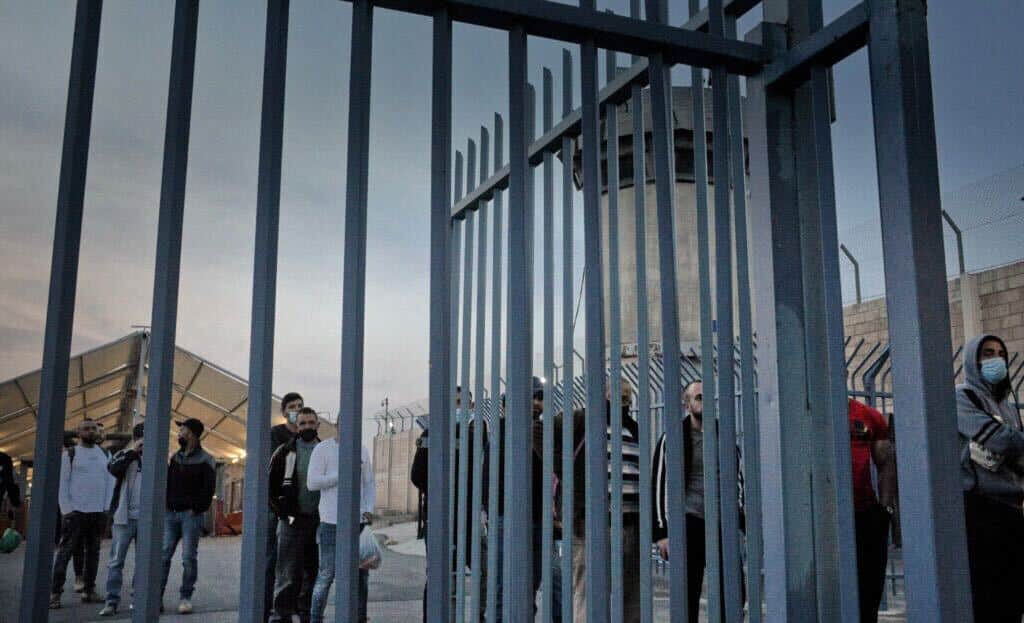
Bir Nabala, a ghost town of abandoned houses and empty streets surrounded by the Israeli separation wall, was once a vibrant middle-class community. Its diverse businesses benefited from the town’s strategic location north of Jerusalem, which made it one of the city’s important gateways. Then the wall cut off Bir Nabala, killing its commercial life overnight and turning it into a remote village on the far edges of Ramallah. Residents have since been gradually leaving the town.
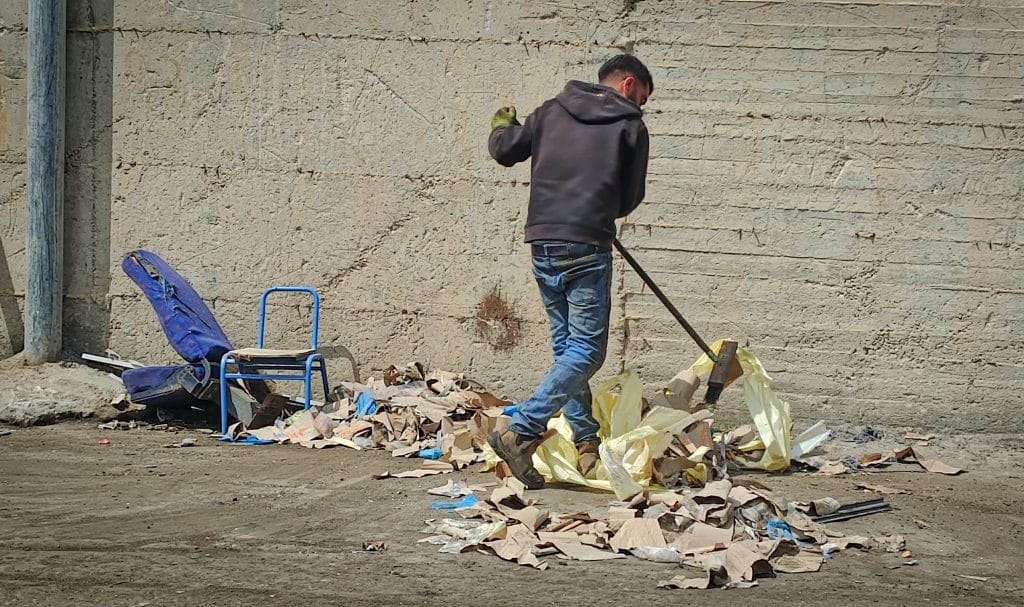
The Israeli wall stretches across the horizon in the village from edge to edge. Lining the streets are a few scattered workshops that continue to function, buried in the silence of empty neighborhoods. Several men take a break from work in front of a metal recycling workshop, right across from the wall.
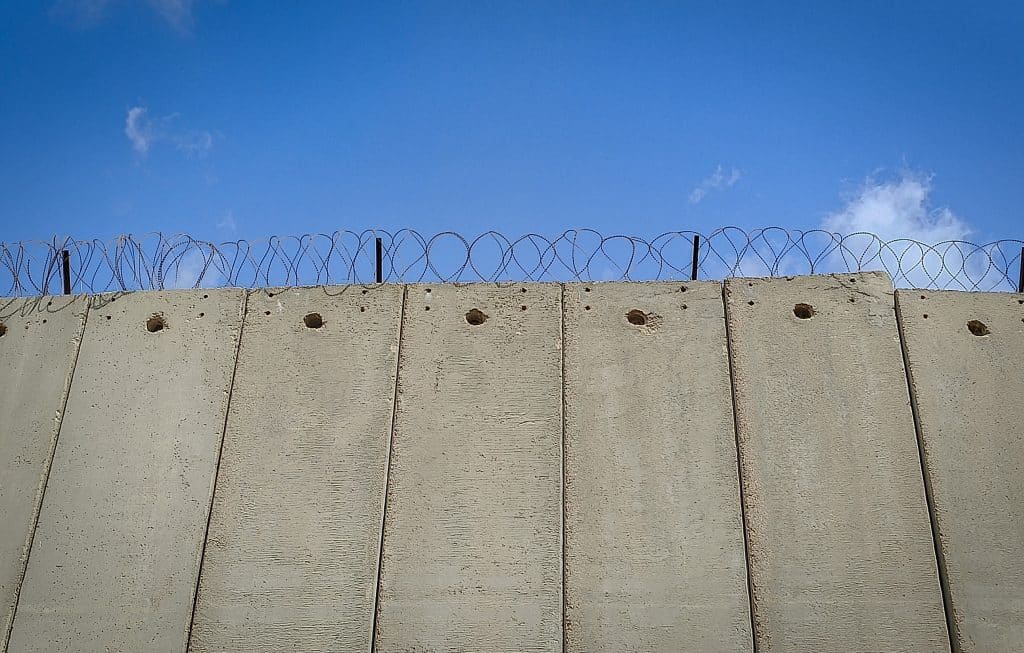
“Permit revocations? That’s everybody’s story here,” says Muhammad (not his real name), who spoke to Mondoweiss on the condition of anonymity. “We’re lucky to even have this job here. Every week, hundreds of workers come here to jump over the wall and find work on the other side. All of their permits were revoked.”
For decades, Palestinian day-laborers in the West Bank have relied on work inside Israel and Israeli-annexed Jerusalem for their economic survival. They needed to request a special working permit from the Israeli military authorities in order to cross a militarized checkpoint to reach their workplaces, hundreds of thousands of which were issued.
But after October 7, Israel revoked the permits of about 150,000 workers legally working in Israel en masse. An additional 50,000 workers were estimated to be working in Israel without permits, having infiltrated through smuggling networks, bringing the total to 200,000 laborers. Their salaries contributed to a vital flow of money into the West Bank’s economy for years.
When Israel cut them off overnight, the Palestinian economy was plunged into crisis. The persistent labor ban has continued to form one of the main pillars of the ongoing collapse of the West Bank economy, increasing economic pressure on hundreds of thousands of Palestinians and their families.
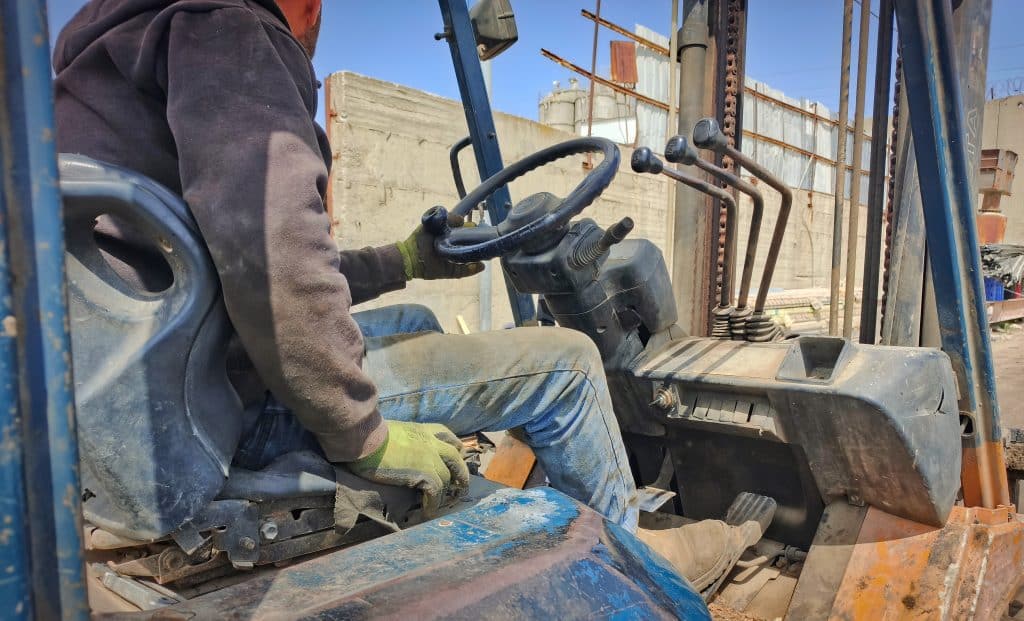
In Bir Nabala, Muhammad and his co-workers prepare to resume work crushing metallic junk into cubes. “I used to work in a warehouse in Jerusalem. I worked there for six years,” he says. “I used to make up to 400 NIS [$133] per day.” A few days after October 7, the manager came and told them that they couldn’t keep their Palestinian laborers anymore, he adds, since the Israeli authorities started to impose fines on any business that violated the ban on hiring West Bank workers. “That was my last day of work there,” he recalls.
Muhammad says that his current circumstances are better than most. He doesn’t live in Bir Nabala, and has to take several taxis to get to work. But it’s better than the alternative. “Here the workshop owner buys us lunch,” he says. “And even though transportation is expensive, it’s not as bad as risking jumping over the wall and paying a smuggler to hide you on your way to the work site, where many workers end up getting arrested.”
The phenomenon of wall-hopping and paying smugglers to get you across the Green Line for work used to be commonplace before October 2023, but after that date, Israeli authorities launched aggressive arrest campaigns and shot any would-be wall-jumper on sight, some of whom have been killed. This led to a dramatic drop in the number of people making the attempt, but the compounding effects of Israel’s economic and physical strangulation of the West Bank have pushed many now-unemployed into desperation.
On Monday, video footage circulated on Palestinian social media accounts showing dozens of Palestinians descending from the packed container of a garbage truck, some of them fainting, before being arrested by Israeli police officers. According to local media reports, the men were Palestinian workers who had been smuggled in the garbage truck for work in Israel, demonstrating just how dire economic conditions have gotten for West Bank Palestinians.
‘There’s no more hope for any kind of future’
Not far away from Bir Nabala, the crowded town of Kufr Aqab is also separated from Jerusalem by the wall, but it’s also not under the jurisdiction of the Palestinian Authority (PA), since it technically falls under Israel’s Jerusalem municipality. This effectively turned Kufr Aqab into a no-man’s-land, caught in the liminal space between Israeli neglect and Palestinian incapacity.
Amid the irregular businesses lining the town’s main street, Salem (not his real name), a former Palestinian worker in Israel who also spoke to Mondoweiss on the condition of anonymity, runs a mobile food stall selling corn seasoned with spices and tossed in margarine. “I never thought that I would be selling corn, but this is what I do today to keep food on the table for my family,” he says.
“I used to work in Deir al-Asad in the Galilee, and I was an experienced construction chief in charge of all the workers,” he says proudly. “I used to earn up to 600 NIS [about $200] per day. Now, I barely make 150 NIS, but it’s better than risking my life wall-hopping.”
Salem’s father was also a construction worker during the 1990s, but inside the West Bank, which at the time had experienced a building boom and an influx of economic investments in the wake of the Oslo Accords. But then came the Second Intifada in September 2000, and construction jobs plummeted. “I was 23 in 2009 after the Second Intifada ended, and I had to help sustain my family,” Salem explains. “And like most unskilled young men my age, I applied for a work permit in Israel. I worked there ever since.”
During this period, Salem married and started his own family. He is now a father of six, the oldest of whom is 11. He used to spend up to two weeks at a time in Israel without going home, living at his work site, and saving up enough money to tide him through periods of temporary permit revocations, such as during Israel’s 2014 war on Gaza. “After October 7, I thought this was going to be another round of revocations that would last for just a few weeks, but I never thought that I would burn through all of my savings and still be waiting for work permits to be reissued two years later,” he explains.
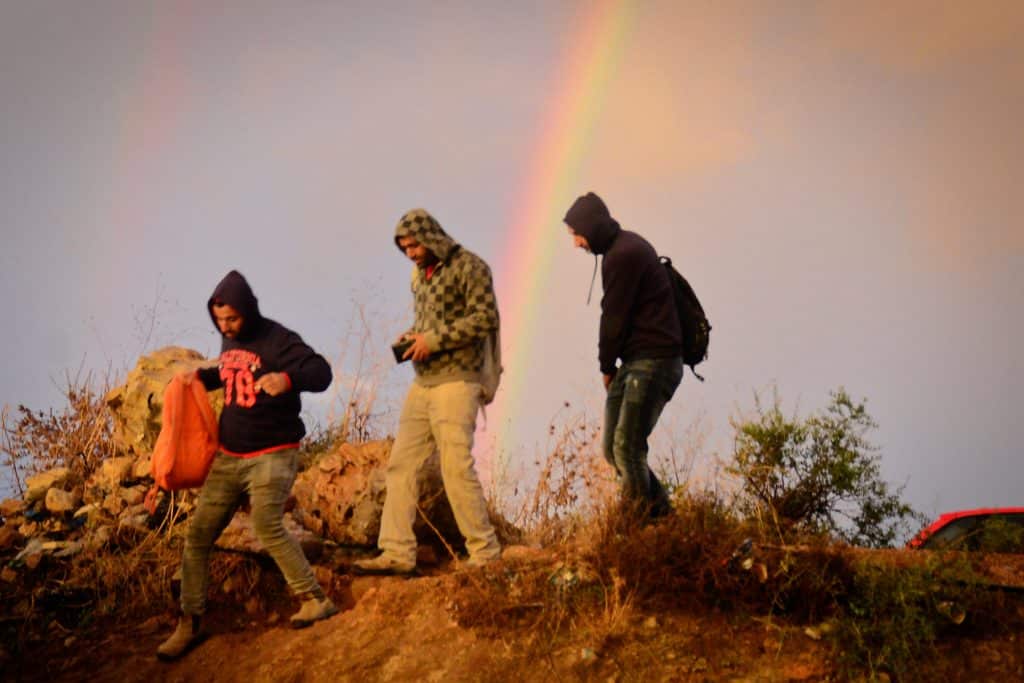
“My employer in Deir Al-Asad called me and told me that he was unable to hire us until things changed,” Salem recalls. “Time passed, and after my savings ran out in the first six months, I decided to apply for a permit again, but my application was rejected.”
During this time, expenses in the West Bank continued to rise. “Our expenditures as a household decreased by 80%,” Salem details. “I used to buy my son shoes worth 200 NIS [$66] at the beginning of every school year, but this year I looked for a 50 NIS pair.”
According to the Palestinian Central Bureau of Statistics, prices in the West Bank surged in March 2026 alone: vegetables up 15.78%, fruit up 3.32%, chicken up 4.42%, and red meat up 1.17%.
“We buy less meat, and after I used to buy three kilograms of tomatoes for the week, now I buy half a kilo, alongside half a kilo of cucumbers,” he describes. “The most expensive thing is transportation, since I have to spend 40 NIS going back and forth to Kufr Aqab for work. And I used to buy a chicken sandwich for lunch during work, but now I just have a pita bread and a sour yogurt.”
In the past, there were forms of mutual aid that Palestinians could lean on in times of hardship, Salem adds ruefully. “We had savings collectives that people could draw upon whenever a member needed it, usually on a rotating basis. And then when their economic situation was better, they would pay back into the fund,” but today, no one has enough cash to pay into that kind of savings collective, he says.
“Yesterday I was talking to a group of workers. We’re all devastated,” Salem continues. “There’s no more hope for any kind of future. It’s only about surviving another day while trying not to think about the accumulating debts.”
Back in Bir Nabala, Muhammad and his co-workers have finished their break and gone back to their tasks. At the center of town, drivers wait for enough people to fill up the mini-bus before heading out toward Ramallah.
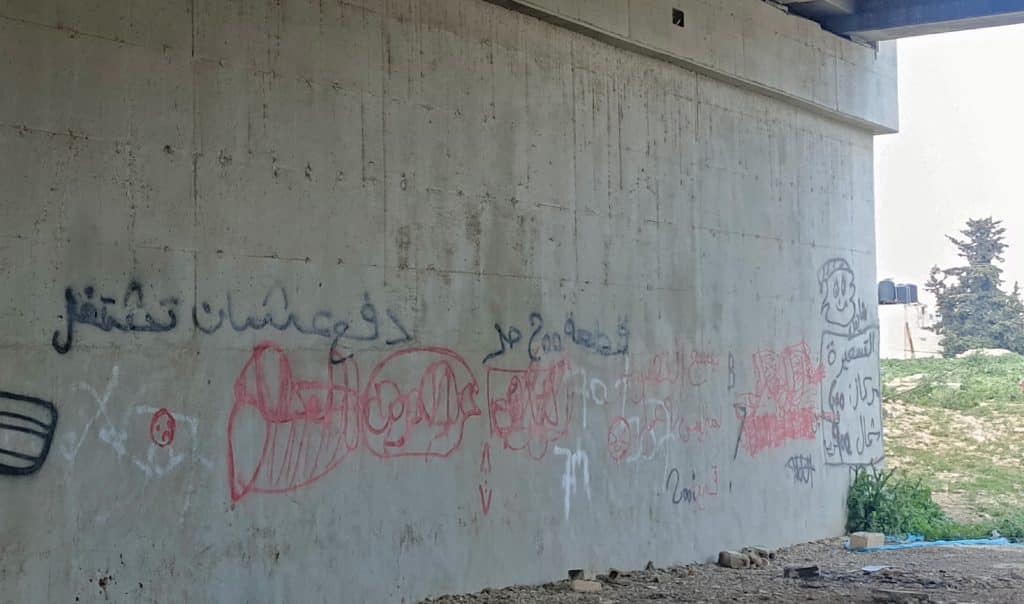
The way out crosses under an Israeli-built bridge and an Israeli-only settler road. One wall under the bridge is covered in graffiti. A line reads, “pay to work.” Another sardonically proclaims that you need to pay 600 NIS to central Israel, 900 NIS to the north. The going rate for smuggling these days.
As the mini-bus drifts into Ramallah, the West Bank’s economic center, shops and businesses begin to appear abundantly on the roadside as the separation wall and the voices of workers whose livelihoods have been destroyed fade away into the distance.

Qassam Muaddi
Qassam Muaddi is the Palestine Staff Writer for Mondoweiss. Follow him on Twitter/X at @QassaMMuaddi.

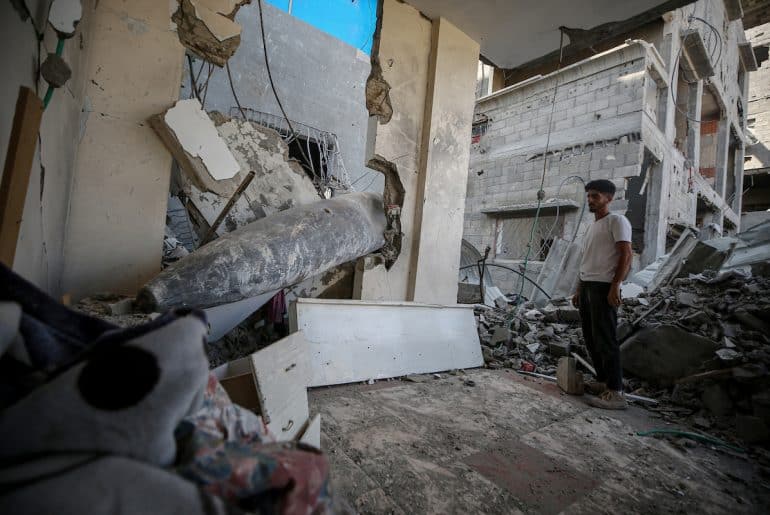
As seen currently in southern Lebanon, Israel loves to build walls and destroy bridges.
Also, note at 3:00 for 3 min.. Another reason for creatively.
https://www.youtube.com/watch?v=jXZ6D9GV8w4
Now this is a luscious example of Mondoweiss’ hypocrisy, if not downright schizophrenia: On the one hand, you hate and wish to destroy Israel, and on the other, you want Israel to employ more Palestinian blue-collar laborers, even if this involves admitting more suicide bombers to kill grocery shoppers and pizzeria customers. Maybe we could arrange for 100 or 1000 Jewish Israelis to commit suicide each month after willing their assets to unemployed Palestinians. Would that be satisfactory?