

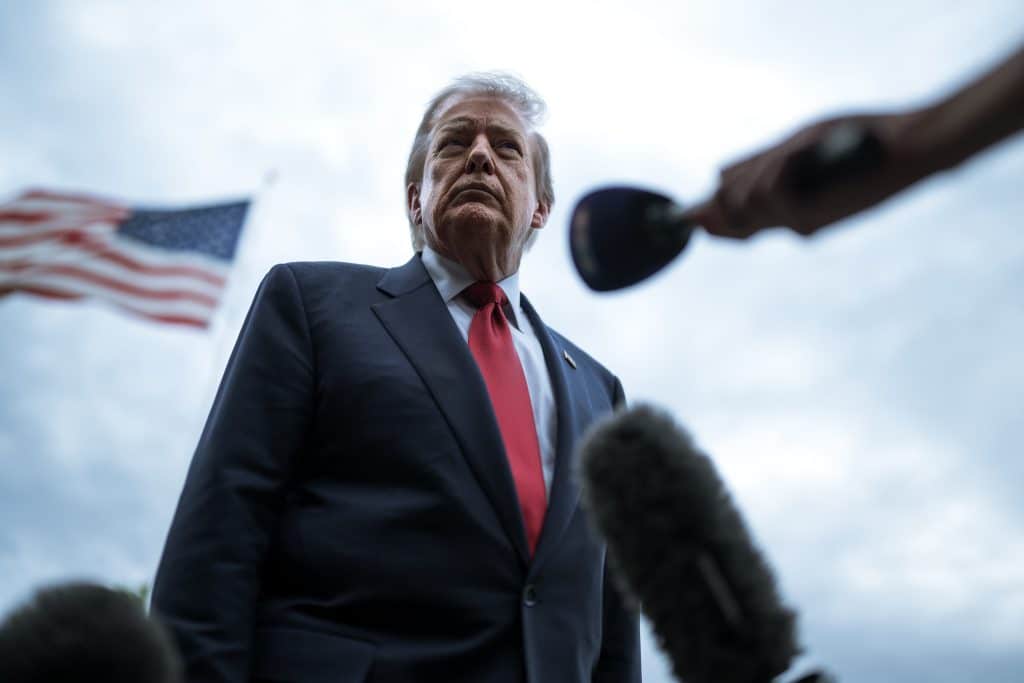
According to available reports, the purported agreement on a Memorandum of Understanding (MOU) between the United States and Iran to entrench the current ceasefire was ready to be signed and presented to the public, and Trump was going to retire to his “situation room” to confer with his people and announce it.
If that seemed too good to be true, it turns out it was, at least for the moment.
Eventually, Trump is going to have to decide whether to accept an MOU that will be harshly attacked by Israel and Iran hawks or resume the fighting. Choosing the former is out of character for the beleaguered president, but resuming the fighting will bury him deeper in this quagmire and will intensify the global economic crisis.
What is in the Iran agreement, and what it is not
It’s important to recognize that all this MOU would do is formalize and expand the existing ceasefire. In practice, ending the war can only happen if the negotiations stipulated in the MOU come to a successful conclusion.
There’s no guarantee of that, from either side. The mistrust, especially from Iran in the wake of the United States and Israel twice attacking it at moments when diplomacy was making real progress, is a gulf between the two parties. And the political complications Trump faces in making the sort of deal he needs to make are going to be difficult for him to navigate.
This mistrust is why Iran wants this MOU rather than a comprehensive deal. They want to move slowly, confirming American sincerity with actions, not words, every step of the way.
Trump, on the other hand, is struggling to decide what to do amid conflicting, powerful political pressures. His team has, apparently, negotiated the terms of the MOU, but he is indecisive about implementing it. These are the consequences of a weak, unqualified person in the White House.
This political quicksand that Trump continues to sink into is another in the long list of reasons why other presidents have refused to let Israel draw them into a war with Iran. Now that Iran has the upper hand, it is dictating the framework of ending the war.
Trump wanted to end it with a comprehensive deal, a grand bargain. That has been completely thwarted by Iran, which insists on a staged process to confirm American intentions after two surprise attacks. Trump’s absurd idea of expanding the Abraham Accords was a last, desperate attempt to try to come out of this debacle with a win big enough for him to claim that it was all worth it.
He made that desperate grab because the MOU, although not addressing some of the biggest issues, would include some immediate concessions to Iran that will be viewed by Trump’s allies as significant setbacks.
The concessions that have been rumored—which include funding Iran’s reconstruction, sanctions relief, and releasing frozen Iranian funds, for which he will be accused of “sending pallets of cash” to Iran, just as Trump once accused Barack Obama—are going to be attacked by Iran hawks. But for Trump, the immediate priority is reopening the Strait of Hormuz quickly and doing as much damage control as he can before the congressional elections in November.
The MOU would, according to the reports, accomplish that. Iran would allow ships to move through the Strait and would start removing impediments, such as mines, from the area, while concurrently, the U.S. would gradually lift its blockade of Iranian ports. The fighting would stop, including in Lebanon, although the specific terms of that and whether Israel would be forced to completely withdraw from southern Lebanon have not been mentioned. Iran would reiterate its long-standing pledge not to create a nuclear weapon.
Beyond that, the MOU would outline the topics for further talks that would, it is hoped, lead to a permanent peace deal. 60 days would be allotted for those talks, which would include Iran’s nuclear program, a proposed $300 billion reconstruction fund for Iran, a permanent system for managing the Strait, the lifting of sanctions, and the release of frozen Iranian assets.
Trump unintentionally confirmed much of the rumored content and limitations of the MOU:
“Iran must agree that they will never have a Nuclear Weapon or Bomb. The Hormuz Strait must be immediately open, no tolls, for unrestricted shipping traffic, in both directions. All water mines (bombs), if any, will be terminated (we have removed, through detonation, numerous such mines with our great underwater mine sweepers. Iran will complete the immediate removal and/or detonation of any mines that are left, which will not be many!). … The enriched material, sometimes referred to as “Nuclear Dust,” … will be unearthed by the United States (which, it is agreed, is the only Country, along with China, with the mechanical capability of doing so!), in close coordination and conjunction with the Islamic Republic of Iran, plus the International Atomic Energy Agency, and DESTROYED. No money will be exchanged, until further notice.”
Though the language is Trumpian, there is much to read into this message, both in its contents and its omissions.
Trump’s demand about destroying the so-called “nuclear dust” leaves open the option of Iran diluting its highly enriched uranium and agreeing to IAEA inspections going forward. That’s an Iranian proposal, which Trump is trying to own. Doubtless, Iran would be fine with him making that claim for his own political purposes.
Dilution, however, would not be good enough for Israel or its allies in Washington. Nor are they going to be happy about Trump even mentioning money. His declaration that no money will change hands “until further notice” implies that there will, eventually, be such “further notice” if the process of the MOU is followed.
It is worth noting that nowhere in any of the talk of either the immediate terms of the MOU or the framework for negotiations going forward that it would imply is there any mention at all of Iran’s missile and drone programs or its support of regional allies, which are often termed “proxies” by the media.
A disaster for Netanyahu and Iran hawks
Israeli reporter Ben Caspit, citing a “senior Israeli political source,” reports that Benjamin Netanyahu faces a political disaster if Trump ends the war.
“This time, the prime minister’s hands are tied. He is completely paralyzed and knows that he will not be able to do anything, even if the agreement signed between the United States and Iran remains the disaster he now defines it as,” an anonymous Netanyahu associate told Caspit.
That same insider also said that Netanyahu now longs for the days of Joe Biden. It is a classic case of being careful what you wish for.
It seems very likely that Trump is angry about the widespread perception that Netanyahu lied to him about the ease of regime change in Iran, helping to dupe him into this quagmire. So, he has shut Netanyahu out of deliberations and merely informs him of whatever decisions are made in Washington.
But that does not mean Netanyahu is unable to influence the situation. The escalation in Lebanon in recent days is meant to send a message to Trump that Israel will not agree to link its actions there with Trump’s agreement with Iran. And, if Trump is going to force Israel’s hand, Netanyahu will make it as difficult for him as possible.
Beyond that, Netanyahu has many allies in Washington. When news of this MOU first surfaced, figures like Ted Cruz, Lindsey Graham, and Senate Armed Services Committee Chair Roger Wicker immediately savaged the idea, though they were careful not to directly criticize Trump.
And it’s not only Republicans that will defend Israel’s interests and try to stave off a deal with Iran.
Democratic Congresswoman Debbie Wasserman Schultz said that if Trump doesn’t give up its nuclear stockpile and its missile system, “this is a failure.”
But Democrats, for the most part, are content to watch Trump struggle between the dual political tides of pro-Israel, Iran hawks on one side and his oligarchical cronies who are worried about economic downturns and November electoral losses on the other.
Still, Iran can be portrayed in Washington as an American concern that Israel will have to take a back seat to. But Lebanon and Hezbollah are on Israel’s borders, and Trump will face enormous pushback if he tries to force Netanyahu to withdraw completely. Much like in Gaza, it is far more likely that Trump will draw up some kind of cosmetic “agreement” that allows Israel to continue its fundamental occupation of southern Lebanon.
Iranian concerns
Trump isn’t the only one who is nervous about the MOU.
Iran has managed not only to withstand the onslaught of two powerful militaries, but they have emerged from this war in an advantageous negotiating position, due to their having demonstrated their ability to control the Strait of Hormuz and having shown just how badly it can hurt their Gulf Arab neighbors.
Still, Iran has suffered terribly in this war and continues to do so. The war, the American blockade, and increased sanctions have made a terrible economic condition worse, with soaring inflation and a rial whose value has tanked. Iran has proven its resiliency in this war as it has before, but it also has a population that would very much prefer to stop proving its resilience.
Iran is not fighting the same war as the U.S. or even Israel. Those two countries are fighting a war of choice to attain policy goals, even if many in those countries believe those goals are vital.
Iran is fighting a war for its very survival. That does not extend only to the Islamic Republic, but to Iran as a country with a long, proud history and what it perceives as a rightful place among the world’s notable nations.
The Iranian government is aware that Israel has a vastly superior military force, an efficient intelligence apparatus, and powerful allies that support it. Iran has far less of all those qualities.
Iran remains vulnerable, despite its impressive resilience and success in defending itself. The country has sustained enormous damage to its civilian infrastructure, damage which it currently does not have the means to repair.
Iran cannot allow this war to end only for the U.S. and Israel to turn around in another six or twelve months and do it again.
The noted Iran expert Vali Nasr made an important point in a recent article. “Analysts in Iran have interpreted [talk in Washington of American strategic defeat] as a clarion call for more war. In their view, the US will not tolerate defeat, and the more that prominent Americans highlight Trump’s failings, the more likely it is that the US will seek to reverse the outcome of this war by waging another.”
He’s right. Articles such as the one you’re reading now raise the hackles of Trump and his henchmen. But Nasr’s point serves to highlight why this whole process is barreling toward further stalemate.
The MOU will either happen or there will be more warfare. If there is, it will probably end with a similar MOU, perhaps after the American midterm elections are over. That will still leave all the major issues to be decided.
Trump probably can’t make the kinds of concessions he would need to in order to reach a deal that Iran could accept. It is more likely that the stalemate we are in right now, minus the closure of the Strait, will continue until 2029, when another president will have an opportunity to end this fiasco once and for all.
It’s worth recalling that Joe Biden could have done just that if he had simply reinstated the JCPOA, the Iran nuclear deal that was brokered when he was Barack Obama’s vice president. He chose not to, doubtless influenced by the same pro-Israel insanity that led him to be a partner in genocide.
The next president, whomever that might be, will have the same opportunity. The terms for a permanent agreement with Iran will be clear: a workable agreement on the Strait, IAEA inspections ensuring Iran doesn’t develop a nuclear weapon, and a path forward that includes a resuscitation of the Iranian economy, and regional agreements to ensure the security of the Gulf states, including Iran.
In other words, the JCPOA, in all the dimensions Obama envisioned. All we need to get there is the same resolute determination to do the sensible thing that Obama showed when he too froze Israel out of the process so he could do something wise.
Mitchell Plitnick
Mitchell Plitnick is the president of ReThinking Foreign Policy. He is the co-author of Except for Palestine: The Limits of Progressive Politics and maintains the Cutting Through newsletter on Substack.
Mitchell’s previous positions include vice president at the Foundation for Middle East Peace, Director of the U.S. Office of B’Tselem, and Co-Director of Jewish Voice for Peace.

In all of this, I have not heard of any Republican ‘Israeli hawk’ (chicken hawks) express any, any concern at all for the American service-people involved. Extended deployment, bad logistics, no idea what they are fighting for.
I know this is crazy, but I can’t help thinking that what will end this debacle is the refusal of service-people, both Israeli and American to fight it. And does anybody know where Trump and Nettie will get more soldiers? People wear out just as fast as machines. Who wants fight die for Trump, Hegseth or Trump?
Israel puts in mind of a classic Jewish joke.
The Rabbi at a cheder (his name is Rabbi Johan, so the students call him Johnny Rebbe) notices one of his brighter students perusing an astronomy text.
” Hmpf” the Rabbi said (that’s Yiddish for Hmpf) “What can that book tell you about the stars and the heavens that you can’t learn from the Torah or the Mishna ?”
“Well Rabbi, it says her that in time the sun will explode and destroy all life on earth!”
The Rabbi said ” I have only one question, and your book can’t answer it”
“What is it?” asked the student.
The Rabbi answered “Is that good for the Jews, or bad for the Jews?”
Oh, stop me if you’ve heard it before.
Re Iran, from the New York Review of Books a few days ago ( probably not available to non-subscribers ):
The U.S.-Israeli war against Iran, far from encouraging a popular uprising, has strengthened the regime’s grip and set back the cause of Iranian freedom indefinitely…During the war the US and Israel attacked not only military and nuclear targets but also steelworks, petrochemical plants, bridges, ports, railway lines, schools, universities, a bank, and a medical research center….Like Eisenhower and Churchill when they ordered Mossadegh’s overthrow in 1953, Trump and Netanyahu have set back the cause of Iranian freedom. Their responsibility for the political winter that follows will not be small.
Iran’s New Winter | Christopher de Bellaigue | The New York Review of Books
Also, perhaps we could stop pretending that the U.S. and Israel are morally superior to Hamas and do not deliberately attack civilian targets? It’s bullshit. Also from the NYRB ( the author, Neve Gordon, is Professor of International Law and Human Rights at Queen College, London ):
Over the course of two years, Israeli forces systematically destroyed the Gaza Strip’s health system. Their attacks on Iran and Lebanon follow a disturbingly similar pattern….As of Thursday, according to a UN statement drawing on statistics from the Iranian Red Crescent, more than 65,000 civilian sites have sustained damage in Iran alone….Among them are a disturbingly high number of medical centers. The Red Crescent reports that US–Israeli strikes have so far damaged 236 health facilities…Since the start of Operations Roaring Lion and Epic Fury, critics have charged that Israel is expanding its Gaza doctrine—a combination of mass displacement, mass killing, and mass destruction of civilian infrastructure—to other parts of the Middle East…. Denying well-substantiated allegations of crimes and accusing enemies of such crimes with no serious evidence: these are preludes to the still more radical step of rejecting international law altogether. Perhaps the most shocking development in the current war is that Israel and the US have not even bothered to justify bombing civilian infrastructure.
The Gaza Doctrine | Neve Gordon | The New York Review of Books
Iran has always been a distraction from Israel’s goals of exterminating Palestinians, Lebanese and Syrians. And—most importantly—stealing land and resources from neighbouring states. The negotiations and nuclear issue are clearly a ruse to give the Apartheid regime time and space to complete its ghoulish project.
America’s Middle East Foreign Policy has been a series of endless blunders for decades because every US President seems unable, or unwilling, to learn anything from the numerous mistakes of their predecessors.
The first step to end this madness should be to stop allowing Israel to dictate US foreign policy in the region. Trillions of US taxpayer dollars have been wasted, millions of people have been killed, and America’s global image has been severely tarnished.
The EPITOME of CORRUPTION and OPPORTUNISM.