Israel is detaining international observers for one simple reason: to prevent us from reporting on its ethnic cleansing project in Palestine.
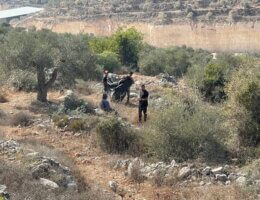

Israel is detaining international observers for one simple reason: to prevent us from reporting on its ethnic cleansing project in Palestine.
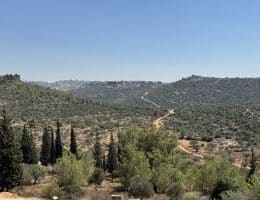
Since August, Israeli settlers have blocked Palestinians from Umm Safa from reaching the village’s only cemetery. Residents say it’s the latest in a series of escalations by settlers — backed by the Israeli army — who are trying to expel them.
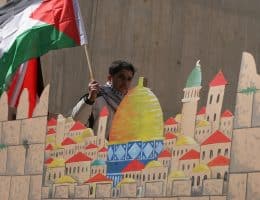
Can a temporary consensus government advance Palestinian self-determination in the homeland and the diaspora?
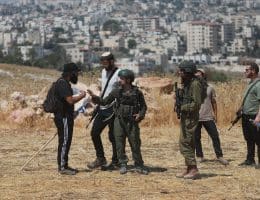
Settler attacks in the West Bank are ongoing with the enthusiastic approval of the Israeli army, as Palestinians are barred from accessing their own land, and their olive groves, for the fourth year in a row.
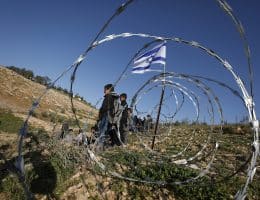
From my uncle’s exasperated sighs over olive groves we can no longer reach, to the iron gates the Israeli army has erected at the edge of my village, there is one word we use to cope: ‘aadi’, or, “normal” in Arabic. But this reality is anything but.
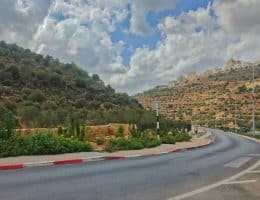
Israel is preparing to give settlers access to a main Palestinian thoroughfare in Ramallah, a move that would bring checkpoints and gates to one of the West Bank’s last spaces of free Palestinian movement and affordable urban growth.

The Senate blocked Van Hollen’s resolution seeking a State Department report on the killing of nine Americans in the West Bank, despite 84% public support. Meanwhile, Troy Jackson’s Maine Senate campaign faces scrutiny over its handling of Gaza.
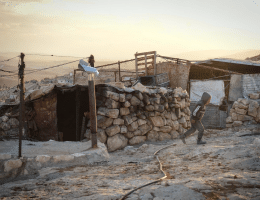
In Masafer Yatta in the southern occupied West Bank, Israeli settlers are accelerating their attacks on Palestinian farmers and herders in the area by cutting off their water supply.
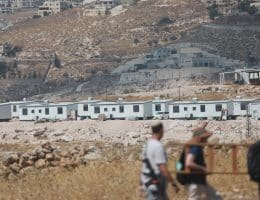
Announced days after UK and European sanctions on settlements, Israel’s expansion of Mishmar Yehuda folds an illegal outpost into a planned city between Jerusalem and Bethlehem, advancing Israel’s decades-old plan to cut the West Bank in half.
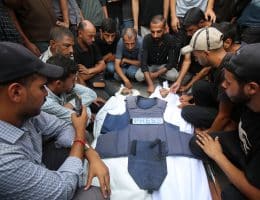
I didn’t choose to make my identity political. But for Palestinian journalists, even naming our own grief and experiences gets branded as ‘ideological’.