

On Monday, April 20, a convoy of vehicles rolled through Khan Younis in southern Gaza, carrying armed, masked men. They belonged to an Israeli-backed militia that typically operates in the part of Gaza that falls under Israeli military control, east of the so-called “Yellow Line” that cuts Gaza roughly in half. Their appearance in the part of Khan Younis under Hamas control was a direct provocation.
In a widely-circulated video on social media, one of the gunmen stepped out and addressed the crowd. “Hamas is over. We are the people, and the people are us; we will protect you from Hamas terrorism.”
The incursion did not go unanswered. Hamas security forces appeared and fired shells and heavy gunfire at the vehicles as intense clashes broke out, according to videos circulated on social media. A Hamas-affiliated Telegram channel called Radea, which emerged in 2025 to track and pursue collaborators, described the response to the incursion as an ambush.
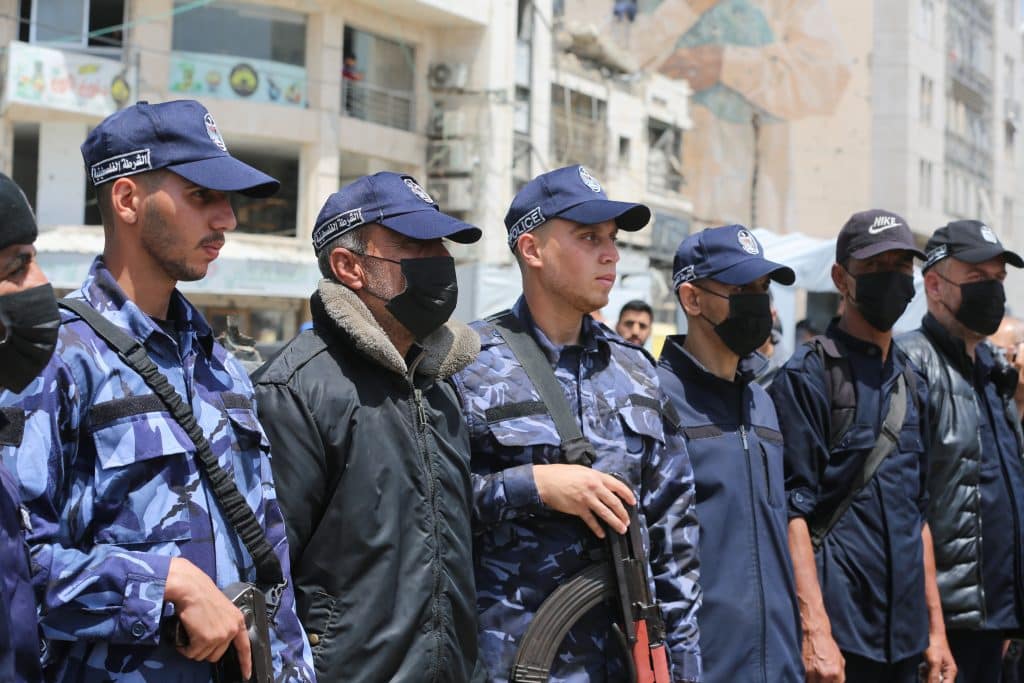
These groups are part of a broader Israeli strategy that Gaza security officers say they’ve been confronting since the beginning of the war: the systematic targeting of police and security personnel to create a vacuum that the militias can fill.
“When the right moment came, Radea fighters opened fire on the collaborators’ vehicles, directly striking the first vehicle and then targeting the second and third, leaving them dead and wounded, while the others fled under the cover of enemy aircraft,” the channel stated. “Israel will not protect you. Our fighters are lying in wait for you.”
The incursion came one day after Ghassan al-Duheini, head of the Israeli-armed “Popular Forces” group, announced on his Facebook page the launching of what he called Operation Deter the Aggressors. The Popular Forces were previously led by gang leader and Israeli collaborator Yasser Abu Shabab before he was reportedly killed by his own associates last December. Hamas government officials previously told Mondoweiss that the group is the largest, best-equipped, and most dangerous militia operating in Gaza.
Today, most of these groups operate in the eastern sectors of Gaza that fall under Israeli military control. These include al-Duheini’s Popular Forces in Rafah and Khan Younis, Hussam al-Astal’s “Anti-Terror Strike Force,” and the so-called “Popular Defense Forces” led by Rami Hilles in Gaza City’s Shuja’iyya neighborhood. Hilles and Astal are reportedly both former employees of the Palestinian Authority’s security forces.
The existence of these groups is part of a broader Israeli strategy that Gaza security officers say they’ve been confronting since the beginning of the war: the systematic targeting of police and security personnel to create a vacuum that the militias can fill.
Mondoweiss spoke with several Hamas security leaders and police officers in Gaza about how they are facing the latest stage in the ongoing Israeli campaign to target their personnel, foment chaos, and strengthen the position of the militias.
‘It’s not aimed at Hamas’
For months, Hamas security forces have worked to control movement across the Yellow Line between the Israeli-controlled part of the Strip and the remaining part of the territory still under Hamas. Their aim was to monitor and restrict entry points through which collaborators could infiltrate displacement camps, but Israel has repeatedly struck Hamas police positions when they appear.
Abu Abdullah (not his real name), a Hamas government official in Khan Younis who spoke to Mondoweiss on the condition of anonymity, said that the targeting of uniformed personnel has forced much of the police force to work undercover. But this isn’t always possible. “When we are in hospitals and displacement camps, we don our uniforms to give people a sense of safety, and to send a message that we are here to protect them,” he explained. “But the occupation targets us at all times and places, regardless of the surroundings or collateral damage.”
In one such attack on Friday, April 24, an Israeli airstrike targeted a police position in Khan Younis, killing four police officers and four civilians who happened to be nearby.
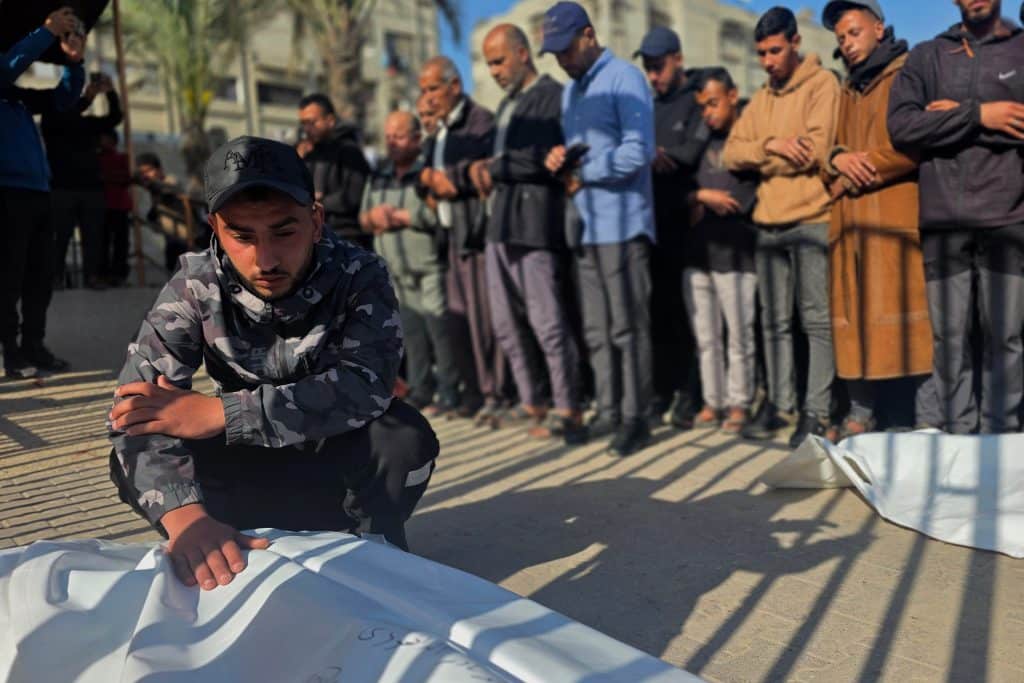
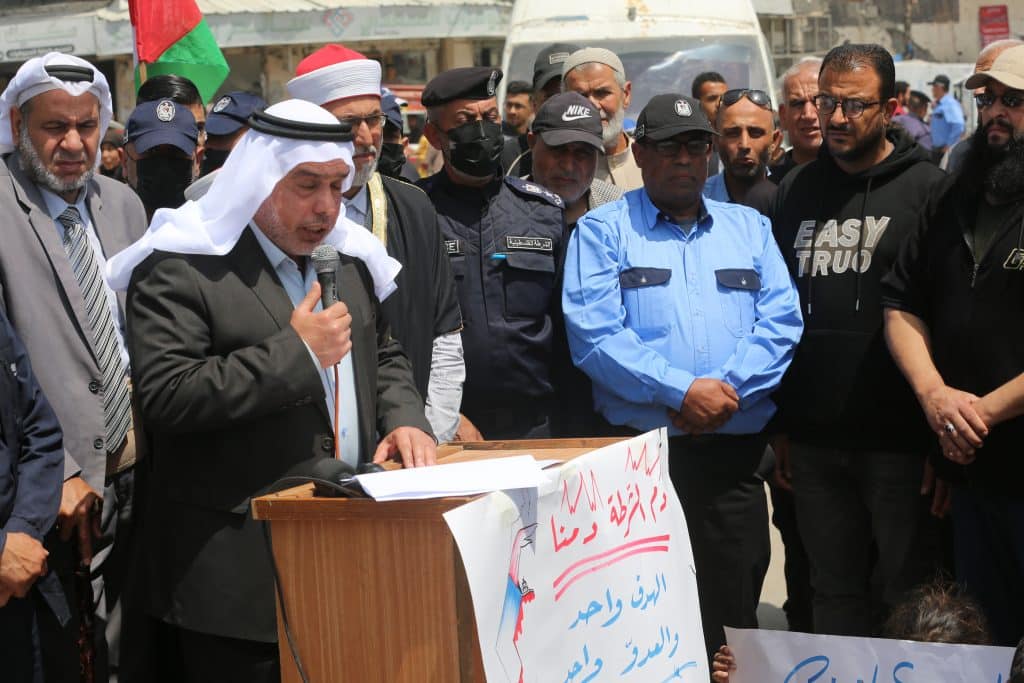
The following day, the Islamic and National factions in Gaza held a joint press conference in Khan Younis to formally reject the targeting of police forces, calling the strikes an attempt to incite chaos and destabilize internal security.
“Israel wants Palestinians to kill each other and steal from one another. It wants to destroy security in our society so it can control us,” Jehad al-Qatatti, a member of the Higher Committee of the National and Islamic factions, told Mondoweiss. “Targeting the police is designed to fracture society and hand over control to the militias. We will not allow that.”
Abu Abdallah echoed a similar sentiment. “The targeting is not aimed at Hamas — it’s aimed at any effort made to protect civilians in Gaza,” he said. “It seeks to prevent any Palestinian entity from establishing its authority over the Strip.”
Abu Hamza, a captain in Gaza City, said Israeli strikes consistently target recently appointed personnel — those who are newer, less experienced, and more visible. He explained that the ranks of Gaza’s police forces were thinned in light of Israel’s onslaught, but that thousands of new police officers continued to be recruited throughout the war. “Some of them are inexperienced and are temporarily filling these positions to compensate for the losses,” Abu Hamza said. For these positions, he added, young men with clean records and no known Israeli surveillance history are prioritized.
Despite the losses, Hamas says its command structure has not collapsed. “We have established procedures that are implemented whenever any leader, police officer, or administrator is killed: qualified individuals assume responsibilities immediately. Each position has multiple deputies, and duties are transferred in succession,” Abu Hamza said. “This is an emergency arrangement imposed by the conditions of war to prevent the collapse of the security and policing system.”
The war on Gaza’s police
The roots of the ongoing confrontation between Hamas and the militias go back to the early stages of the genocide in Gaza. By June 2025, Israeli Prime Minister Benjamin Netanyahu confirmed that he had “activated” clans in Gaza opposed to Hamas rule. These groups were used by the Israeli military to conduct abduction and assassination operations and to loot aid convoys during the war and the famine that followed.
In response, Gaza’s Interior Ministry formed a special plainclothes unit in early 2024 called the Arrow Force, tasked with hunting down looters and collaborators operating under Israeli protection. In a June 2025 Mondoweiss investigation into the unit’s operations, an Arrow member described going to a food warehouse in Gaza City where armed thieves were attempting to steal aid, only to be bombed by an Israeli drone when they arrived. “When the Arrow Forces arrived, the thieves withdrew, and the Force was targeted,” he said. “Then, another unit was dispatched to the site to support the Force, but it was bombed by the occupation as well.”
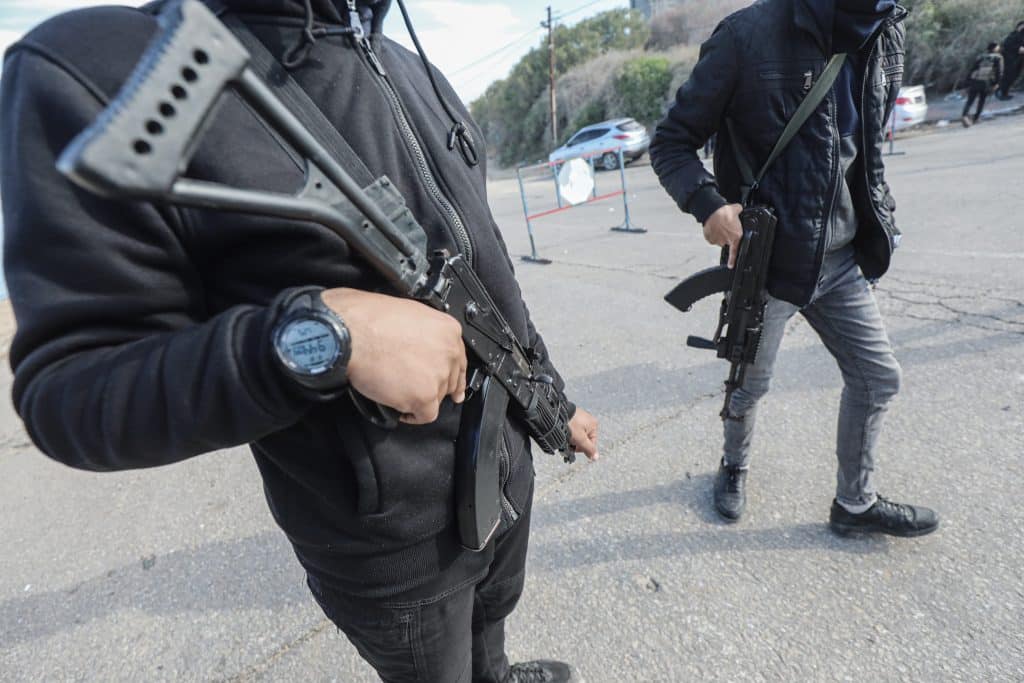
The Arrow Unit was reactivated after Israel resumed its assault in March 2025 and the militias re-emerged under Israeli cover, but the assault on Israeli-armed militias truly picked up steam after Hamas launched a wide-ranging security campaign to hunt them down when the ceasefire with Israel went into effect last October.
But the armed groups continued to receive Israeli support, while Hamas forces continued to be targeted by Israeli strikes, despite the “ceasefire.” Since then, the Israeli army has systematically attempted to intervene whenever Hamas security forces are exposed on the ground, sending in drones to strike them. And the militias are growing more aggressive in confronting Hamas’s presence, most recently manifesting in Ghassan al-Duheini’s Operation Deter the Aggressors.
‘We say goodbye to our families every day’
Today, the security situation is “on the edge,” as an official at the Ministry of Interior, Abu Ahmad, put it. He described what daily work now looks like: police officers move through the streets in civilian clothes, carrying concealed pistols. Members of the Qassam Brigades, the military wing of Hamas, do the same. “The plan involves both morning and evening surveillance shifts. Everyone moves armed through Gaza’s streets as a precaution,” he said.
Abu Ahmad recounted a kidnapping attempt against one of his colleagues in the Qassam Brigades earlier this week. Militia members tried to abduct him in a densely populated area in central Gaza City. He survived because he was armed and colleagues were nearby.
The stakes are not abstract. “We say goodbye to our families every day we go to work,” Abu Ahmad said. “We know that if we leave, we may not return. We regard ourselves as martyrs-in-waiting.”
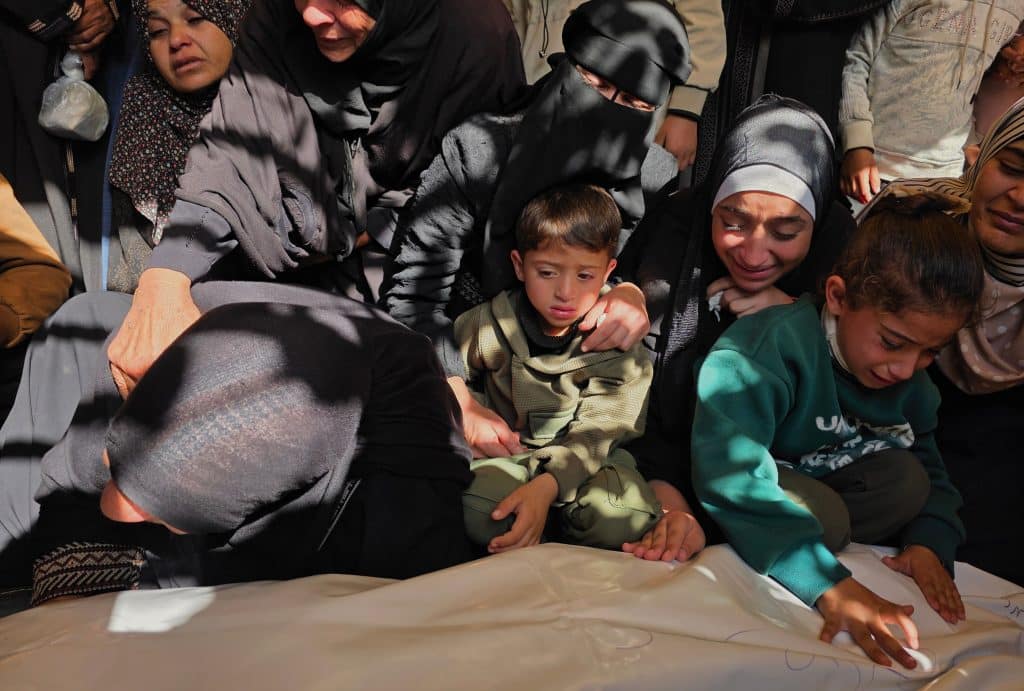
Israeli intelligence, he said, sends them regular threats via text messages and calls from unknown numbers, warning them that they and their families have been targeted. “But we refuse to respond to those messages under any pressure and continue to carry out our national and humanitarian duty.”
These attacks have weakened security and police control over the Green Zones, and at times, have forced a pullback. They have also reduced the police’s ability to pursue criminal elements, enforce the law, and carry out detention orders, a reality they have lived with since the outbreak of war. But everyone Mondoweiss spoke with insisted on continuing without retreat.
Since October 2023, at least 770 police officers have been killed on duty across the Gaza Strip, according to Hamas government figures. The dead include officers killed at checkpoints, at police positions, and in the streets while working in plainclothes. In nearly every case, Hamas says, the strikes came when officers were actively pursuing or positioning against the militias.
“There is a clear message that our presence as security forces and police is a target for Israel,” Abu Ahmad said. The strikes are signals, he said, aimed at preventing security forces from asserting control and maintaining order. This is the new stage in Israel’s broader bid to end Hamas rule and force disarmament.
“We receive numerous calls and threats to kill our families, but we refuse to yield to these pressures,” Abu Ahmad said. “Our duty is to enforce security, and in every war, many members of the police and security forces are killed. This is our work, and we will not retreat from it. The occupation will not succeed in imposing its control or breaking our will.”
Tareq S. Hajjaj
Tareq S. Hajjaj is the Gaza Correspondent for Mondoweiss and a member of the Palestinian Writers Union. Follow him on Twitter/X at @Tareqshajjaj.

With all respect to MW reporter Mr.Hajjaj , let’s not forget that he’s reporting from Hamas-controlled territory and needs to be careful as to what he writes. .
“Their appearance in the part of Khan Younis under Hamas control was a direct provocation.” Hamas has no business controlling any part of Gaza. The more of these murderous rapists, murderers and kidnappers who are killed, the better. In glorifying these savages, Mondoweiss forfeits any right to criticize Israeli actions.
As usual, MW glorifies and supports the Hamas terrorists.
Here’s a positive note, from Israeli politics (MW refuses to report from Israel):
https://www.haaretz.com/israel-news/israel-politics/2026-05-01/ty-article-magazine/.highlight/we-shouldnt-forget-the-nakba-but-we-have-to-move-on/0000019d-de07-d473-a1bf-ffe795eb0000