

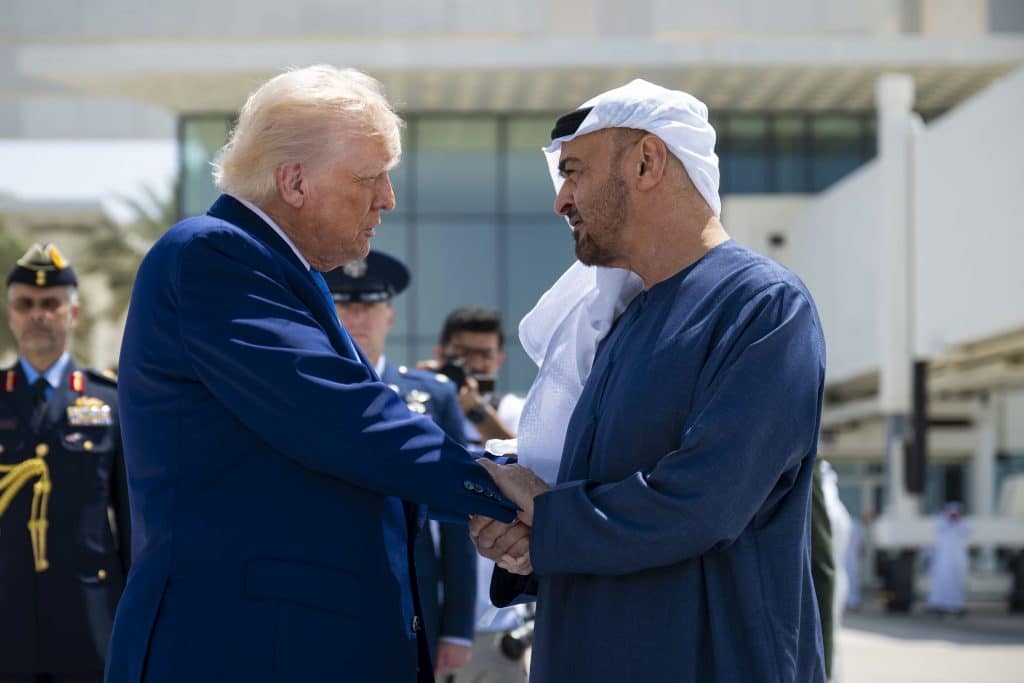
On Tuesday, the United Arab Emirates announced it would be leaving the Organization of the Petroleum Exporting Countries (OPEC) and its sister organization, OPEC+.
The news was treated as a major earthquake in the oil market. Politically, however, and in terms of international affairs, the effects could be even more pronounced.
Why is the UAE leaving OPEC?
The timing of the UAE’s departure from OPEC is important, but the Israeli-American war on Iran is not the major factor in this decision.
The Emirati statement announcing their decision is vague on specifics, leaving us to speculate about the real motives.
“This decision reflects the UAE’s long-term strategic and economic vision and evolving energy profile, including accelerated investment in domestic energy production, and reinforces its commitment to a responsible, reliable, and forward-looking role in global energy markets,” the official UAE statement read. “This decision follows a comprehensive review of the UAE’s production policy and its current and future capacity and is based on our national interest and our commitment to contributing effectively to meeting the market’s pressing needs.”
The timing of the UAE’s departure from OPEC is important, but the Israeli-American war on Iran is not the major factor in this decision.
Several factors led to this decision.
The UAE has been unhappy with OPEC for years. They have limited oil output at OPEC’s direction, based on decisions made by OPEC’s de facto leader, Saudi Arabia. But the UAE has different priorities from the Saudis, both in oil production and in regional affairs.
Saudi Arabia is pushing hard to diversify its economy under its Vision 2030 plan. When and if that plan is fully implemented, Riyadh might be less concerned about maintaining higher oil prices and therefore limiting output. But for now, the UAE and other OPEC countries have conceded to the Saudis and reduced their oil production quotas.
That hasn’t always pleased Abu Dhabi, which is less concerned about higher prices and would often prefer to sell a higher volume. That has produced tensions between the two throughout this decade.
Those tensions have grown in the last few years, as the two countries’ regional outlooks have diverged and their rivalry has grown. That has played out most visibly in their proxy conflicts in Sudan and Yemen. Despite attempts to portray a façade of unity, the tension has been exposed even more by the war with Iran.
The UAE has been the most vocal of all the Arab states in urging Israel and the United States to decisively defeat Iran militarily. The Saudis have been a key element in bringing Pakistan in to mediate between the two countries, further casting doubt on dubious reports that had been circulating weeks before about the Saudis pressing for more American aggression.
The UAE has been hit harder by Iran than any other Gulf country, due to its more extensive partnership with Israel (a partnership that has included Israel actually sending IDF troops and Iron Dome batteries to the UAE) and hawkish approach to Iran. This has led them to openly press the United States for aid in the wake of the war.
The UAE wants a currency swap from the U.S. to help address some of its losses in the war. Although the request is meant, in part, to remind Washington that the UAE has options that the White House would not like if it refused this request (such as turning to oil sales in Chinese yuan or selling U.S. treasury bonds), it is also a signal from the Emiratis of the direction they would like to go for their future security.
In that regard, leaving OPEC is also meant to give U.S. President Donald Trump a win, as he has long despised the organization. He views the cartel as having too much control over the oil market, preferring a laissez-faire, free-market approach.
Creating an OPEC rival?
OPEC’s influence has been declining for decades. It once accounted for over half of the world’s oil exports, but it has since dropped to about 40%. The UAE was the third-largest oil exporter in the cartel, behind Saudi Arabia and Iraq. Its departure means OPEC loses about 15% of its capacity, controlling what will be closer to 30% of oil exports after the UAE leaves.
Ultimately, OPEC’s declining share of oil will mean a more open market, with more major oil producers pursuing individual agendas, but this process has been underway for a while already. The UAE’s departure is just another step in that process.
In the short term, the UAE leaving OPEC will have no effect on the global oil market or the current crisis. The UAE, like every other Arab state in the Gulf, was already well below its target for production due to the closure of the Strait of Hormuz and the destruction of infrastructure that Iran wreaked. They can’t increase their output even if they want to.
In the longer term, it will have an effect because the UAE produces a significant amount of oil, and it will now be free to increase its output, once it restores its capacity to do so, at its own discretion.
This is where the political and economic dimensions begin to interact, potentially producing new outcomes.
With the UAE leaning so heavily into its alliance with Israel and the U.S., and its own large reserves of both oil and natural gas, there is real potential for an energy partnership intended to rival OPEC.
Below, I’ll examine more of what this all means politically, but in terms of the global energy market, the UAE’s eagerness to partner with Israel and the United States may be tied to a shift in the market.
American oil exports have jumped enormously since the mid-2010s, and they have received a new boost from the war on Iran as well. Meanwhile, Israel’s natural gas exports have exploded, rising 86% between 2021 and 2025. While it doesn’t have the kind of natural gas reserves that the biggest countries in this field (Russia, Iran, and Qatar) do, Israel’s growing natural gas industry has made it much less dependent on energy imports, despite its relative lack of oil reserves. It’s also helped cement the dependence of Egypt and Jordan on their peace deals with Israel by supplying much of those countries’ natural gas.
With the UAE leaning so heavily into its alliance with Israel and the U.S., and its own large reserves of both oil and natural gas, there is real potential for an energy partnership intended to rival OPEC.
The political divides defining the region
There is more here than energy concerns.
The Saudi-Emirati divide is rooted in divergent interests and a fundamentally different approach to regional and global order.
Saudi Arabia supports statist stability. They tend to gravitate toward supporting existing governments and hew closer to protecting the status quo wherever possible.
The UAE is relatively new to being an influential player in the regional and international arena. Thus, it is more transactional, less conservative in its strategy, and more inclined to chart a different path when it sees opportunities to expand its wealth, power, and influence.
But now, there is a starker difference in the wake of the Iran war.
The UAE has fully embraced the U.S.-Israel alliance, at a time when most of the rest of the region has come to realize that the United States is an unreliable partner. The Saudis, in sharp contrast, are moving to get away from an almost exclusive reliance on the U.S.
The UAE has fully embraced the U.S.-Israel alliance, at a time when Saudi Arabia and most of the rest of the region have come to realize that the United States is an unreliable partner and that Israel is a regional menace.
The UAE has publicly criticized other Arab states for not standing up to Iran sufficiently, and, though it officially backs a diplomatic resolution, has made it clear that they want escalation until Iran is smashed.
Meanwhile, Saudi Arabia has been working closely with allies such as Pakistan, Egypt, and Türkiye to seek a diplomatic resolution. The UAE expressed its displeasure at this recently by calling in $3.5 billion that Pakistan owes them. The sudden demand for payment drained nearly a fifth of Pakistan’s reserves and endangered a proposed International Monetary Fund bailout. Not coincidentally, Saudi Arabia deposited $3 billion into Pakistan’s reserve fund shortly thereafter.
Publicly, Pakistan said this was a routine transaction, but it was clear that it was false, and reports are that they are fuming privately.
The Saudis, in sharp contrast to the UAE, are moving to diversify their security networks and get away from an almost exclusive reliance on the United States. Washington has proven itself an unreliable partner that may actually pose more risk than it protects against.
At least that appears to be the Saudi view.
The UAE has also drawn closer to India, while Israel has focused heavily on strengthening its relationship with New Delhi.
These deepening alliances are beginning to resemble a regional cold war, but that would be an overstatement. As the Emirati-Saudi rivalry grows, there are still areas of common interest, and Iran is a big one.
The Saudis seem to have realized that the Islamic Republic is going to survive this war, and that this will mean it will have the ability to disrupt traffic in the Strait of Hormuz as a tool in its diplomatic kit in a much clearer way than the mere threats to do so in the past gave it.
The Emirati-Saudi rivalry is beginning to resemble a regional cold war, but there are still areas of common interest, and Iran is a major one.
Riyadh may be furious with Tehran for retaliating against it, but Saudi Arabia did not maintain its primacy in the region by being hot-headed, however given to occasional brutality Crown Prince Mohammed Bin Salman might be regarding Saudi dissidents and political opponents.
MBS knows his kingdom will have to live with Iran in the long term. He also knows by now that Iran is likely to emerge from this war in a better position regionally than when it entered it, and that the chances of an Iranian nuclear weapon have gone up considerably due to the reckless actions of the Netanyahu and Trump regimes.
The UAE has chosen a different path to address Iran. Given how badly Israel and the U.S. have done in this war, it seems a foolish choice for the Emiratis, but the choice is theirs to make.
Yet even so, the Gulf Cooperation Council will continue to exist. The UAE is unlikely to ever be at outright war with Saudi Arabia or any of the other Arab states around it. Even direct war with Iran is not a likely prospect for the UAE. If they didn’t do it now, when the United States would have been at their side, it’s hard to see that ever happening.
There will be other matters of regional cooperation that the UAE will want to pay attention to as well. In general, none of the Arab states in the Gulf like to be in open conflict, even diplomatically. It happens from time to time, but they all try hard to present an image of “brotherly unity,” even in the face of extreme competition and tension.
Still, the UAE’s departure from OPEC is clearly a sign of the growing competition with Saudi Arabia, and the arrays of regional and global allies on each side portends more tensions to come.
Mitchell Plitnick
Mitchell Plitnick is the president of ReThinking Foreign Policy. He is the co-author of Except for Palestine: The Limits of Progressive Politics and maintains the Cutting Through newsletter on Substack at mitchellplitnick.substack.com.

Am thinking, hypothetically of course, would Arabs be better off without the Saudi dynasty regime or that of the current UAE?