

On Monday, U.S. President Donald Trump told Jake Tapper of CNN that Iran having retaliated for the unprovoked war launched by him and Israeli Prime Minister Benjamin Netanyahu by striking Arab states in the Persian Gulf region “was probably the biggest surprise” of the war so far.
It was a stunning statement that reflects the utter lack of thought and preparation that went into launching this war of choice. Iran had demonstrated in the past that hitting the global energy supply was how it would respond to American attacks. More than that, it’s an obvious tactic.
Both Iran’s action and the U.S.’ failure to plan for it are forcing the states of the Gulf Cooperation Council (GCC) and others to reconsider their positions and strategies in the region and the world.
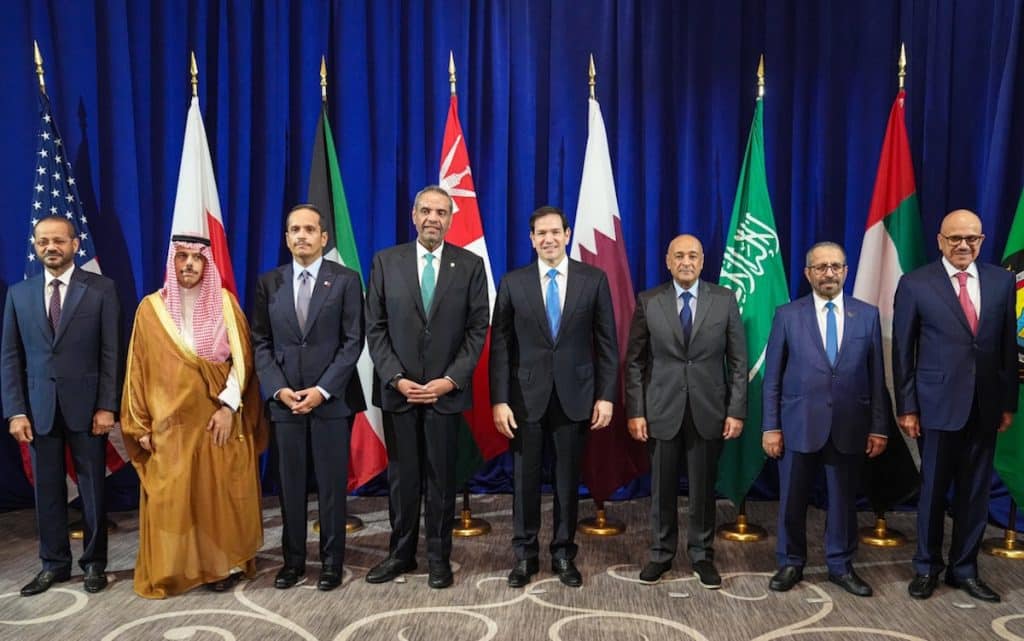
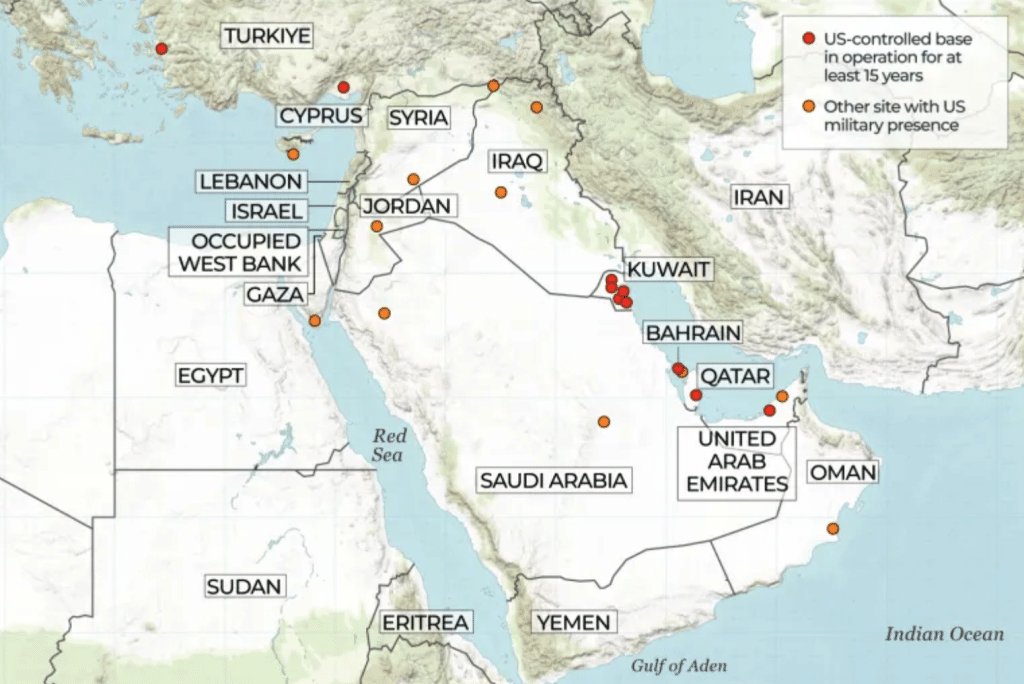
For the GCC states, even those who are quite openly aligned with the United States, the priorities from the start have been regional stability and their own individual neutrality. Iran’s targeting of those states has complicated that stance, but so far, the GCC states have held to it, even to the point of continuing to refuse the United States permission to launch attacks from their bases situated in those countries.
At this early stage of the war, it’s impossible to predict what sort of regional changes it might bring. For the GCC states, as well as others nearby such as Iraq, the only thing we can really be certain of is that things will be different.
Still, we can consider the impact of both American and Iranian decisions and actions on how the neighboring states might restructure their strategies and planning.
Did Saudi Arabia back the American and Israeli attack?
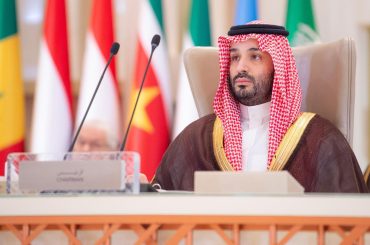
On Saturday, a report appeared in the Washington Post alleging that Saudi Crown Prince Mohammed Bin Salman (MBS) had been secretly pushing Trump to attack Iran for the past few weeks.
It seems unlikely that the report is accurate. It is poorly sourced, attributing the information to “four people familiar with the matter,” and it flies in the face of all of MBS’ and Saudi Arabia’s public statements, which have consistently urged a diplomatic resolution. Still, while the report seems unlikely to be true, there is nothing to suggest it must be false.
In either case, it illustrates the position Saudi Arabia now finds itself in. They could come out of this war in a very advantageous regional position, or it could bring the kind of instability they have been trying for decades to avoid.
MBS was surely not surprised by Iran’s decision to attack its neighbors. He understands that Iran’s strategy is to make the war so costly for the global economy and for American allies that it will deter future Israeli and American action. Thus, if he did encourage Trump to attack, he did so knowing he was inviting Iranian attacks on Saudi Arabia.
And as those attacks have come, Saudi Arabia, like the rest of the Gulf, has refrained from entering the war or even allowing the United States to use the bases on its territory in the war effort.
This feeds into Saudi Arabia’s longer-term regional ambitions. One of the keys, as I noted recently, is Pakistan, the country that has the largest population of Shi’a after Iran. Fellow GCC member Bahrain also boasts a large Shi’a population. Saudi Arabia does not want to diminish its already shaky image among the Shi’a of the region.
More than the other Arab states in the region, though, Saudi Arabia could gain from a change in Iran that sees the country emerge stable and whole, but under a different government. Certainly, a weakened Iran would greatly diminish challenges to Saudi Arabia’s regional dominance, limiting them to competition with the United Arab Emirates and whatever tensions might arise with Israel.
The Kingdom’s position is likely to be strengthened even if the Islamic Republic survives, though, as Iran will be substantially weakened for many years to come. But that advantage comes at a cost that is much higher than the gains are worth.
Saudi Arabia and Iran had been slowly thawing their relationship over the past few years. Obviously, Iran’s decision to attack its neighbors is going to set those efforts back considerably, not just with Saudi Arabia, but with all of the Gulf Arab states.
Do the Saudis and others care? The Gulf Arab states thrive on regional stability. Increased tensions with Iran make the region more violent, fueling the growth of militant groups on all sides with a variety of religious, political, and ideological agendas. The only issue in the region that contributes as much to that dynamic is Palestine.
On that basis, and given that Iran was already weakened by the 12-Day War of 2025, Saudi Arabia and the rest of the Gulf have little to gain by risking a massive uptick in regional instability just to further diminish, or even eliminate, the competition from Iran.
Where does the rest of the GCC stand?
All of the GCC have issued strong denunciations of Iran for attacking them. But they are not entering the war or allowing the U.S. to launch attacks from their territory. But neither are they giving any immediate indication that they might ask the U.S. to remove those bases after the war.
That is a possible outcome, even if there is no hint of it yet. Iran has sent an unmistakable message to the countries of the region: housing American military bases does not make you safer; it makes you targets.
For the most part, the GCC countries are trying to hunker down and weather this war, but they can’t avoid actions that affect the war’s calculus.
Perhaps the best example of that is Qatar’s decision to suspend its production of liquified natural gas (LNG). Qatar is one of the world’s leading exporters of LNG, contributing about 20% of the world’s supply. According to the Qataris, it will take at least a month to restart the super-cooling process that creates LNG.
The other two top LNG producers, Australia and the U.S., are already near their capacity limits and cannot replace the loss of LNG from Qatar. Mainland Europe and much of Asia depend on LNG from Qatar. Europe is particularly dependent on Qatar for LNG, as it stopped buying it from Russia in the wake of its invasion of Ukraine. Now, Europe may be forced to turn back to Russia, which would undermine European efforts to support Ukraine.
The closure of the Straits of Hormuz also poses a major challenge for the GCC, so serious that Donald Trump has offered to deploy significant American naval resources to escort oil tankers through the Strait. Gulf states have thus far seemed to be less than reassured by this idea.
The global energy market will feel this pain, but for the Gulf states, it raises long-term questions.
The anger at Iran in the Gulf is very real, whether or not they expected this response to the American-Israeli attack. It might have been mitigated if Iran had stuck to targeting the American bases in these states, but it didn’t do that.
The reason for Iran’s decision is that, as important as oil is to the GCC, tourism is also a key component of their economies and one of the sectors growing the fastest. Dubai, Abu Dhabi, and Doha are all considered top spots for luxury tourism, and Riyadh has worked to develop its sports and entertainment sector in recent years to attract Western tourists and fans.
More than that, Saudi Arabia and the UAE are leading the region in developing data centers and have attracted significant investments to that end. The rest of the GCC countries have also made inroads into the AI data center world.
All of that investment and tourism depends on the Gulf States being safe havens in the Middle East. Through a combination of strong state authoritarianism and great efforts to avoid becoming embroiled in the conflicts that have torn apart so many Arab states, places like Dubai, Doha, Abu Dhabi, Muscat, and other Gulf cities are perceived as safe for Westerners.
This war has upended that perception, and it may be difficult to recover from that for some time. Among the many details the Trump administration seems to have completely failed to consider before launching this attack was the evacuation of Americans in the region. Although a more competent future administration would certainly prepare to evacuate its citizens, this failure will dampen people’s desire to visit the Gulf after the war.
And, of course, that assumes that things return to something like the status quo ante once the war is over. They won’t.
The risk of permanent instability and the potential fracturing of Iran
The Trump administration expected the Iranian government to collapse once the Supreme Leader, and perhaps also some other top officials, were killed. At the very least, they certainly expected Iran to be unable to sustain its resistance.
Nothing of the sort happened. As everyone familiar with Iran warned, the government is institutionalized, with deep roots throughout the country. That’s a structural project, and it doesn’t change when the government becomes less popular, as this one certainly did, especially after the recent massacres of protesters.
In his desperation, Trump is turning to sectarian factions to try to act as the ground troops he is unwilling to send in. He has approached Iranian Kurdish factions, and is reported to have reached out to Balochi armed groups as well. There are various militias that Trump is apparently considering arming.
That risks turning the war in Iran into a sectarian battle. It’s already started to some degree, as the U.S. has bombed IRGC positions near the Iraqi border where Iranian Kurdish militias are, while Iran has targeted Kurdish sites, likely as a warning against involvement.
The price will be that most Iranians—even including members of these minority communities, as well as strong opponents of the Islamic Republic—will quickly harden against the American-Israeli invasion even more than many already have. Government supporters and opponents may be bitterly divided, but the overwhelming majority agree on the need to keep Iran from being divided along sectarian lines.
Perhaps that’s a price Trump is willing to pay. It is certainly one Israel and Benjamin Netanyahu will have no problem with.
But that kind of civil war in Iran is the last thing the rest of the Gulf countries want to see.
Sectarian fighting of that kind is not going to stay confined in Iran, and it tends to spawn new threats, as we saw in Afghanistan with al-Qaeda and in Iraq with ISIL. That is what Trump is inviting with these flirtations.
All of this highlights the need for a regional security regime for the Gulf states, and that seems to be what Saudi Arabia is building.
The GCC states are caught between a rival in Iran and a partner in the United States, which is showing very little concern for their interests.
While there is no complete alternative to the American security umbrella, a regional alliance led by Saudi Arabia and connected to states outside the region, such as Pakistan and possibly Türkiye, could diminish the need to rely on U.S. protection. The bases the U.S. has stationed in the region may be more trouble than they’re worth when the Gulf states can afford to buy more weapons from America and use them in partnership with their allies, for example.
Ultimately, though, the Gulf states’ anger with Iran will wane; they knew of this strategy, and while they naturally don’t like it, they also understand that Iran was facing two vastly superior militaries, that it had tried diplomacy and was betrayed both times, and that it had few strategic options.
That doesn’t mean they accept Iran’s attacking them, but over time, they are much more likely to forgive it than they are to forget how the United States plunged the region into a war with no goal, no plan, and no exit strategy, and with utter disregard for the Gulf States’ concerns, which they repeatedly voiced.
They have realized that they can buy many things in Washington, but they cannot buy the preferential treatment that Israel has won over years of partnership, lobbying, and public relations.
How exactly they will recalibrate their strategies going forward remains to be seen. But recalibrate them, they surely will.

There are two people at U Chicago who have pointed out the stupidity of this war: John Mearsheimer and Robert Pape. Most people know Mearsheimer’s name but Pape may be unfamiliar: he has extensively studied air wars** , Pape points out that bombing campaigns have never succeeded in regime change wars*** . Here are his comments:
Airstrikes alone unlikely to result in regime change in Iran, expert warns: “It has never worked”…U.S. and Israeli airstrikes alone are unlikely to result in the ouster of the Iranian government, according to an expert in air campaigns, who said that the risks are growing for a more drawn-out war that could spread beyond the Middle East….Robert Pape, a professor of political science at the University of Chicago who has studied air power for three decades, told CBS News 24/7 that history does not support the idea that bombing alone can unseat a regime and install a more friendly leader….”The fact of the matter is, for over a century, states have been trying to topple regimes with air power alone and — I’m choosing my words carefully — it has never worked,” Pape told CBS News 24/7 on Friday. “We are heading toward the predictable result of growing risk, growing escalation. And I’m sorry to say this could go on for quite some time.”...Amos Yadlin, the former head of Israeli military intelligence, told CBS News on Friday that no reasonable person in the Israeli government or military believes regime change is feasible at this point….Pape said that Iran “can do many things to prolong the war and hurt us and never fight a set-piece battle with us.”
Airstrikes alone unlikely to result in regime change in Iran, expert warns: “It has never worked” – CBS News
**
“Bombing to Win: Air Power and Coercion in War”
Bombing to Win: Air Power and Coercion in War (Cornell Studies in Security Affairs): Pape, Robert A.: 9780801483110: Amazon.com: Books
***
The U.S. bombed the crap out of Hanoi, and look how that turned out.
Peter Beinart has posted a really interesting piece on the history of the Iran-Israel conflict, and I cannot recommend it more highly.
In May 2003, after the Bush administration’s invasions of Afghanistan and Iraq, Iran sent the US government a secret message: If the US lifted sanctions, ceased trying to overthrow the Islamic Republic, and accepted Tehran’s right to peaceful nuclear energy, Iran would end its support for Hamas and Islamic Jihad, pressure Hezbollah to disarm, place its nuclear program under international inspection, and support the 2002 Arab Peace Initiative, which offered to recognize Israel if it accepted a Palestinian state and a “just solution to the Palestinian refugee problem.” According to Richard Haass, then head of policy planning at the State Department, the Bush administration spurned Tehran’s offer because “the bias was toward a policy of regime change.”
Iran Is Not an Existential Threat
I think there’s a lot in this article that deserves discussion. To be clear, I would not shed any tears if a progressive, secular and democratic regime took over from the mullahs, but Iran is not Amalek.
The reluctance of GCC states to allow the US to operate from bases in their countries explains why Trump is so desperate to use bases in England, Spain and Diego Garcia.
Decades ago Cspan’s Washington Journal had former head IAEA nuclear weapons inspector Scott Ritter on to talk about his incredible book “Target Iran”
https://www.c-span.org/program/book-tv/target-iran/165975
Cspan’s Washington Journal no longer has anyone who talks about Iran based on facts having to do with their nuclear program. I have been watching and listening for decades. As of late even with this horrific, unnecessary, deadly attack on Iran by Israel and the U.S. Washington Journal still not having experts on who have views based on hard facts about Iran’s nuclear program.
No Scott Ritter, no Hillary and Flynt Mann Leverett, no Joseph Cirrincione.
https://www.c-span.org/search/?searchtype=Videos&sort=Newest&personid%5B%5D=56771
One has to wonder did CSpan feel intimidated when the I lobbies “CAMERA” made Cspan a target.
So remember when then MSNBC host Melissa Harris Perry had Hillary Mann Leverett on to talk about the situation with Iran. Can’t find any video of the interview. Former CIA middle east analyst Flynt and Hillary Mann Leverett were on quite a few outlets years ago discussing their book and their stances against the Bush administrations attack on Iraq and the push by Israel and the I lobby to push the U.S. into attacking Iran. Their book is a must read. Although clearly Trump and his war hawk team did not read.
Wonder why they are no where to be found about the Iran topic. I had read they had a couple of kids. I know Hillary is Jewish and was so unusual back then taking a fact based stance based on facts. Hope they did not become a target of the I lobby or Israel.
Hillary Mann Leverett on Melissa Harris Perry’s . Read Hillary’s wise words.
https://www.nbcnews.com/id/wbna55691214
Of course, none of this matters now….Israel and U.S. bombing the daylights out of Iran. We do not live in a democracy.
+ How Israel and the FBI manipulated assassination plots to goad Trump into Iran war GrayZone. 3/6/26
The FBI manufactured plots to convince Trump that Iran sought to kill him, while Israel and its administration allies exploited the president’s deepest fears to keep him on the war path.
excerpts:
‘Fearing that Iran would down the famous “Trump Force One” airliner at any moment, Trump was placed on a “ghost flight” owned by his golf buddy, real estate tycoon Steve Witkoff, while the rest of his campaign traveled on the main jet. ‘
Joining Trump on the secret decoy plane was his campaign manager, Suzie Wiles, who would go on to become White House chief of staff, controlling access and the flow of information to the president. Unbeknownst to the public, Wiles had served as a paid advisor to Israel’s Netanyahu during his 2020 re-election campaign, consolidating her role as a key point of contact between Tel Aviv and Trump.
Netanyahu nudges Trump with Butler plot
On June 15, 2025, days after launching an unprovoked war on Iran, Netanyahu took to Fox News to manipulate Trump into joining the assault. The Israeli leader appeared to know exactly which psychological vulnerabilities to exploit.
“These people who chant death to America, tried to assassinate President Trump twice,” Netanyahu declared, asserting without a shred of evidence that Iran was behind both the Butler assassination attempt and the one at Mar a-Lago.
“Do you have intel that the assassination attempts on President Trump were directly from Iran?” a visibly startled Fox News host Bret Baier asked.
“Through proxies, yes. Through their intel, yes. They want to kill him,” stated Netanyahu with a cocksure gaze.
https://thegrayzone.com/2026/03/06/israel-fbi-assassination-plots-trump-iran-war/
“…I got him before he got me,” an ebullient President Donald Trump remarked to a reporter when asked about his motives for authorizing the killing of Iran’s Leader, Ayatollah Ali Khamenei, on February 28, 2026…”