The Latest:
- 547 confirmed COVID-19 cases in the occupied Palestinian territory; 355 in the West Bank; 172 in East Jerusalem; and 20 in the Gaza Strip
- 4 Palestinians have died of COVID-19 related causes
- 13,000 Palestinian workers entered Israel and will stay overnight there until the end of Ramadan
- Barbershops and salons allowed to open on Friday and Saturday this week
- Clothing and house wear shops are allowed to open this week
- 16,409 confirmed cases of COVID-19 in Israel; 245 have died from COVID-19 related causes
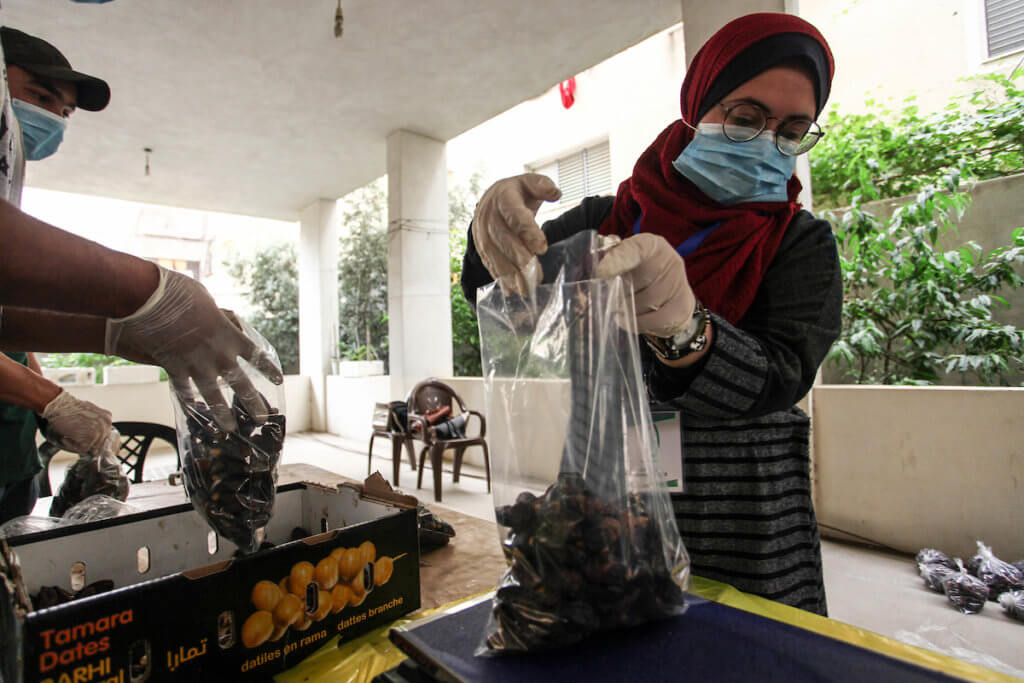
It has been two months since a state of emergency was declared in the West Bank, shuttering most of public life in an attempt to slow the spread of the coronavirus. The closures were initially aggressive, kicking tourists out of the region, setting up isolation centers in hotels, and erecting medical checkpoints. Restrictions have eased in the last week in part due to the Muslim holiday of Ramadan, a month-long celebration that includes fasting between sunrise and sunset.
As of May 7, there are 355 confirmed cases of COVID-19 in the West Bank, and while there have been multiple days in the last two weeks where no new cases were recorded, the virus is still spreading.
Our correspondent in Bethlehem Yumna Patel reported in the Tuesday version of this newsletter that many Palestinians feel as though they have hit their “breaking point.” She finds unemployment and stimulus checks are not arriving, and many are absconding from social distancing, much to the frustration of those that are in isolation at home
From Patel: “The reality that things are not under control is blatantly obvious to the average citizen walking through the streets of Bethlehem, Ramallah, Nablus, or any of the major cities in the West Bank. Markets are crowded, people are going about their shopping as normal, and there’s not a mask in sight.
It was only two weeks ago that new cases were being reported, yet today, police checkpoints are unmanned, and the so-called nightly curfew has barely been enforced.
Everyone I speak to is frustrated; frustrated with the government’s inability to seemingly make a decision and stick to it, frustrated by the state of financial and economic despair being faced by most of the country, and frustrated by the fact that there is no clear direction on what we should be doing.”
Peak Week Predicted for End of May
Mathematician Ines Abdeljaoued-Tej ran epidemic models to determine the actual number of Palestinians in the West Bank, East Jerusalem and Gaza who are likely infected with the coronavirus. Her data, crunched in late April, estimates between 506 and 2,026 have COVID-19, which is roughly between 50 and 1500 less than the count of confirmed cases by testing.
Her model goes on to suggest peak week will hit the occupied Palestinian territory in late May.
“The simulations predict a total number of infected cases of 11,014 in the most optimistic scenario and 113,171 in the most unfavorable outcome. The peak of the pandemic is expected between May 22 and May 27, 2020.”
Viruses Aren’t Restricted by Borders, But People Are
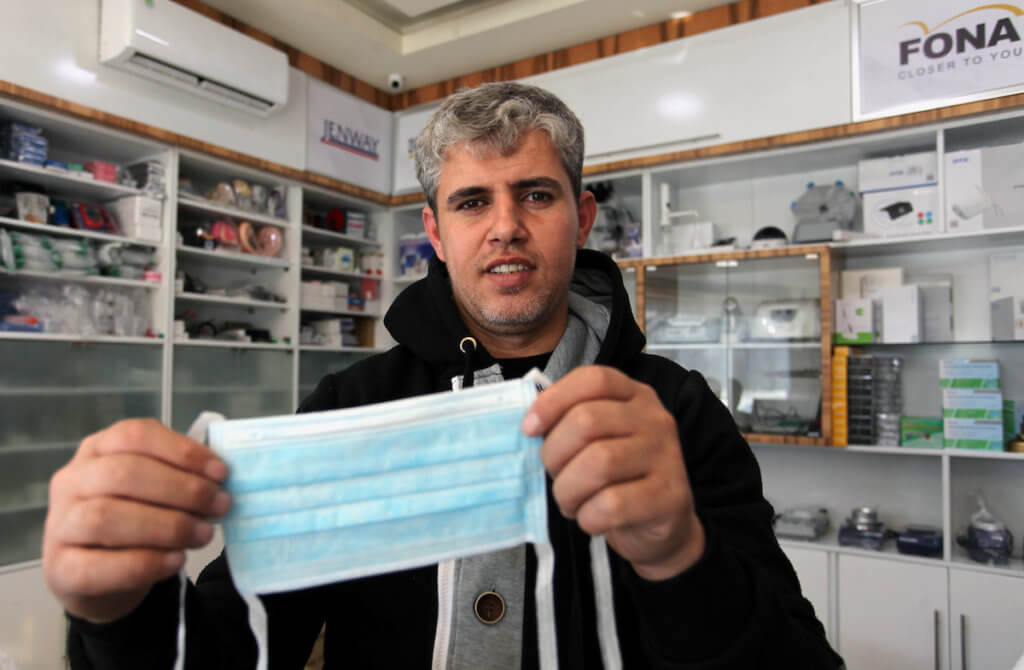
While there has been a great deal of collaboration and coordination between Israeli and Palestinian leaders, the same conflicts that predated the pandemic exist alongside the pandemic. The World Health Organization noted in their most recent Health Cluster Bulletin there are still secluded communities in the West Bank where Palestinians are cut off from medical support. According to the report, the Palestinian Medical Relief Society is still unable to get permits to serve 500 Palestinians living in three Bedouin towns: Arab ar Ramadin Shamali, Arab Ramadin Janoubi, and Abu Farde. “They remain without access to basic primary healthcare services since the beginning of April,” the report said.
Dr. Alice Rothchild has an wide view essay out examining how the coronavirus impacted the different regions and political cantons that make up Israel, the West Bank, East Jerusalem and the Gaza Strip. “While the virus recognizes no boundaries, each of these regions experienced the pandemic with a different underlying social and political reality,” she writes.
From Rothchild:
“Israel reported its first case of the coronavirus on February 21, a woman returning from a cruise. In the second week of February, the coronavirus was found in Bethlehem in the West Bank, introduced by foreign tourists, with another wave brought in by day laborers returning from Israel and Jewish settlements. Gaza’s first two cases were noted on March 22, two men returning from Pakistan. The data from East Jerusalem is difficult, partly because Israel considers East Jerusalem part of “unified Jerusalem” while the Palestinian Authority maintains that East Jerusalem is in the occupied West Bank. That said, on March 10, six East Jerusalem Palestinians were quarantined and the first death was reported April 18. The acclaimed world map and dashboard by Johns Hopkins University’s Center for Systems Science and Engineering initially erased the Palestinians altogether, then acknowledged the occupation, and finally changed their ‘country, region, sovereignty’ to the West Bank and Gaza, with no separate designation for East Jerusalem.”
A Quieter Ramadan in Gaza

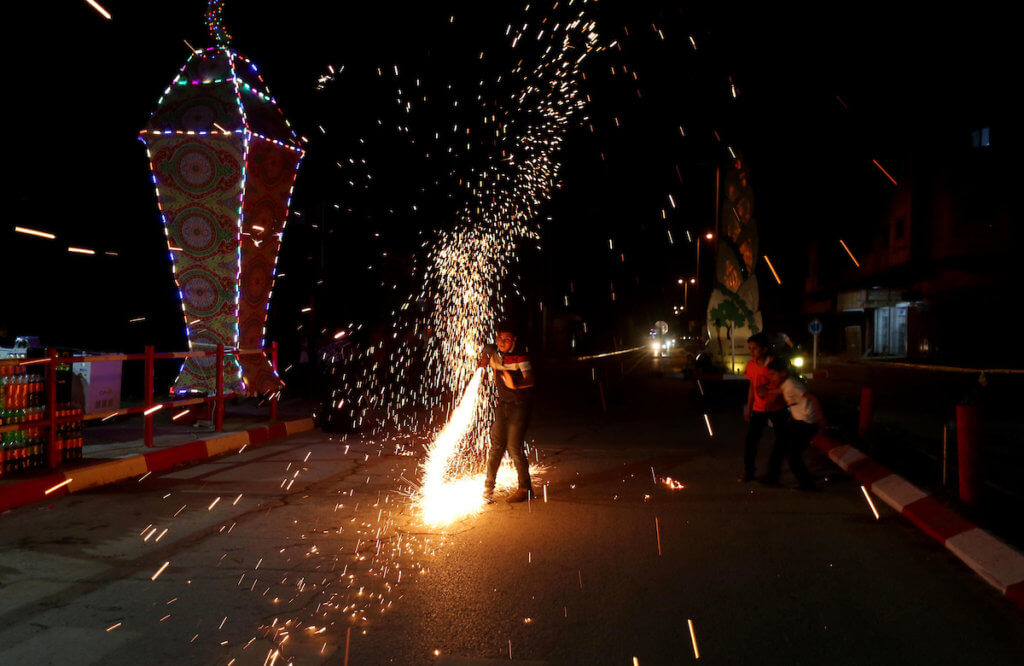
What’s normally a bustling time of year has become an understated month of celebrations and prayers during the Muslim holy month of Ramadan, this year observer mid-pandemic. While mosques remain shuttered to the public in the Gaza Strip, Palestinians are organizing small gatherings for evening prayers in their homes.
Officials have eased some restrictions allowing Palestinians a reprieve from the lockdown to buy gifts and sweets, even barbershops reopened. Allison Deger put together a photo essay of how the holiday is being celebrated in Gaza.
Links of Interest
- Coronavirus a gift to Israeli colonization (Electronic Intifada)
- COVID-19 Restrictions Offer Window into Palestinian Experience (Human Rights Watch)
- Palestinian woman leads fight against coronavirus, while others fall victim to domestic violence (Al Monitor)
- Dispatch podcast featuring interview with Mondoweiss’s Yumna Patel (Middle East Eye)