
This is the era in which diversity is finally being promoted at the top of American institutions, including the Biden White House, but– Israel remains a glaring exception. The mainstream Democratic/media perspective on the conflict is limited to an Israeli one.
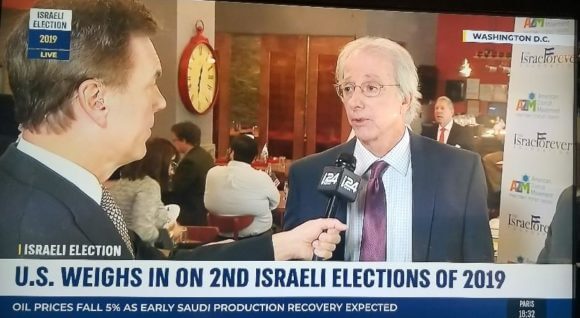
Yesterday, “Fresh Air”, the NPR talk show that did yeoman work undermining the Trump presidency as authoritarian, devoted most of an hour to a new Israeli documentary on the breakdown of the peace process; and the two guests were the Israeli documentarian, Dror Moreh, and the former peace processor Dennis Ross.
Ross is not impartial. He has been widely labeled “Israel’s lawyer”– in Al Jazeera, and by his colleague Aaron David Miller (who said he shared in the blame) — and has even embraced that role. He told a private Jewish audience in 2016, “Plenty of others have been advocates for the Palestinians. We don’t need to be advocates for Palestinians. We need to be advocates for Israel.”
So for 42 minutes on Fresh Air, Ross put out a very stale argument, that Yasser Arafat was in the end responsible for the breakdown of the peace process.
Interviewer Dave Davies: [A]fter the Camp David negotiations ended in failure, the Clinton team gets some principles and gives them to both sides, which the Israelis privately agree to adopt. And you have Arafat come in. There’s some hope that it might happen. It doesn’t. He wants to ask more questions. He wants to renegotiate. It can’t be done. Dennis Ross, do you think Yasser Arafat would ever have been able to close the deal? I mean, there’s this narrative that kind of grew out of this, that he would never be a partner… for peace. What is your take?
Dennis Ross: My take is he wasn’t able to do a final deal. it required too much personal redefinition for him… Arafat was capable of doing limited deals with Israel because Arafat was the kind of guy who could never foreclose an option. What made it hard for him to accept what we were asking were three words – end the conflict. Well, for him, end the conflict meant end the grievance, end the struggle, end the claims. That, he wasn’t prepared to do.
Later Ross said Arafat rejected the Clinton parameters, because he’s just a defiant Palestinian.
In the end, Arafat wasn’t prepared to move on anything. We made a proposal that, in a sense, we drew out of [Ehud] Barak, what was the kind of things that he could actually do. And Arafat doesn’t make a counterproposal, but he simply rejects it. He does – I will say he does go back to Gaza, and he goes back with the image that he defied Israel and the United States. The notion of defiance is very much a part of the historic Palestinian narrative.
It’s astonishing that even as “Fresh Air” trotted out this mythology, there’s a new book out from a leading historian of the conflict saying that Israel bears the greatest responsibility for the failure of the peace process in the Clinton era. “Israel simply was unwilling to end its occupation of the West Bank and allow the Palestinians to have a viable state of their own,” Jerome Slater concludes after examining closely the negotiations that Dennis Ross led, in his book “Mythologies Without End.”
As for Arafat asking so many questions rather than accepting the deal outright, Slater disputes Ross’s reading:
“Dennis Ross later characterized Arafat’s letter as ‘stiffing’ Clinton with reservations that were essentially ‘deal-killers.’ However, it seems persuasive — or even undeniable– that most of Arafat’s objections or requests for changes, clarification, or more specific and detailed proposals were reasonable and legitimate. In light of the history of past Israeli violations of apparent agreements — for example Oslo — he was right to be concerned that every Clinton ‘idea’ could be interpreted by Israel in a manner that effectively undercut his proposed compromises.”
And when it came to Arafat’s rejection of Clinton parameters, Slater puts the onus on Barak. “Barak ended the Taba talks, and in his last few months in office he resumed his previous rigidity on the Israeli-Palestinian conflict, with devastating consequences that continue today.” Barak did so because he was ambivalent about “the need for compromise” and unwilling to “appear too ‘leftist’… on the ev of the national elections.”
Of course, Israel has rarely felt a “need for compromise;” it has continually expanded the domain of the “Jewish state,” and today it’s been declared an apartheid regime by a leading human rights group. Though of course that news wasn’t on “Fresh Air” yesterday either.
No, what we got was a gushing report on Dennis Ross’s statecraft (Davies: “God, I have to say, I marvel at your ability to visualize moves on the diplomatic chessboard still.”).
Though Davies did ask Dennis Ross whether it wasn’t a problem that there were so many Jews on the U.S. negotiating team. Davies:
“One of the issues that’s raised in the documentary is that most of the members of the American negotiating team over this – the course of these conversations are Jewish, varying degrees of observance among them. And there’s a question of whether, you know, a Jewish – Dennis, you’re Jewish. I mean, the question of whether, you know, you just have an affinity for one side or an understanding that colors the way you do things?
Ross of course deflected this, with a lot of b.s. “I think that all of us who happen to be Jewish on the team, we all had a real passionate commitment to try to resolve the conflict. So if there was something that our Jewishness contributed to, it was a sense of mission about trying to resolve the conflict and do everything we could in that regard.” And that means: “[W]e had to really understand what the Palestinians needed. We had to really listen to them, which we did.”
It can hardly be the case that Ross just happened to be Jewish. The Israel lobby is well aware of who gets such positions. And again, Ross has said outright that American Jews must be advocates for Israel not Palestine. And he’s chair of a pro-Israel organization that is battling the challenge of Jews marrying non-Jews.
The amazement of the “Fresh Air” interview is they treat Dennis Ross as an impartial observer and completely omit the Palestinian perspective. No one was “really listening” to Palestinians on NPR yesterday, just parodying the “Palestinian narrative.”
So a leading liberal publication addresses a central question in history/policy — and it’s completely one-sided. The indigenous people are given no opportunity to say why they object to Jewish nationalist colonial settlement in their land. That omission ought to be impossible in 2021. But it’s not.
Thanks to Kate Casa.


1 of 2
Apart from the 2002 Arab League Beirut Summit Initiative, which offered Israel full recognition as a sovereign state, exchange of ambassadors, trade, tourism, etc., if it complies with international law and its previous commitments, here are some of the other peace proposals that Israel has rebuffed: Secretary of State William Rogers’ The Rogers Plan (1969); The Scranton Mission on behalf of President Nixon (1970); President Sadat’s land for peace and mutual recognition proposal (1971); Jimmy Carter’s call for a Geneva international conference (1977); King Fahd’s peace offer (1981); Ronald Reagan’s Reagan Plan (1982); Secretary of State George Shultz’s Schultz Plan (1988); Secretary of State James Baker’s Baker Plan (1989); the 1993 Oslo accords signed by Yasser Arafat and Yitzhak Rabin that unraveled following Rabin’s assassination and return to power of the Likud under Benjamin Netanyahu; continuation of the Taba II negotiations (2001), and the unofficial Geneva Peace Initiative of November/December 2003.
As for the 2000 Camp David Summit, Barak and Clinton tried to shove a very bad deal down Arafat’s throat. It could only be rejected. To quote Shlomo Ben-Ami, then Israel’s foreign minister and lead negotiator at Camp David: “Camp David was not the missed opportunity for the Palestinians, and if I were a Palestinian I would have rejected Camp David, as well.”(National Public Radio, 14 February 2006.)
“Clinton and his negotiators were so eager, in pursuit of Israel’s interests and of Clinton’s much-ballyhooed ‘legacy,’ to forge a peace agreement at all costs before the end of his term, and were so outraged when the Palestinians refused to relinquish their hope for true independence and sovereignty by complying with Israel’s inadequate offer at Camp David, that they quite deliberately shifted the entire onus for failure onto the Palestinians….” (Camp David Redux, by Kathleen Christison, a former CIA political analyst.(http://www.counterpunch.com/christison08152005.html)
2 of 2
On 16 June 2009, after meeting U.S. President Jimmy Carter, Ismail Haniya, P.M.of Hamas’s Gaza government, declared ‘If there is a real plan to resolve the Palestinian question on the basis of the creation of a Palestinian state within the borders of June 4, 1967 [22% of historic Palestine] & with full sovereignty, we are in favour of it.’ No response from Israel.
‘We accept a Palestinian state on the borders of 1967, with Jerusalem as its capital, the release of Palestinian prisoners, & the resolution of the issue of refugees,’ Haniyeh said…” (Haaretz, December 1, 2010) No response from Israel. (By calling for a ‘resolution of the issue of refugees,’ Haniyeh was in accordance with UNGA Res. 194, which calls for financial compensation as a possible option for the Palestinian refugees rather than their “inalienable Right of Return.”)
“Senior Hamas Official: ‘I Think We Can All Live Here in This Land – Muslims, Christians & Jews.’” Nir Gontarz. March 28/18, Haaretz. No response from Israel.
Unfortunately, Israel’s repy to every peace overture from the Palestinians, including Hamas, & the Arab states (e.g., the US/EU/UN supported 2002 Arab League Beirut Summit Peace Initiative), has been rapidly increasing illegal settlement construction and escalating dispossession & violent oppression of the indigenous Palestinians.
The offer made in 2008 by Israeli PM Ehud Olmert was never seen as serious because it lacked cabinet approval, he was under indictment with only a few weeks left in office, had a 6% favorable rating, &, therefore, couldn’t have closed the deal, even if the Palestinians had accepted it. (Olmert was imprisoned.)
Re Netanyahu & Likud, here’s a brief summation of their positions that are contrary to international law & help explain why the conflict has continued:
Likud Party Platform:
a. “The Jordan river will be the permanent eastern border of the State of Israel.”
b. “Jerusalem is the eternal, united capital of the State of Israel & only of Israel. The government will flatly reject Palestinian proposals to divide Jerusalem”
c. “The Government of Israel flatly rejects the establishment of a Palestinian Arab state west of the Jordan river.”
d. Settlement of the land is a clear expression of the unassailable right of the Jewish people to the Land of Israel & constitutes an important asset…”
I heard the interview yesterday, and there were many amazing things about it (you think maybe they could have a Palestinian in on the discussion? Nah). But to my mind the most amazing thing was at the end, when the interviewer asks Ross and Moreh about the future prospects for ending the ‘conflict’. Ross says – “But I remain hopeful because I do think we have to break the stalemate between Israelis and Palestinians. And I think we can use Arab states to help do that.” No mention of the half-million+ settlers in the West Bank, or the home demolitions or the ‘administrative detentions’. Here’s a transcript of the interview:
https://www.npr.org/2021/01/26/960717216/new-documentary-offers-an-inside-look-at-90s-middle-east-peace-negotiations
ever since I heard their piece on the settlements, described as “vibrant thriving communities” NPR has ceased to be “supported by listeners like me”. They are utterly biased, mouthpieces for imperialism, like the rest of mainstream media…
I think those of us interested in a more balanced Middle East US policy have lost out once again with the naming of Anthony Blinker as secretary of state. He is and always has been a wildly pro-Israel, anti-Palestinian type.