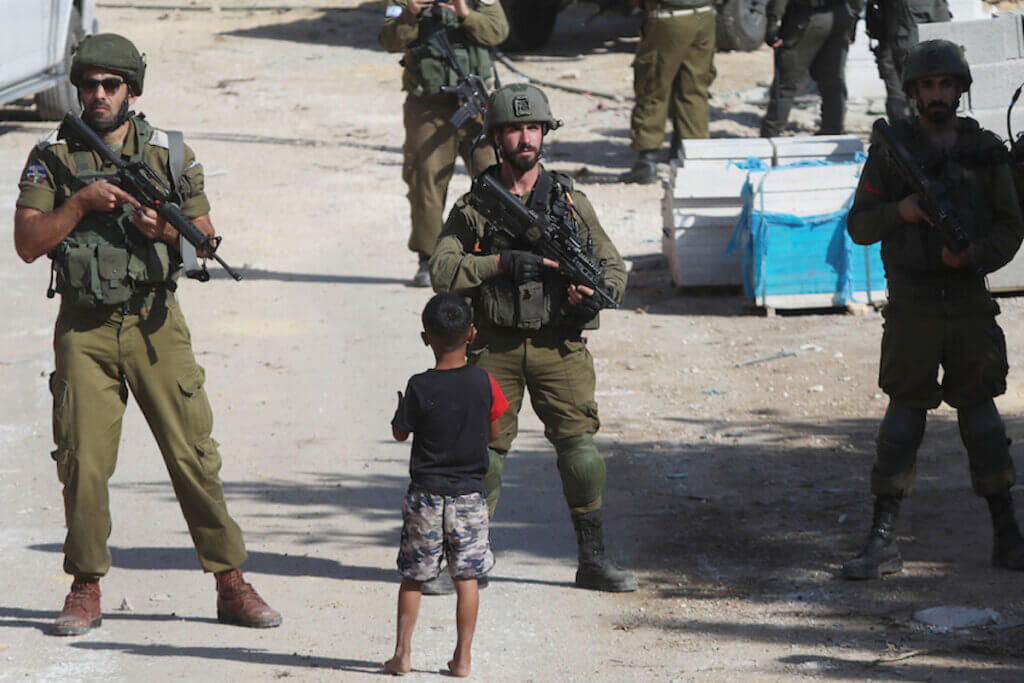
It has been a year of slaughter. One which is diverse in its call to death. It is no easy task to track the number of Palestinians arrested each day (averaging on 20 per day), or the number of martyrs (averaging 19 per month), or the number of home demolitions (including those against Palestinians with Israeli citizenship), or the settlements expanding, let alone the arming and emboldening of settlers in the West Bank. But added together Palestine feels like a big slaughterhouse.
The slaughterhouse of Palestine does not perhaps come across like a dramatic film with epic soundtracks and special effects to highlight the travesty of the pain. This slaughterhouse is far more intricate, concealed, and corrupt. It is labyrinthine in the same way that you might explore alleyways and hidden doorways until you are lost.
The process of unearthing information, mapping testimonies, and linking these events to broader sociopolitical developments becomes a burden that may seem fruitless. If the purpose is to document, then the archives of the United Nations and human rights organizations have fulfilled it. The story has not changed for decades.
I have read reports from the 80s, 90s, 2000s, and the past decade. They repeat the same conclusion of “illegal,” and “must end.” They also share the reality that no action at all was taken after the gathering and analysis of documentation. This is the reality and cycle of violence which Palestinians endure. It is entwined with the creation of myths and narratives that justify and promote a continuation of aggression, offense disguised as defense, and ethnic cleansing.
I keep returning to the words, and they all keep falling short. What remains is the equipping of people with information and tools not only to inform them, but to allow for a conversation and an engagement with one another. It is to facilitate the understanding of communities.
From the slaughterhouse, journalists become phone line operators – taking sound bytes from a wire and switching it to a phone plug. It’s an attempt to bring the distant near as the near seems to fade slowly. Yet as journalists from the slaughterhouse, we can also see that what seems like despair and doom, may only be a glitch in the wire. That, on the other end of the line, life still persists, even if the line is lagging.