
MOTHER OF STRANGERS
by Suad Amiry
279 pp, Random House $27.00
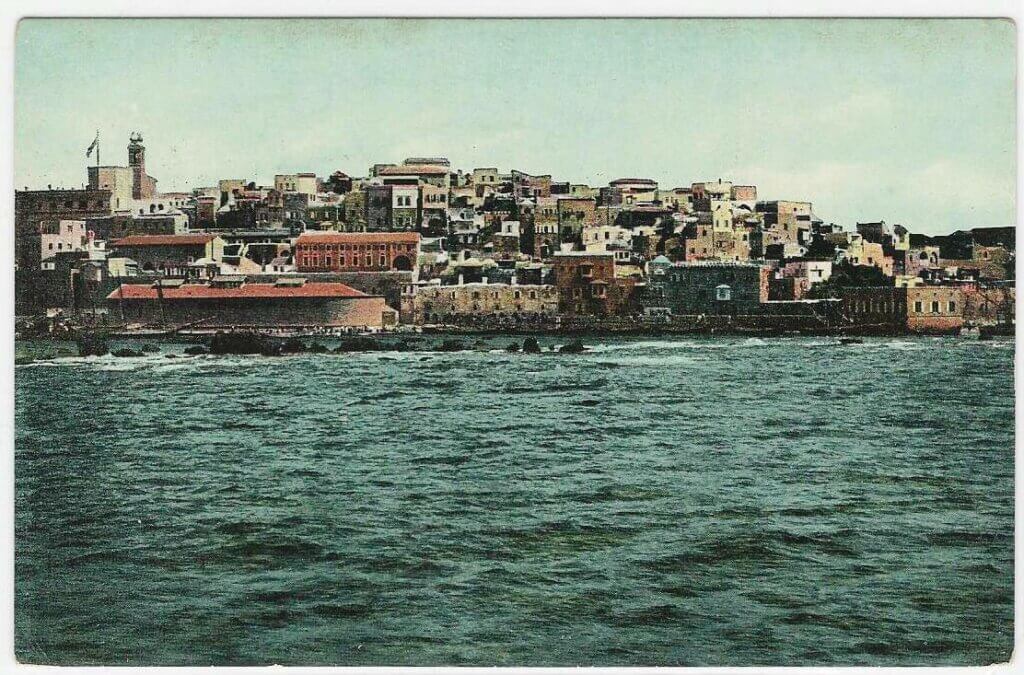
Suad Amiry has written a novel about old Jaffa, its destruction in the Nakba, and the struggles of its former inhabitants in the years immediately after. Despite an unsparing depiction of a terrible mass atrocity, Mother of Strangers keeps the reader smiling inwardly, charmed just to be in the company of Amiry’s vividly realized characters, people of old Palestine. We experience their trauma and inconsolable grief, but it is the creative resilience of their hold on life and each other that affects us most deeply as they journey into their nether existence, human remnants of a lost world. It is an important book that may leave many readers quite changed — more immune to the prejudice and special pleading that sustains Zionist paranoia and intimidates so many people — and more confident that somehow the Palestinians will show the world, especially Jewish Israelis, how to overcome their fears and hatred.

Author Amiry is the Jordanian-born daughter of Palestinian survivors like those in the novel. From them she seems to have inherited the friendly nature of the city once called the “mother of strangers,” as she guides us around lively streets and neighborhoods that no longer exist. She doesn’t preach or prognosticate, preferring just to present a story of ordinary people driven out of their beloved ancient port, also known as “the bride of the sea.”
We spend the first hundred and some pages of the novel enjoying the last vibrant months of Jaffa, before it was reduced in 1948 to a battered old appendage of Tel Aviv. We follow in intimate detail the life of handsome young Subhi, who is fast becoming known as the best mechanic in the city. He has Romeo-strength feelings for Shams, a lovely peasant girl, whose dad works for his dad in the celebrated orange groves surrounding Jaffa. Subhi’s Uncle Habeeb, something of a black-sheep in the family, helps his sheltered nephew — and Amiry’s readers — get acquainted with especially interesting precincts of the city and their inhabitants, including Habeeb’s favorite brothel, a Jewish establishment starring genial Shoshana. When Subhi resists going there, citing his devotion to Shams, Uncle Habeeb replies, “Trust me, Shoshana is going to teach you how to please that peasant girl. You know villagers are timid, and you need to learn how to make them lose their frigidity [a word that’s new to the lad].”
Subhi’s ability to play the young man about town is enhanced by his having just acquired a new, custom-tailored, English suit of the finest Manchester cloth from a grateful, wealthy client. The suit comes to symbolize his plans to gain prosperity and to one day sweep Shams up into happily-ever-after wedded bliss. This is his dream in the city he loves – a town that teems with desires and hopes.
When Subhi finally yields to Habeeb’s pragmatic advice, Amiry tells of the encounter with Shoshanna matter-of-factly and with unsentimental empathy. It is one of the countless scenes throughout the novel rendered with sharp dialogue that she infuses with deft notes about the characters’ inward thoughts and feelings – sometimes almost unconscious ones — as they talk to each other or to themselves. This skill lets readers pick up extra dimensions of irony, humor, and pathos in the characters and their relationships.
Amiry’s light, but compelling style first emerged in a “personal war diary” she kept while living in Ramallah during the Second Intifada and whose entries she would email to friends and relatives wanting to know how she was doing. The endless, absurd complications of daily life under Israeli occupation and curfews made for tales as weirdly hilarious as they were sometimes terrifying — hilarious because she aired the entire gamut of emotions and thoughts that streamed through her panicked, witty, irascible, compassionate consciousness, especially as she tried to tend to her somewhat dotty, exasperating mother-in-law, trapped in a home just outside Yassir Arafat’s heavily besieged headquarters. The writings became Amiry’s prize-winning, first book, Sharon and My Mother-in-Law (2006). Thus, she had developed an effective technique to take readers of her new book through what it was like for Jaffans to suffer the destruction of their city and villages, and the aftermath.
Clad in his bespoke English suit and armed with Shoshanna’s lessons in love, Subhi is set to meet and begin to woo young Shams, who has been quietly growing up in her family’s home in the village of Salameh. Of great concern to him is the need to somehow spike expected parental resistance to their marriage due to her inferior class origins. The gifted mechanic’s romantic machinations are progressing well, until the creeping menace posed by Zionist Jewish militias — which has been steadily invading everyone’s conversation — explodes into huge terror bombings, followed by an overwhelming military assault that hurls almost all the people, if they survive, into the interior or out to sea.
The narrative follows the individual fates of Subhi and the other characters as they intersect with the general panic and hysteria. This is all richly registered in small incidents and details, and in the victims’ constant, bewildered commentary, and argument: So, for example, “Like most in the frenzied city, members of Subhi’s family spun around themselves and around the house. Rushing in and out of rooms, they argued about what to take and what to leave behind. They yelled at one another as Subhi’s mother and sisters gathered some valuables but also some random odds and ends.” And everyone scattered.
Subhi stayed behind, however, and we accompany him around the dying city. He hides in his home or in the home of his cranky grandmother who refused to flee. Jewish militia, and soon new Jewish immigrants, sometimes whole families, begin methodically breaking into and looting all the homes, or moving right in. Accompanied by a collaborator, some intruders jail Subhi, accusing him of stealing his own English suit, which they think is too nice for the likes of him. And so it goes – with more pungent commentary — until eventually he decamps to Tiberias with Uncle Habeeb.
The novel then turns to the wanderings of Shams and her family, who joined the masses of refugees heading inland toward the city of il Lyd, which soon will also be ethnically cleansed and renamed Lod. There we find Shams and her two younger sisters huddled in il Lyd’s main square as overwhelmed social workers try unsuccessfully to reunite them with their parents. An unknown woman suddenly steps forward and claims to be the girls’ aunt. Shams and her sisters go along with her to escape a “nightmarish life in the crowded Damash Mosque,” soon to be the site of a large massacre. Their new surrogate mother, Rifqa, turns out to be an Arab Jew married to a Muslim who is in prison. She lavishes love and care on her new daughters, and she and her husband become beloved characters as they and the girls face many challenges and further travels to remain together. To reveal more of the story, unfortunately, would spoil several fantastic twists that spin the plot forward.
Beyond being a great read, Mother of Strangers offers a reply to many people who may wonder why some Americans get so deep into the Palestinian cause, let alone like to visit a place where the news is always bad, if not gut-wrenching and infuriating. What’s the attraction of visiting a ground zero of gloom? Amiry’s own mother, we are told in an Author’s Note, once asked her, “Who in their right mind would opt to go live under occupation?” This was just before Amiry left for a one-month stay in Palestine that has now lasted over 40 years.
Amiry herself admits she didn’t have the “emotional courage” to visit her father’s lost hometown of Jaffa until 2018, and it did not go well. Deeply dispirited, she and her husband climbed into a cab to return to Ramallah. As they muttered sadly to each other, the cabdriver, who overheard them, slowed down, turned to face her, and said, “Why don’t you come back to Jaffa and meet my Aunt Shams? She has an incredible story.” Amiry did just that and instantly realized she had “a treasure in my hands.”
The story, the people in the story, and the writer of the story – which is Palestine’s story – all possess and exude the deep core of Palestinian “sumud” — the term for their storied “steadfastness.” Through them we realize that courage, stoicism, patience, and toughness, which generally are said to define sumud, were never enough to get them through more than 100 years of heartbreak in the struggle to be free in their own land. Beyond such solid virtues they have distilled deeper, irrepressible essences of joie de vivre, ones that exude notes and flavors of wit, humor, wry wisdom and the like, drawn from the secret springs of human nature.
Suad Amiry offers the treasure of that sumud to readers of her book. Through it they can feel the awful weight of the Nakba, which is still ongoing, and yet at the same time realize how alive and strong the Palestinians are — and eager to be recognized. Those two perceptions — one about the past and the other about the present — are what make people around the world embrace the Palestinian cause. Now, rather than trying to explain that peculiar passion, all that’s necessary is to put this book into people’s hands.
Publication Note: Written by Amiry in English, the novel was first published in 2020 in the Italian translation of Sonia Folin as “Una Storia di un abito inglese e una mucca ebrea” (“The story of an English suit and a Jewish cow”). Amiry translated the book into Arabic with the collaboration of poet Hala Shrouf. Then Random House published the original book in 2022 under the title “Mother of Strangers.”

1 of 2
RGB Media – Responsive Email Template (972mag.com)
The Landline, Nov. 20, 2022 by Oren Ziv.
“Fighting the Israeli right means relearning the basics of solidarity”
“A few days after it became clear that Israelis had elected a far-right, Jewish supremacist government, I spoke to some Palestinian activists at an olive harvest in the occupied West Bank. Despite the grim mood among the left in Tel Aviv, where I live, not a single one of the activists I spoke to showed any sign of depression. Not one of them spoke about leaving the country for Berlin &, more importantly, none of them dreamt of giving up on protests, boycotting Israel, or actively resisting the occupation by other means.
“Some of those I spoke with had spent time in Israeli prisons, long before Itamar Ben Gvir arrived on the scene. Some expressed fear that the new government would be worse, while also wondering whether anyone in the international community could now deny that Israel is a fascist state.
“On the other hand, it’s not difficult to understand why Ben Gvir’s recent election win raises fears among many Israeli Jews, since until now they have been relatively protected from policies that affect “undesirable” groups, most prominently Palestinians. But before we begin to formulate a broader plan for how to deal with the new government, the left needs to return to basic acts of resistance & solidarity — not only against Ben Gvir, but against Jewish supremacy, colonialism, & apartheid, which were here long before the Otzma Yehudit leader.
“We must stand alongside those who will suffer most from his policies, not to ‘change’ or ‘strengthen the left,’ but because trying to stop injustice is the right thing to do. In such an extreme atmosphere, solidarity is a basic — & sometimes the only — step to take.
“At least for the foreseeable future, change will not come from the Knesset. That’s why Israeli Jews must take inspiration from direct action groups such as Anarchists Against the Wall, Ta’ayush, & other organizations that have been active against the occupation for more than 20 years.” (cont’d)
2 of 2
“Whether documenting settler attacks, home demolitions, & daily violence by the army; accompanying shepherds & farmers who face violence & harassment from the army and the settlers; or protesting in solidarity with Palestinians who face expulsion & replacement by settlers, these groups have helped set a precedent for how Jews must stand up against Israeli oppression.
“The new government has also made clear its intention to promote conversion therapy & implement other draconian measures against the LGBTQ community, & particularly the trans community. African asylum seekers will also likely be targeted. In these struggles, too, there are organizations which have been fighting for years that need mass support more than ever.
“Beyond joining protests or other activities, the left should also adopt a mindset of a persecuted minority, as Israeli scholar Idan Landau put it the day after the election. The Israeli Jews who oppose the occupation & Jewish supremacy are no more than a handful. This is the reality.
“In the eyes of many in the Zionist center-left, Netanyahu’s victory, the entry of the Kahanists into the government, & the possibility of the Supreme Court being defanged means the further erosion of supposed liberal values (even if those values exist solely in the minds of those who lost the election), which will bring about a drastic change in their lives. And while it is unlikely that Ben Gvir & Netanyahu will immediately try to cancel Pride parades across the country or close cafes on the Sabbath, many in the liberal camp feel they no longer recognize their country. As new, draconian policies come into effect, this feeling may intensify & bring people into the streets to protest.
“There is a chance that the new government will be careful not to upset the secular Jewish-Israeli public. Yet we will likely see increased attacks on Palestinian citizens of Israel, as well as an attempt to bar their political representatives from the Knesset. This will start with the disqualification of the Palestinian Balad party in the next election, as well as attacks on Arab local authorities, Palestinian activists on university campuses, & anyone who tries to promote Jewish-Arab partnership on any issue. Vigilante militia groups in the so-called mixed cities will be emboldened to take matters into their own hands,..”