
Key Developments (Dec 13 – Dec 19)

- Two Palestinian brothers, Mohammad and Muhannad Muteir, killed in settler car-ramming attack, south of Nablus
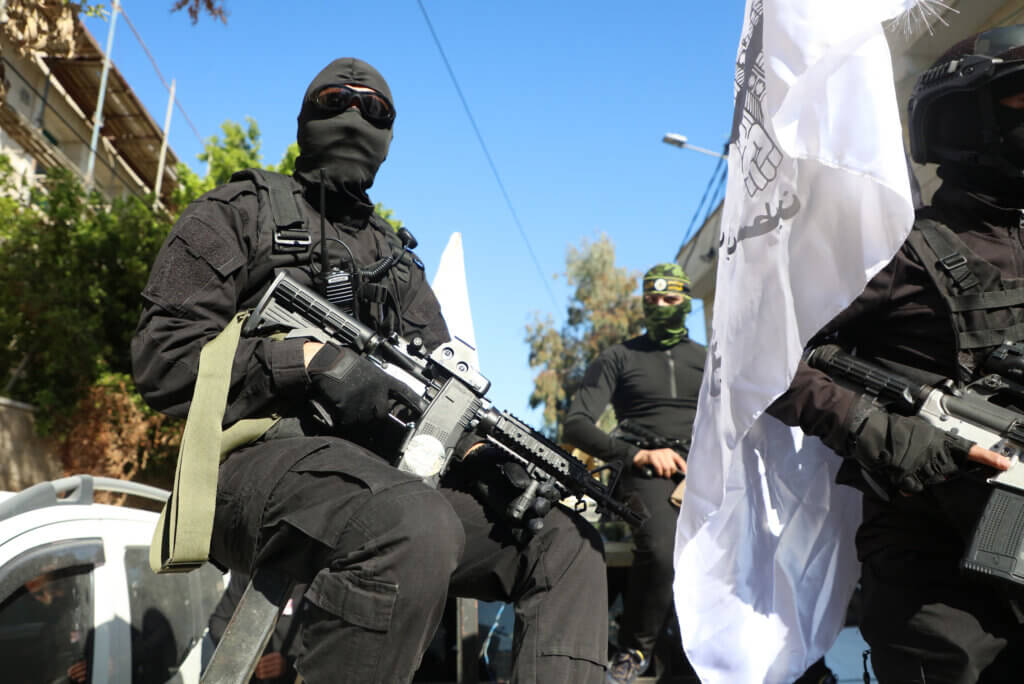
- A Palestinian fighter with the Jenin Brigades, Tamer Nasharti, succumbed to wounds sustained in an accidental explosion in Jenin refugee camp last week.
- Armed clashes break out in Jenin following Israeli raid on Sunday evening, Dec. 18
- Settler violence in the West Bank reaches record high, UN experts say it’s become difficult to “discern between Israeli settler and State violence”
- Palestinian human rights defender Salah Hammouri forcibly deported to France.
- The Palestinian Authority conducts large-scale arrest campaigns in the West Bank, detaining more than 251 Palestinians belonging to political opposition groups such as Hamas within 48 hours.
- Israel escalates its raids and invasions, carrying out mass arrests of Palestinians, with a focus on Hebron.
In-Depth
The events of this week have been more muted than the weeks that preceded it. While Palestinian loss of life has certainly not come to a halt (an Israeli settler killed two Palestinians in a car-ramming attack south of Nablus), it still does not compare to the trail of martyrs killed by Israeli forces between November 28 and December 5.
That period saw a dramatic climb in the number of Palestinian deaths, totaling 18 killed within two weeks. The killing spree was an Israeli response to the continuing wave of unabated Palestinian resistance to settler-colonial encroachment. That resistance has included both armed and unarmed forms of confrontation, from shooting operations against army targets, to stone-throwing and the hurling of Molotov cocktails at invading Israeli forces, to the formation of small decentralized “disruption battalions” of Palestinian youth engaging in sabotage and direct actions against settlers and military targets. The Israeli decision to crack down on this persistent phenomenon was meant to increase the human cost of resistance, a price that was paid in Palestinian blood.
Then, the Palestinian death toll dropped in the past week. What is most notable about this is that night raids and arrest campaigns — which were when most of the deaths from the previous two weeks occurred — have continued into this past week. Moreover, so has the confrontation of Palestinian youth against invading Israeli forces. What this should indicate to any intelligent observer of the data is that the uptick in Palestinian deaths was unrelated to the degree of youth militancy in the field. In other words, the killing of Palestinians was not due to any threat that the youth posed to Israeli forces (as the usual Hasbara would have us believe), but rather due to an antecedent decision from the army to make the Palestinians pay. This was illustrated most prominently in the killing of brothers Thafer and Jawad Rimawi, who were shot dead by retreating Israeli forces despite not posing a threat to the armored vehicles.
What this means is that the killings of those previous weeks were executions, albeit carried out extra-judicially. Moreover, it also shows that the decision to kill was not tactical in the sense that it arose from developments in the field, but was in fact a matter of policy, premeditated at the political level. As Mondoweiss has continued to point out, this signals the revival of the decades-old Israeli policy of “liquidation,” an attempt to restore Israeli “deterrence” through the obscene practice of raising the Palestinian body count.
The deterrence ethos continues to renew itself in public pronouncements by Israeli officials — just this past week, retired Brigadier General and member of the Jewish Power party, Zvika Fogel, said that “the concept of proportionality must cease to exist” and that “if it is one Israeli mother crying, or a thousand Palestinian mothers crying, then a thousand Palestinian mothers will cry.”
Such is the honesty of the Israeli fascist right. It has also expressed itself in the continuation of settler attacks throughout the year. Settler violence in the West Bank reached a record high, and UN experts say it has become difficult to “discern between Israeli settler and State violence.” In last week’s feature, Mondoweiss Palestine News Director Yumna Patel leaves us with the following sobering observation:
The incidents in Hebron and Huwwara are not isolated but part of a larger trend of settler violence in the occupied West Bank that is increasing not only in frequency but in brutality as well.
As of November 21, the UN Office for the Coordination of Humanitarian Affairs in the Occupied Palestinian Territory had recorded 660 settler attacks against Palestinians since the start of the year.
The attacks consist of everything from throwing rocks at Palestinian vehicles, physically assaulting Palestinians, vandalizing Palestinian vehicles and homes, and destroying Palestinian farmlands and crops.
[…]
In a majority of the instances of settler violence documented by Mondoweiss in 2022, Palestinians reported the presence of Israeli forces or authorities at the time of the attack. In most cases, the soldiers either did nothing to prevent the attacks from happening or actively engaged in the attacks with the settlers, turning their weapons on the Palestinian victims rather than on the Israeli aggressors, as was the case in Huwwara, Hebron, and al-Mughayyir.
Important figures
- 229 Palestinians have been killed by Israeli forces and settlers in 2022 across Palestine.
- 171 Palestinians were killed in the West Bank and East Jerusalem alone.
Mondoweiss Highlights
2022 was a record year for settler violence. Palestinians say next year will be even worse, by Yumna Patel


“In other words, the killing of Palestinians was not due to any threat that the youth posed to Israeli forces (as the usual Hasbara would have us believe), but rather due to an antecedent decision from the army to make the Palestinians pay. “
_________________________________________________________
Beyond making the Palestinians “pay”, there is a political advantage to cultural anger. Makes it far more difficult to develop the necessary consensus on co-existence in a secular state.