75 years after their displacement, refugees in Gaza are preserving their cultural heritage through folklore and song. These songs tell a story of resistance and longing for Palestine.


75 years after their displacement, refugees in Gaza are preserving their cultural heritage through folklore and song. These songs tell a story of resistance and longing for Palestine.
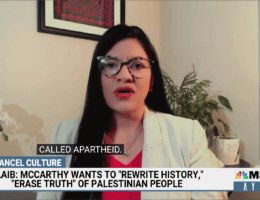
The 75th anniversary of the Nakba brought unprecedented coverage in American media of the Palestinian experience.

The Israeli government is pushing member countries to boycott the United Nations’ first official commemoration of the Palestinian Nakba.

On the 75th anniversary of the Nakba, the violent eviction of Palestinians from their homes and their land, we must reaffirm that freedom is incomplete without the freedom of the Palestinians.
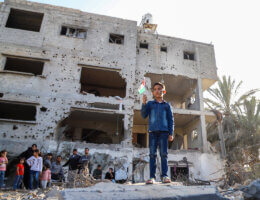
On the Nakba’s 75th anniversary, the Zionist war against Palestinian refugees is alive and well, as refugee camps continue to be besieged by the Israeli army in the attempt to quash resistance.

Despite the continued denial of the Nakba by Zionists, Palestinian refugees have not forgotten what was done to them. And more than four generations later, they have not given up on the hope that they will return.
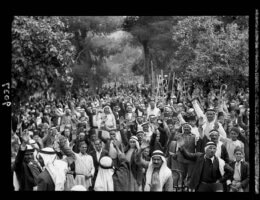
Palestinians and Arabs have been active agents of resistance against colonialism and imperialism since before the Nakba, and the legacy of this anti-colonial resistance lives on today.
Nakba is 75 years of what is happening to us, not what happened.
Nothing remains. But in the traces– Everything remains.
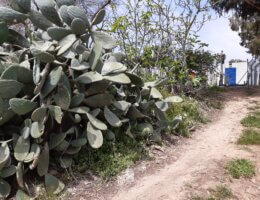
Jonathan Ofir grew up on a kibbutz and was never told of the destroyed Palestinian village upon which it was built. But some signs remain, like the cacti which Israelis have attempted to appropriate, but signify the deep Palestinian ties to the land.
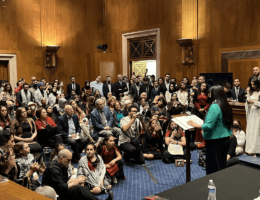
The Israel lobby group ADL tried to stop the Nakba commemoration at the Capitol by saying that Rashida Tlaib had slandered Israel. The historic ceremony was carried off thanks to Bernie Sanders.