Key Developments (May 9-11)

- On May 9 Israel launched “Operation Shield and Arrow,” a preemptive attack on Gaza that has so far killed 28 Palestinians, including 6 children. According to the Palestinian Ministry of Health, 93 people have been injured. The first airstrikes on May 9 targeted senior commanders of the Palestinian Islamic Jihad movement, and assassinated three of the movement’s leaders. At least one of the commanders was killed, Tareq Azz al-Din, was targeted while he was at home. The airstrike killed him and his two young children, Mayar, 10 and Ali, 8. On Wednesday night, May 10, another targeted airstrike assassinated PIJ leader Ali Ghali, along with his brother. The airstrike targeted a residential tower in the southern Gaza Strip area of Khan Younis.
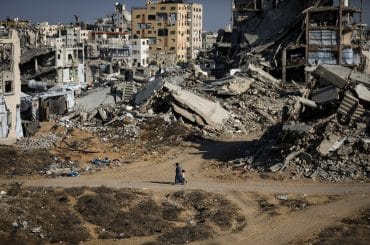
- Despite news that an Egyptian-brokered ceasefire was in the works, airstrikes continued into Thursday, with hundreds of retaliatory rockets fired from factions in the Gaza Strip. Mondoweiss’ Gaza Correspondent Tareq Hajjaj reported that Gaza’s sole power plant is close to running out of fuel and that on May 11, the third day of the Israeli offensive, five buildings in Gaza were completely destroyed, including 19 residential apartments. Additionally, 314 residential units were partially destroyed, 28 of which have been deemed uninhabitable. Since Israel’s operation began, 46 families in Gaza have been made homeless.
- Two Palestinians were killed on Wednesday, May 10 in the town of Qabatiya, in the Jenin district of the northern occupied West Bank during an Israeli army raid. According to local reports, Israeli forces raided several homes in the town, sparking confrontations with local residents, among them armed confrontations. Israeli forces reportedly opened fire on a vehicle in the town, killing two Palestinians and injuring a third. The two who were killed were identified as Ahmad Jamal Assaf, 19, and Warani Walid Qatanat, 24. One day later, on May 11, the third Palestinian succumbed to his wounds. He was identified by Wafa News Agency as Aws Kmeil, 30. Israeli forces released a statement claiming that the young men in the car opened fire toward Israeli forces and that soldiers “responded with live fire”.
- A 66-year-old Palestinian man was killed by Israeli forces on Thursday, May 11, in the Nur al-Shams refugee camp in the city of Tulkarem in the northern West Bank. The Palestinian Ministry of Health identified the man as Ghazi Yousef Shehaab. He was reportedly shot in the stomach during an Israeli army raid on the camp Thursday morning and succumbed to his wounds later in the afternoon. At least one other Palestinian was injured during the raid on the camp, and four Palestinians were arrested by Israeli forces, according to local reports. A total of 23 Palestinians were detained by Israeli forces during raids on May 11, according to Wafa. Another 28 Palestinians, including six minors, were arrested in raids on May 10.
- The Israeli army demolished a Palestinian primary school for the second time in less than a week. On Sunday, May 7, Israeli forces demolished the Jubbet al-Dib school in the southern Bethlehem area, leaving dozens of schoolchildren without a school. Activists rebuilt a makeshift school shortly after, and on Wednesday, May 10, the school was destroyed again. The EU-funded school serviced children from the village of Jubbet al-Dib and the nearby Beit Ta’mar, both remote Bedouin communities. Prior to the building of the school in Jubbet al-Dib, the children had to walk for two miles to reach their school. The school was demolished as part of a petition by the settler group Regavim, who petitioned Israeli courts to demolish the school, claiming it was built “illegally”. Appeals by Palestinians to retroactively legalize the school were denied. According to Haaretz, the final court ruling, which ruled in Regavim’s favor, based its decision “on an official opinion issued in 2018 claiming the school had safety issues and could collapse in the event of an earthquake.” The EU condemned the demolition, saying the move is “illegal under international law, and children’s right to education must be respected. The EU calls on Israel to halt all demolitions and evictions, which will only increase the suffering of the Palestinian population and risk inflaming tensions on the ground.”
In-depth
A recent article by Abdaljawad Omar in the Arabic-language 7iber Magazine addressed the concept of “the unity of fields” in connection with Israel’s latest war on Gaza (dubbed “Operation Shield and Arrow”). Originally emerging during the Gaza war two years ago in May 2021 and the Unity Intifada of that same month, the phrase “unity of fields” was meant as a way of linking Palestinian struggles in their different geographic locations, from the West Bank to Palestinian communities with Israeli citizenship to the besieged Gaza Strip. Omar’s article charts how this concept has evolved during the current Israeli assault, and how the “unity of fields” now aspires to become a means of raising the price of colonial aggression, whether in West Bank towns, in the al-Aqsa compound, or inside Israeli prisons.
But first, it is important to explain how the above-mentioned “fields” first widened and extended following the Unity Intifada and the May war of 2021. At the time, the popularization of “unity of fields” was meant to describe a united resistance agenda across Palestinian geographies and diverging political tendencies, something akin to the concept of the “united popular front” of previous decades in the history of the Palestinian struggle, albeit unencumbered by the ideological baggage associated with that strategy.
What was most notable about this seemingly amorphous concept is that, for the first time in nearly two decades, Palestinian resistance, whether armed or unarmed, was no longer confined to a single territorial enclave. Gaza was no longer to bear the brunt of human sacrifice, nor the burden of confrontation with Zionist colonialism alone, and for the first time, the West Bank was not only rising up in a series of so-called “lone wolf” operations but was also joined by Palestinians from ‘48, long marginalized but never completely forgotten.
For the first time also, the resistance factions in Gaza — whether Hamas’s Qassam Brigades or the Islamic Jihad’s Saraya al-Quds — were launching rockets to defend the al-Aqsa compound from Zionist attacks on the holy site that had left hundreds injured. This is what the resistance factions called “Operation Sword of Jerusalem,” and through it, the resistance was hoping to no longer remain on the defensive from colonial aggression, but to become an active deterrent against such provocations.
As if prophetically, two years later, those united “fields” have only deepened and widened, and the West Bank has seen the resurgence of armed resistance groups from Jenin to Nablus to Jericho and beyond, in part due to the role played by the instigation and funding of resistance factions in Gaza (most notably the Islamic Jihad). Precisely because of that role, Israel launched its supposedly “pre-emptive” strike against Gaza in August 2022 (“Operation Breaking Dawn”), which was meant to prevent the spread of armed struggle in the West Bank by dealing a blow to what Israel saw as the source of it all — the Palestinian Islamic Jihad’s leadership in Gaza.
Breaking Dawn did not have its intended effect, as the armed resistance only continued to spread in the West Bank throughout the following year, despite a string of brutal assassinations of resistance fighters, several massacres in Nablus and Jenin, settler-led pogroms, and near-daily arrests.
Now, this recent attack on Gaza has already led to the death of 28 people, the vast majority of whom are civilians and children. Yet the stated aim of the strike was to kill three senior Islamic Jihad leaders responsible for coordination with the armed groups in the West Bank. For the second time in under a year, Israel was attempting to decide the fate of the West Bank in the Gaza Strip. But more than that, it was launching a war against the united fields.
This context is crucial for understanding what is happening now in Gaza. It is not only a war for the survival of the resistance in Gaza but for the survival of what is yet to come — a united resistance strategy that can put a limit to what Israel can get away with without suffering consequences. This is what Abdaljawad Omar emphasizes in his piece:
“The concept of the unity of fields embodies in our imagination that which is possible, but which in reality remains latent — the ability [of the resistance] to rise above a number of tensions and divisions, not only within Palestine’s fragmented geography but also in the region as a whole, in order to reach a kind of unity in the decision of war and peace. This is why this concept is a threat to the colonizer, because it is no less than the reproduction of an old Arab dream, albeit in a different shape and form, and within different historical parameters. It is the dream of building Arab and Islamic societies that are capable of challenging the Zionist presence and putting an end to it. This is no easy task, as it requires surpassing a number of isolationist and narrow nationalist tendencies, and because it comes at a time when there are forces seeking to root out Palestine from the Arab psyche. But it can be said that the embodiment of this unity in the field of war, and in fact the redefinition of every geography as a field of war, is in and of itself an act that has already robbed those geographies of their isolationist tendencies and narrow interests. Now we see the emergence of a new imagined cartography, one that turns Lebanon, Syria, the West Bank, Gaza, and Jerusalem all into fields of battle, with a single common orientation and promise.”
Here, Abdaljawad Omar is not only referencing the latest war on Gaza but the events of previous months, when rockets were fired from southern Lebanon into Israel in response to the provocations at the al-Aqsa compound in April. At the time, the Israeli army seemed to enter a kind of panic, as it was the first time that rockets were being launched from anywhere other than Gaza. The Israeli response was muted at best, launching limited airstrikes only on specific sites from which the rockets were launched (claimed by Israel to be Hamas targets) for fear of instigating a wider response from Lebanon that would convert it into a regional war on multiple fronts — Gaza, Lebanon, and the West Bank.
A month later, Palestinian resistance icon and martyr Sheikh Khader Adnan died in Israeli prison while on a hunger strike protesting his imprisonment. A prominent symbol of defiance in a time without symbols, Adnan was also a member of the Islamic Jihad (although not in its armed wing), and so the Islamic Jihad in Gaza launched a barrage of rockets into Israel then as well. The Israeli response, as with the response to the Lebanon rockets, was also limited in fashion compared to its usual Gaza strategy of “mowing the lawn.”
Yet those two incidents — the rockets from Lebanon after the Aqsa invasions, and the rockets from Gaza after the death of Adnan — were too unprecedented for Israel to ignore. Added to the proliferation of armed resistance operations in the West Bank, the Israeli government planned for its current blitz on Gaza at least a week in advance, bypassing the security cabinet and limiting the decision-making circle to Prime Minister Netanyahu and senior army and security officials.
Therefore, the current war on these quickly consolidating fields is not so much a war on what they currently are, but on what they may become. Abdaljawad Omar argues that “despite the importance of the new phrase, which the resistance and its different forces have propagated as a concept guiding its actions, it is in essence an attempt to achieve a state that resembles the agreements that bound several Arab states in joint war pacts in the middle of the twentieth century, such as the Egyptian-Syrian Mutual Defense Pact [of 1955].”
Although the reality of the resistance presence in Palestine and the region is nowhere near this advanced, in this current phase the concept of the unity of fields, according to Omar, seeks to rise above the atomization of Palestinian resistance by building a common strategic and political orientation that renders “a resistance battle in Jenin, despite being a local act entangled in its own specific dynamics, part of an umbrella that in turn binds other acts in Gaza, Lebanon, and Syria together.”
Mondoweiss Highlights
Israeli attack on Gaza kills entire families in effort to assassinate resistance leaders, by Tareq Hajjaj
A year after the assassination of Shireen Abu Akleh, by Shatha Hanaysha
Important figures
- 148 Palestinians have been killed by Israeli forces and settlers since the start of the year, according to the latest figures from the Palestinian Ministry of Health. Those numbers include 28 Palestinians who were killed in Gaza since Tuesday.