

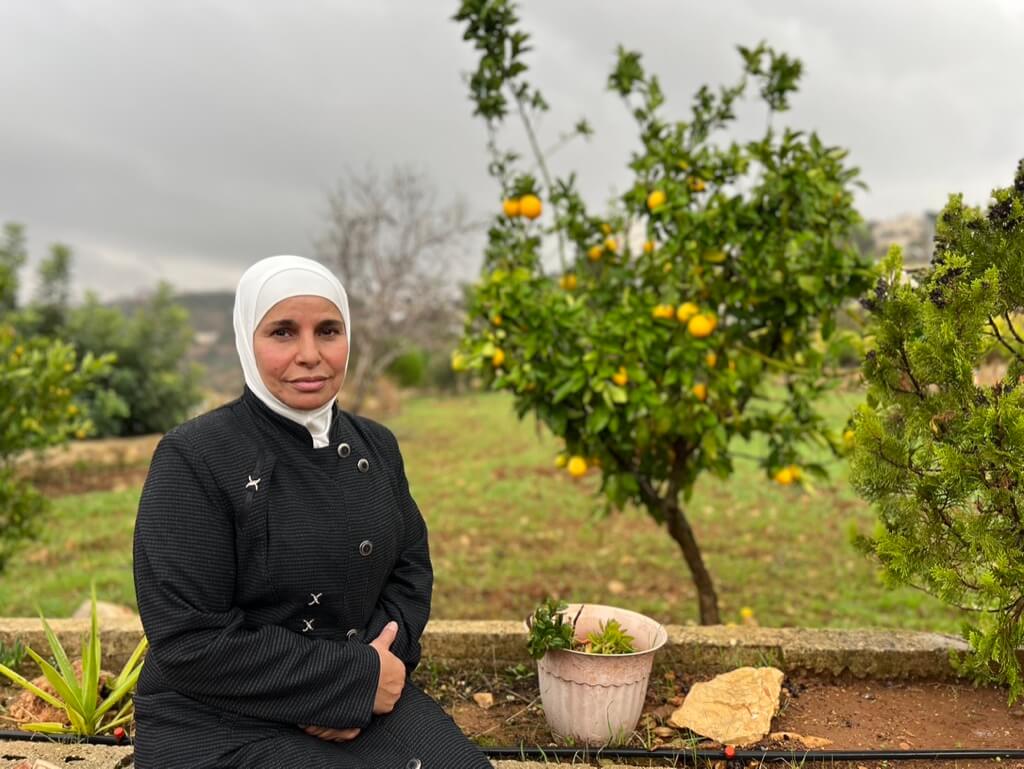
Citrus trees bearing plenty of low-hanging fruits dot the lush orchard of the Barghoutis’ home in the occupied West Bank.
Perched on a high hill in the village of Kobar, northwest of Ramallah, it overlooks vast green plains. The orchard is alive with the winter rain, yet the hands that planted it never got to see it bloom.
Aman Nafi’, a gentle, 59-year-old woman, pulls a stack of photos placed on a cupboard next to the front door. They are of her husband, the longest serving Palestinian prisoner Nael Barghouti, during the brief three years he spent outside Israeli prisons since 1978.
“Nael was re-imprisoned after he planted all these trees – they grew in his absence,” Nafi’ tells Mondoweiss in sorrow.
“He never got to taste the fruits of his labour,” she continues, holding up a photo dated June 16, 2013, of a white-bearded Barghouti planting a tree in his yard.
The issue of Palestinian prisoners has risen to the fore in parallel with Israel’s ongoing assault on the besieged Gaza Strip, in which more than 27,000 Palestinians have been killed – the majority of them women and children – while 61,830 others have been wounded, in what has been described globally as a genocide.
Since October 7, when the Gaza-based Hamas resistance group launched an attack on Israeli territory killing 1,139 people, Israeli occupation forces have carried out daily mass arrests in the occupied West Bank and eastern Jerusalem.
At least 6,460 Palestinians have been arrested in the past 119 days in what rights groups deem collective punishment, the majority of them held without trial or charge under Israel’s “administrative detention” policy.
At least seven Palestinian prisoners have also died or were killed in Israeli custody – and dozens of others with severe to moderate injuries – the vast majority of them in the days and weeks after their arrest. Countless testimonies, videos and images of Israeli soldiers torturing, humiliating, beating, and stripping naked Palestinian men during arrests have emerged, spurring comparisons online with the torture carried out by United States forces in Iraq’s Abu Ghraib prison in 2003.
“This is a revenge operation and collective punishment,” says Amany Sarahneh, spokesperson for the Palestinian Prisoners Society (PPS).
“It is an attempt to scare Palestinians and deter them from resisting their occupation in any kind of way,” she told Mondoweiss.
‘Three-hour assault’
On December 24, Israeli prison authorities severely beat Barghouti, who is a 66-year-old man who has spent 43 years – more than two thirds of his life – behind bars.
The PPS said the assault “lasted approximately three hours”.
“He was beaten with batons and rifle butts all over his body, and the attacks were concentrated on the chest and ribs area, causing him to suffer fractures and bruises,” the group said in a statement, details which Nafi’ confirmed.
While her husband is a household name, Nafi’ is careful not to refer to him as an individual case. With every sentence, she makes sure to place him in the wider context of the severe conditions for all Palestinian prisoners.
“It’s not just Nael. There are people who were killed in prison. We are worried about the prisoners as a whole,” she says. “They are sleeping on floors, they have no contact with the outside world, they are being beaten, they have no food, no water.”
Aside from the overcrowding, the serious decrease in food portions, and the beatings, Israeli prison authorities have for the past four months majorly restricted yard time and shower time for detainees, cut electricity and hot water, and shut down the canteen which prisoners use to buy food and basic supplies.
The Addameer prisoners rights group said in a statement last month that “occupation authorities have worked, since the first day of the aggression [on Gaza], to torture and take revenge on the prisoners in a major and deliberate manner,” describing the conditions as “tragic.”
On January 15, Israeli forces also raided Nafi’s home in Kobar, among other homes from the Barghouti family, causing widespread destruction to furniture and belongings.
“My husband has been in prison for 10 years since his last arrest. There is no reason for their raid other than revenge. They were deliberately breaking things, throwing our clothes and personal belongings on the floor, ruining our flower pots,” said Nafi’, adding that the Israeli army confiscated her car.
‘Forbidden from the sky’
The story of Barghouti is emblematic of the extremely difficult experience of imprisonment by Israel, and the suffering of prisoners’ families.
Nafi’s eyes light up with the excitement of a child when describing her husband. “Nael has a beautiful personality. He is playful, highly educated and considerate,” she says.
Barghouti was arrested at age 20 from his parents’ home in Kobar and sentenced to life within Israel’s discriminatory military court system, over charges of participating in the killing of an Israeli occupation soldier in 1978.
He was released after 33 consecutive years behind bars as part of a prisoner exchange deal between the Hamas movement and Israel in 2011.
Nafi’, who wed Barghouti one month after his release in 2011, spent less than three years with her new husband before he was taken away from her.
“We did not leave each other’s side except for a few hours during those 31 months,” she says.
“Nael would go up on the roof every night to stare at the stars,” she recalls. “He was forbidden from being able to see the sky for 33 years.”
In the mornings, she explains, Barghouti would spend his time “planting orange and peach trees, along with tomatoes and cucumbers, among other things.”
“He would help me out around the house,” says Nafi’, “but he couldn’t cook. He tried, but he was bad at it,” she said with a chuckle.

Systematic re-arrest of former prisoners
As part of the 2011 prisoner swap under which Barghouti was freed, 1,027 Palestinians were released in exchange for one Israeli soldier, Gilad Shalit, who had been held by Hamas in the besieged Gaza Strip.
On one night in 2014, Israeli forces re-arrested 70 of those released during the 2011 deal. Some 48 prisoners remain today, the majority of them elderly men, including Barghouti. Many had their original sentences reinstated.
The same happened with Barghouti in 2017, three years after his re-arrest and while he was still in custody. The grounds on which the Israeli military prosecution re-instated his life sentence was based on “secret evidence.”
Under Israeli military order 1651 and in violation of the release agreement, re-arrested former prisoners can have their original sentences reinstated by a military committee on the basis of “secret evidence,” to which both the Palestinian prisoner and their lawyers are denied access.
The 2011 deal was the largest prisoner exchange prior to the most recent one that took place in November and December, during Israel’s ongoing assault on Gaza.
A seven-day humanitarian ceasefire between Israeli occupation forces and the Hamas armed group in November 2023 saw Egypt and Qatar broker the release of 240 Palestinians in exchange for 105 Israelis and foreign nationals held in besieged Gaza since October 7.
Israel has already violated the deal and re-arrested two of the Palestinians it released during the truce.
One of the people re-arrested, Yousef Abdullah Khatib, was initially detained as a minor on September 2, 2023 — at the age of 17 — and held under administrative detention without charge or trial.
He was released on November 27, only to be re-arrested again on January 23.
The PPS said Yousef’s re-arrest is a “dangerous development” and a “clear violation of the release deal.”
Speaking to Mondoweiss, Sarahneh noted that Israel’s re-arrest of former prisoners is a long-standing policy.
“If you look at the vast majority of people being arrested now, they are former prisoners,” she said. “They are holding people without trial or charge – people who have served out their previous sentences, and do not have any new charges against them.”
In an interview with local media from their home in the Aqbet Jaber refugee camp in Jericho in the occupied West Bank, Yousef’s father Abdullah, called for intervention to release his son.
“My son was released as part of a legal agreement that the whole world witnessed under the guardianship of the Qataris and the Egyptians. They [Israel] violated the agreement, by re-arresting a child, a minor. He was arrested, threatened and intimidated,” said Abdullah, who is handicapped.
Yousef’s mother Nisreen, said her son was “badly humiliated” while in detention.
“They [Israelis] would bring one plate of rice for eight prisoners in one cell, and the food would be burned. They would only be allowed out of their rooms for 15 minutes to shower a day,” she told Mondoweiss.
Happiness over the release of her son was short-lived, when less than two months later, occupation forces took Yousef into custody again after being summoned to Beit El for interrogation under threat.
“I felt like I wanted to dig a hole and hide my son in it. I didn’t want anyone to take him from me again,” she said.
Zena al-Tahhan
Zena al-Tahhan is the web correspondent for Al Jazeera English in occupied Jerusalem.

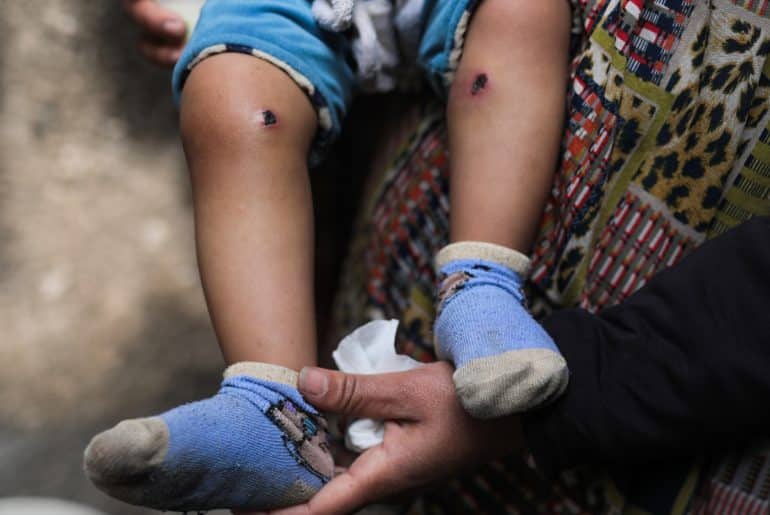

War on Gaza: Israel imprisoned 82-year-old Palestinian woman as ‘unlawful combatant’Fahamiya Khalidi, who has dementia, was arrested inside a school in Gaza and then taken to Damon prison where she was refused a lawyer
The Israeli army arrested and imprisoned an 82-year-old Palestinian woman in Gaza under a law aimed at detaining unlawful combatants, Haaretz reported.
According to the report, Fahamiya Khalidi, who suffers from Alzheimer’s, was sheltering at a school in Gaza after she was forcibly displaced due to the ongoing conflict.
In December, she was arrested and imprisoned under the Incarceration of Unlawful Combatants Law, and taken to Israel’s Damon Prison. She was released on 19 January.
Khalidi’s caregiver, who had to stay with her at all times because her children live abroad, was also arrested and remains in custody. ……..
Since Israel launched a ground invasion of Gaza in late October, its forces have detained hundreds of civilians from their homes or while they were fleeing fighting through “safe corridors”.
Some have been released after interrogation but many have been taken to undisclosed locations, including mothers who were separated from their babies.
The Palestinian Authority’s Commission of Detainees and Ex-Detainees Affairs on Sunday confirmed at least 142 females – including elderly women and infants – are currently held in Israeli jails.
In a joint statement with the Palestinian Prisoners’ Club, the commission warned that “horrific crimes” have been committed against the female prisoners.
https://www.middleeasteye.net/news/war-gaza-israeli-forces-imprisoned-82-year-old-palestinian-woman-alzheimers-two-months
Here We Go Again in the Holy Land
By Fred Reed
” ‘Nuther day, ‘nuther few morgue loads in Gaza. It has become almost boring, 25,000 dead and counting. Should we go for a record?
But questions do arise to reinvigorate flagging interest. What kind of human will intentionally bomb a hospital? Or a refugee camp? Is there nothing so foul that an Israeli pilot will not do it? What could be more cowardly? What would it take to get you, the reader, to bomb a hospital’
Of course it is not the scale of what Israel is doing, but the dogged, unrelenting coldbloodedness of it, its shamelessness. It would never occur to a military man, Israeli or otherwise, to say, “No, I won’t do that.” In my decades of covering the armed forces I found officers often to be long on physical courage but almost always to lack moral courage. Soldiers pride themselves on following orders and if the orders are to bomb a refugee camp, well, the pilot was just following orders.”
https://informationclearinghouse.blog/2024/02/03/here-we-go-again-in-the-holy-land/14/
The hypocrisy of Mondoweiss makes me retch. Since October 7, this publication has carried not one article about the Israeli hostages, including children, held in dungeons in Gaza, has not interviewed one friend or family member of any hostage, has not sent one reporter or observer to a single community from which the hostages were kidnapped, has not directly interviewed one released hostage. It has only run pieces by others who claim to have researched and pooh-poohed their ordeal. And it has the gall to claim that it does “honest reporting” about Israel and Palestine! If Mondoweiss does honest reporting, Donald Trump is an honest presidential candidate.