

Words can empower, arm, and evoke sentiments that stimulate new ideas, worldviews, and policies. Being the only Muslim in the newsroom, I feared the language the Canadian Broadcasting Corporation (CBC) was using to talk about Palestinians and resistance could ignite similar emotions that justified the U.S. invasion of Iraq and mass killings of innocent civilians in 2001.
Days after October 7, 2023, I sat across from a CBC executive who appeared uneasy yet curious about my concerns over CBC’s coverage of Hamas’ attack on Israel. I was appalled by CBC’s lack of historical context between Israel and Palestine and the language used to defend Israel’s massacre of Palestinians.
The executive appeared empathetic but then quoted CBC’s stance on impartiality and the importance of “balanced coverage”. But, I argued, when crimes against humanity are being committed, there is no such thing as both sides to a story. There is only the truth.
After sharing my concerns with the executive, I was strategically dismissed from daily pitch meetings for a few weeks.
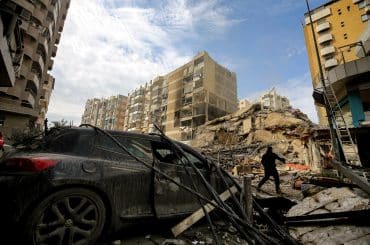
After sharing my concerns with the executive, I was strategically dismissed from daily pitch meetings for a few weeks. But as the war amplified and I returned to my seat at the table, I continuously brought up to my peers and editors that labeling genocide as the “Israel-Hamas war” falsely portrays that both Palestinians and Israelis are on even-playing fields. This narrative ignores that for 76 years, Palestinians have been forcibly ousted from their homes, confined to the barbed wires of the Gaza Strip, and have been under constant surveillance of Israeli settlers.
Instead of being receptive, senior journalists in the newsroom parroted CBC’s Language Guide, which highlights the language CBC uses.
The CBC Language Guide on the Middle East is a catastrophic oxymoron. The guide prohibits using the term “colonization” but encourages journalists to provide context by saying Palestinians “fled or were forced from their homes”. The targeted killings of Palestinians are referred to as “collective punishment” and the term “occupied” is “OK to use…if an adjective is needed”. “Apartheid”, a policy in which people are separated based on racial or ethnic criteria, is discouraged when describing the barrier between West Bank and Israel that separates Israelis from Palestinians. Finally, a senior producer told me that acknowledging Palestine is like referring to Persia – an outdated term that refers to a historical region – despite Palestine being recognized by the United Nations.
In January, The Breach reported that CBC acknowledged to a reader’s complaint that they reserve terms such as “massacre”, “brutal” and “slaughter” in reference to Hamas’ October 7 attacks but attribute neutral language around Israeli attacks because they are “carried out remotely”. The complainant, retired professor Jeff Winch, argued CBC’s biased language skews “the reader’s empathy towards Israel and away from Palestinians—a further dehumanizing of an already downtrodden people.”
I wondered then, was impartiality an excuse for complicity?
In formerly colonized countries, journalism is used as a decolonization tool to grant a voice to those silenced by authoritarian governments and institutions. In contrast, the CBC’s goal to report “impartially” by calling the invasion of Lebanon and growing death toll in Gaza the “Israel-Hamas war” reflects their own subjectivity and moral failure to side with justice.
Israel is undoubtedly a settler colonial force and Charles Mills explains in The Racial Contract that settler colonialism has various tools it uses to achieve the upper hand over colonized peoples – one being institutions that act as their right arm to justify their actions.
CBC’s journalistic practices are an offense to dozens of journalists like Shireen Abu Akleh, a Palestinian journalist targeted and killed by the IDF, and Arshad Sharif, a Pakistani journalist killed after vocalizing his stance against the Pakistani army. Both put their lives at the forefront of their work to stand for the greater good of humanity.
Instead, Canadian journalists who voice their moral duty to stand on the right side of history are silenced under the banner of objectivity—a concept that, although great in theory, is still man-made and injected with the biases of the master who leads the institution.
By the time I resigned, I had become a shell of myself. The constant tug-of-war between my conscience and CBC’s Language guide was an uphill battle that I could no longer fight.
By the time I resigned, I had become a shell of myself. The constant tug-of-war between my conscience and CBC’s Language guide was an uphill battle that I could no longer fight. The language used at CBC to describe the atrocities in Gaza was hammered into my subconscious and fogged my critical thinking. I began to believe that, perhaps, Israel may not be in the wrong. CBC is the truth-teller and it is I, the trouble-maker, who deserved the dismissive demeanor of my peers to whom I consistently pitched stories with Palestinian voices.
It took months to clear my mind and when it did, I understood that impartiality was a concept that was used to avoid confrontation from state actors, politicians, and Israeli lobbyists. By doing so, journalists working for mainstream Canadian media had cowered into the role of stenographers, leaving Palestinians defenseless in the face of genocide. But lying low to avoid backlash only empowers the wrongdoers to continue inflicting injustices on the oppressed, the language not only minimizes the brutality of the oppressor but justifies it.
Now is the time for journalists to use their power to change the opinions of the masses through the stories they write. After all, truth-telling is not only a moral human obligation, but for journalists, it is also a revolutionary act.
Thank you for having the courage to stand up to an entity that is clearly complicit in providing cover for the Apartheid state. And for your principled stance in resigning.
I used to watch and listen to the CBC when it did proper journalism. A time when they had real war correspondents like Neil McDonald. I have not heard the CBC, CTV, Globe and Mail or the Toronto Star, for example, criticize Israel for the killing of hundreds of Palestinian journalists. I guess Palestinian journalists are of a lesser god or, perhaps, as Israeli leaders would call them, “human animals”.
There are many examples that prove that the CBC no longer does journalism. The eye opener for me was a couple of years ago watching a political panel show discussing Ukraine. On the panel was a retired Canadian general who forcefully advocated Canada going on an immediate war footing. Not revealed to a gullible audience was that this individual sat on the boards of arms manufacturing companies. A conflict of interest that should have been revealed.
The most egregious example was when a CBC interviewer used the word “Palestine” when interviewing a photo documentarian (if I recall correctly) who had visited Palestine as part of their work. The day later, the interviewer was forced to apologize for his thought crime and—unbelievably—CBC excised the word from the broadcast so that anyone listening to the recorded version would not be offended.
I suspect the Israel centric coverage is the result of careerist who don’t want to lose their jobs and top-down pressure from government pressure, and an army of malevolent Israeli advocacy groups wanting Canadians to not understand the true nature of the Israeli state and its long history of barbarism toward the indigenous people of Palestine.
Welcome to 1984.
When the dust settles, and it will, the media will have to face its own day of reckoning. Their complicity, biased, one-sided reporting and use of Orwellian levels of language, used to justify and cover-up one of the worst genocides in modern history, will be analyzed for generations at universities around the world.
I listen to CBC Radio 1 (news and talk) all the time. I remember well the time a broadcaster was forced to apologize for speaking the word “Palestinian” on air.
But I have to say that some of the programs, e.g. The Current, have been broadcasting actual Palestinians. They interviewed Mosab Abu Toha this morning.
I actually wrote the CBC to complain a few days ago. I’ve wanted to do it many times but having read how those complaints are dismissed evev when they make it to the ombudsman, I kept telling myself it wasn’t worth my time.
But a few days ago, I couldn’t contain my rage after watching a report about the attack that burned people alive. Their report didn’t mention people burning, it said people had died and the areas with tents had burned. We all saw that horrific picture & they couldn’t even report it?
The media, all of them, are complicit & they’ve enabled Israel to commit these atrocities by normalizing the death – the horrific deaths & suffering of Palestinians. It’s unforgivable & the day will come when they are forced to take accountability.
But it doesn’t seem to matter because we went through this with the “war on terror” yet the media, politicians and much of the population has sunk back into open and loud disgusting racists Islamophobic, anti Palestinian literal hate speech as if it was totally normal.
We’ve learned nothing, I’m so disgusted by the society I’m part of. Who are these people. And just as bad, so many people are silent. Very disheartening. And I feel like I have no power to do anything about it. The media failed.