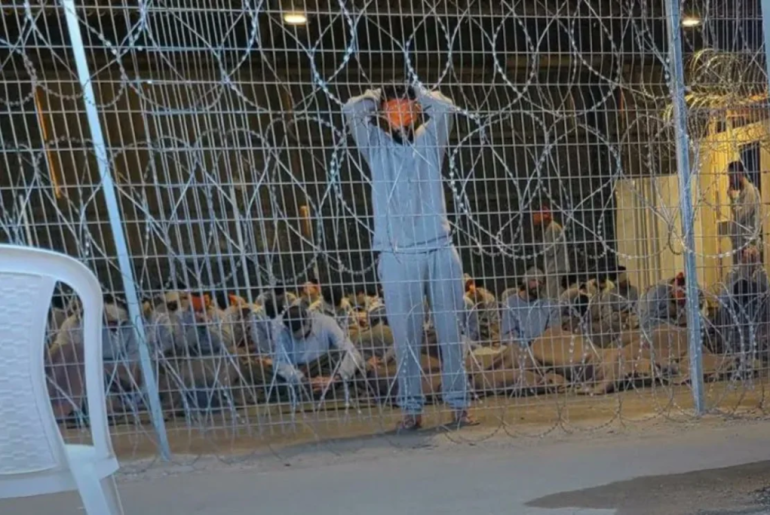
The night the Gaza truce was announced was different—no sleep, no rest, just a wait that resembled the eve of a holiday. But this time, the holiday did not bring children’s laughter or decorative lights. All eyes were fixed on the clock, waiting for the announcement —the declaration of the end of a 15-month bloodbath without pause.
Everyone was in a state of anticipation. Each person had their own answer to the one question everyone was asking among family and friends: “What’s the first thing you’ll do when the truce begins?”
My friend Jumana spoke in a hoarse voice, saying, “I will cry. Yes, I will cry a lot for those who left and will never return. For the martyrs who departed, leaving behind a void that nothing can fill.”
My friend Noor expressed another face of grief, mixed with hope, saying, “I will scream and dance on the rubble—not out of joy, but because the river of blood has finally stopped.”
Nada told me, “I was sitting next to my mother when they announced the truce. She quickly grabbed the pictures of my martyred brothers, Mahmoud and Ahmed, and started sobbing like never before. It wasn’t just silent tears; it was cries filled with anguish. She screamed, ‘Life will return to everyone except you. For me, the war starts now!’”
“I couldn’t calm her down—these weren’t just tears; they were delayed tears, grief that had been postponed for too long. I joined her in crying, but I was helpless in the face of her pain.”
Mohammed Al-Rayes, a family friend said he eagerly awaited the truce, not to celebrate, but to return to the north and search for the place where his daughters were buried under the rubble.
Mervat told me, “When I heard about the truce, I felt a lump in my throat. The first thing that came to my mind was my destroyed home. I now have no place other than this tent.”
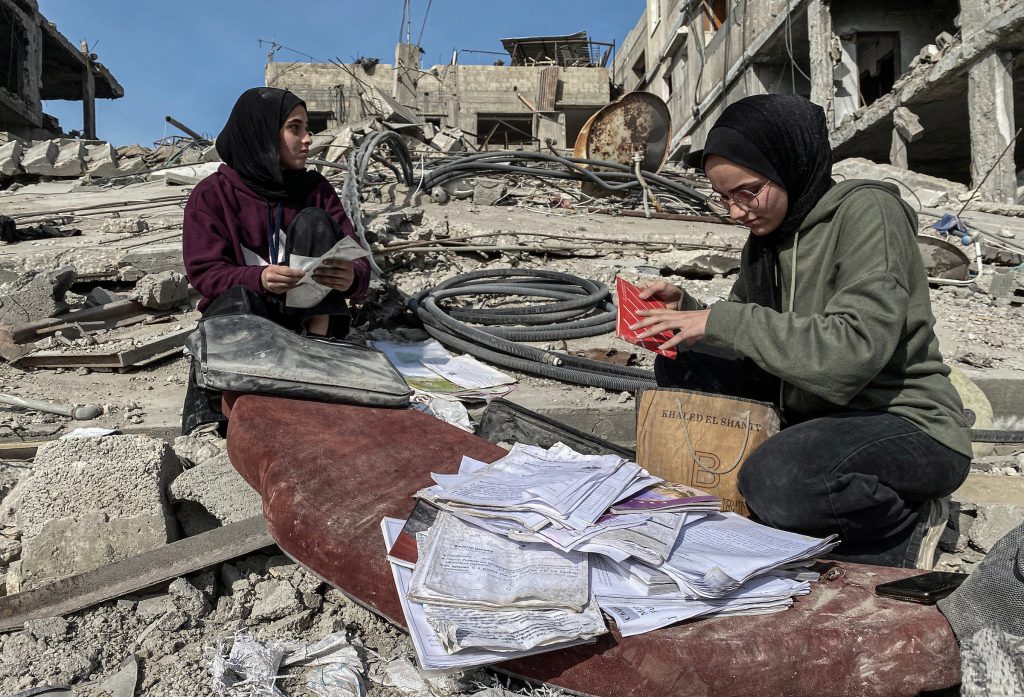
Rania told me via a phone call from Egypt that she was crying and laughing at the same time. She said, “I will return soon to embrace the soil of my homeland. A tent in my country is better than a palace in exile.”
Here is a conversation I had with Amjad, the brother of my martyred friend Hanin:
Me: “How are you now? There’s not much time left until the truce begins and the bloodshed stops.”
Amjad: “Finally, I’ll be able to retrieve the bodies of my family from under the rubble and bury them with the dignity they deserve.”
I couldn’t hold back my tears and cried before he did. Hanin was martyred along with her husband, daughters, and her entire family. For a whole year, their bodies remained under the ruins.
At that moment, I realized the truce is nothing but a time for all the delayed grief and sorrow.
My injured cousin Hazar spoke to me from the hospital. She said, “Everyone here is talking about the end of the war and the truce, but I lost my husband and became disfigured. My son, Osama, came to see me and didn’t recognize me. My body is burned, my limbs are shattered, and I’m undergoing continuous surgeries to implant metal plates. When I spoke to him, he screamed, ‘I want my mom and dad! You’re not my mom, you’re scary!’”
I couldn’t find words to console her. Her case is like many others. I told her, “This will all pass. The wounds will heal, and one day Osama will hug you again.”
With every repeated story, I felt that the truce is not a moment of joy. It is a moment for our suppressed tears to explode.

Every answer bled pain, emerging from a heart burdened with agony. A woman said she would start clearing the streets of rubble to welcome her loved ones who had been displaced to the south. Another refused to leave the south before retrieving her family’s bodies from under the rubble so she can bury them with the dignity they deserve.
When we look at the war, we find that the concepts of victory and defeat have changed. Is the truce considered a victory? From a religious perspective, some may see patience and resilience as a form of triumph. But from a human and material perspective, it is a bitter loss.
The loss is not just in homes reduced to rubble or hospitals and schools wiped out of existence. The real loss lies in the child who lost his legs and no longer knows how to play, the girl whose body was entirely burned and now fears her reflection in the mirror. The loss lies in the father who lost his children, the wife who lost her husband, and the orphan who sits alone, unsure how to rebuild his life.
The end of the war does not mean the end of suffering. We face thousands of destroyed homes, unburied bodies, and people with permanent disabilities. We now lack hospitals, schools, and even the basics of life.
But despite everything, we have learned a lesson. The veil of fear has been lifted from our eyes. We have started to process the shock and face reality, no matter how bitter. We are no longer the same. We have been changed forever.
Before the truce was announced, the attacks intensified wildly, as if death wanted to claim as many lives as possible in the final moments. I spoke to my loved ones, saying, “Hold on to life. Stay away from the streets and gatherings. Don’t die in the last moments.”
Those moments before the truce was declared were filled with hope and fear, joy and sorrow. They are the story of every Palestinian who lived through this war—a story of a people who bore pain, clung to life in the face of death, and stood amid the ruins of their cities and dreams, trying to rebuild what the war destroyed, even as their souls remain burdened with memories and wounds.
Soha Ahmed Hamdouna
Soha Ahmed Hamdouna is a 27-year-old Palestinian from Gaza, a wife, and a mother of two daughters. She is a graduate of the Faculty of Engineering and Information Technology from Al-Azhar University.