

On November 23, Israel assassinated Hezbollah’s chief of staff, Haitham Tabtabai, before the one-year anniversary of the signing of the “ceasefire” between Israel and Lebanon could be commemorated. That so-called agreement can now be declared null and void.
Hezbollah ceased fire, but Israel never did. In the year since signing it on November 27, 2024, Israel has escalated its daily attacks on southern Lebanon, the Beqaa Valley, and Beirut, recording over 4,500 violations of Lebanon’s land, air, and sea borders.
The assassination of Tabtabai is the culmination of a year-long process of periodic Israeli provocations meant to draw Hezbollah back into an open confrontation. But Hezbollah, weakened by Israel’s successive attacks since 2023, has not responded.
In the lead up the November 2024 agreement, the Lebanese resistance movement weathered several blows, from the infamous exploding “pager” attacks to the assassination of Hezbollah’s iconic secretary general, Sayyed Hassan Nasrallah, alongside most of the party’s military leadership. The escalation happening today bears the same features. The tactics are familiar, the aim is still the same, but the players and the scale have shifted: the Americans are now directly implicated in the dynamic.
Now, in addition to the ongoing Israeli attacks, Hezbollah faces the greatest pressure it has experienced since its formation, this time centering around a singular Israeli-American condition: disarmament.
In August of this year, caving to American demands, the Lebanese government agreed to disarm Hezbollah before the deadline set by the U.S. — the end of December. With less than a month left before the Lebanese government has to answer to the Americans, and as Hezbollah declares that it will not hand over its arms, all eyes are now on what the government might do — and what further escalation Israel might undertake to force Hezbollah’s hand.
The lead up to the disarmament ‘proposal’
It was quite the busy summer for American diplomats, especially Tom Barrack, the U.S. special envoy to Syria and former U.S. ambassador to Turkey, who was reportedly put in charge of Lebanon’s “dossier” in May 2025. Barrack was joined by Morgan Ortagus, the deputy presidential special envoy to the Middle East, on back-and-forth visits to Lebanon throughout the summer, culminating in their delivery of a U.S. disarmament proposal on August 7, 2025, two days after the Lebanese government’s historic decision on August 5 to disarm the organization.
But the U.S. proposal was much less a proposal than it was a threat. The plan, described in a copy of a cabinet agenda reviewed by Reuters and briefed by U.S. envoys, ties Hezbollah’s disarmament to a phased Israeli withdrawal from five hilltops in south Lebanon alongside the granting of reconstruction aid; otherwise, Lebanon can forget about the international guarantees meant to secure a ceasefire.
The American proposal also imposed a tight deadline on the government: to begin the disarmament process on September 1 and complete it by December 31.
Following the government’s decision, the Lebanese Army was instructed to develop a plan and submit it by the beginning of September. The day after the announcement, an 11-year-old child was killed by an Israeli airstrike.
On August 25, 2025, Benjamin Netanyahu’s office released a statement congratulating the Lebanese government on its “historic” decision, claiming that once disarmament has taken place, the Israeli army would consider “reciprocal measures,” including a “phased” reduction of Israeli presence “in coordination with the US-led security mechanism.”
What disarming Hezbollah entails
Disarming Hezbollah would mean stripping away all means of resistance to the Israeli occupation, thus reducing the group to just another passive political party in Lebanon’s overcrowded political landscape.
The government’s plan includes taking over all weapons, from heavy artillery down to light weapons, and dismantling the entire military infrastructure that liberated southern Lebanon in 2000 and acted as a deterrent against future full-scale wars and invasions of the country.
Simultaneously, the Lebanese Army launched a campaign to disarm Palestinian groups in refugee camps. The first stop was Burj al-Barajneh in Beirut’s southern suburbs, where Palestinians reportedly handed over “illegal arms” that had entered the camps, only 48 hours earlier. That handover offered an early glimpse of how the government intended to handle disarmament on the ground; the army had sent a truck or two to collect a few rifles and guns — very light weapons — handed over willingly by camp residents. No heavy arms, if any existed, ever appeared, thus producing a performative, obviously staged scene that was widely mocked on social media and seen as inconsequential rather than a serious first step toward disarmament.
The push to disarm Hezbollah, and the willingness to risk internal fighting, is itself a sign that Hezbollah still threatens the occupation. How far the Lebanese government is willing to go reveals the other side of the American coin.
Reactions to the government decision split into two striking positions: one hailing the move as a historic first step toward salvaging a broken state, a view which ignores Israel’s continued occupation of southern Lebanese territories after the ceasefire; and another that refused the plan outright, and not only from Hezbollah supporters.
On September 5, 2025, the Lebanese Army formally presented its plan to the government. Hours after the session, Minister of Information Paul Morkos announced that the plan had been adopted — but that its components would remain confidential.
Following that meeting, the disarmament debate largely disappeared from public view. The subject was, it seemed, not-so-safely tucked under the rug.
One element of the ceasefire, effective as of November 27, 2024, required the Lebanese Army to deploy across the southern Litani River, and for Hezbollah to withdraw north of the river. Hezbollah agreed to be disarmed south of the Litani, and the transition there was relatively smooth. The army reportedly found weapons caches in several locations and destroyed them. Since the ceasefire, the army has routinely “detonated remnants of the war,” with civilians regularly hearing explosions on top of Israel’s near-daily strikes in the south.
Why detonate these weapons instead of using them? Tom Barrack already answered in an unhinged interview with Hadley Gamble published on September 22, 2025: the Lebanese Army should not be equipped enough to fight Israel, only to fight Hezbollah internally.
The U.S. role
In that interview Barrack was unusually candid for an American diplomat. He said that although the U.S. was requesting the Lebanese government to disarm Hezbollah, Washington did not intend to equip the Lebanese Army in a way that would allow it to fight Israel. “We don’t want to arm them… so they can fight Israel? I don’t think so, so you’re arming them so they can fight their own people, Hezbollah. Hezbollah is our enemy,” Barrack said. Honesty can be refreshing sometimes, even though ten days earlier, the Pentagon had approved $14.2 million in military aid for the Lebanese army. But what would $14.2 million do in the face of the billions given to Israel yearly?
Meanwhile, the disarmament process in Lebanese politics remained deadlocked, at least publicly. The Lebanese government had been humiliated on August 26 when, a few weeks earlier, it acted on a deal that promised reciprocal moves from the occupation, only to realize that what Barrack has been saying from the start is true: America cannot compel Israel to do anything.
Barrack had returned to Beirut at the end of August, with Senator Lindsey Graham tagging along this time, and said that now that the Lebanese side had acted, he could not guarantee that Israel would act in turn. “You gotta hold your end of the bargain,” he said, even if Israel failed to reciprocate, and he urged Lebanon to disarm Hezbollah by the end of the year with no guarantees that Israel would stop violating the ceasefire or end its occupation.
During that same visit, his Western arrogance spilled over: he called Lebanese journalists “animalistic” and demanded they be “civilized.” At the same press conference, he insisted, dismissively, that “the idea of disarming Hezbollah did not come from me, it came from you, the Lebanese people.”
Senator Lindsey Graham said bluntly: “Israel’s never going to look at Lebanon differently until you do something different. And that is disarm the enemy of the Israeli people. So don’t ask me any questions about what Israel is going to do until you disarm Hezbollah.” He also warned that whether Israelis withdraw “depends on what you do,” and insisted the reason to disarm Hezbollah is “because it’s best for you.”
Today, Israeli strikes are increasing daily in the country. They’re widening the geographical scope and the targets: massacres are back on the table with the strike on the Palestinian refugee camp of Ain al-Hilweh that killed 13 teenagers playing football.
Every once in a while, the Christian far right makes a comment about how it’s all Hezbollah’s fault and that it should be disarmed. Other voices lowered the temperature of their rhetoric; the Lebanese Army released a statement condemning the actions of the “Israeli enemy,” saying that Israel’s actions are obstructing the completion of the army’s deployment in the south (by literally occupying the land). Washington got upset and canceled the Commander General Rudolf Haykal’s visit to the U.S capital.
The conditions that created resistance remain
There’s a bigger picture here that Donald Trump, Benjamin Netanyahu, and Lindsey Graham fail to recognize: people will never cease to resist. The conditions Israel is creating today in southern Lebanon are the same conditions its created decades ago that led to the formation of Hezbollah. Lebanese resistance will continue to take on different names, but its essence will remain the same.
Only a month before the government moved to disarm Hezbollah, people from the border village of Aita al-Shaab sent a letter to the president of Lebanon, Joseph Aoun, holding the state accountable for their security. Dated July 25, 2025, it warned that, “In light of this repeated neglect, we clearly declare that we are considering taking future steps to protect ourselves and our land, ensuring our dignity, security, and right to life.” The letter concluded: “Our security is not a luxury… but a right. Mercy to our martyrs, healing to our wounded, and freedom to every land that resists.”
Arms can be taken away, of course. But the conditions that gave rise to their need remain. Disarming Hezbollah under foreign stress will not extinguish resistance: it simply clears space for other actors to organize and continue the same struggle. The people of Aita al-Shaab made that clear.
So just another Trump crony (interestingly, his ancestry is Lebanese Christian). One thing Trump is really good at is finding the worst possible person for the job.
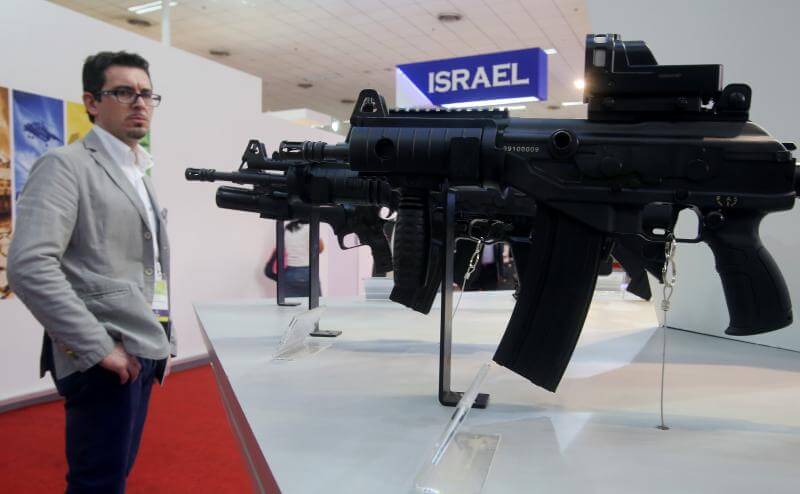
That gentleman you see in the photo is ( as the subtitle says ) Tom Barrack, the U.S. Ambassador to Turkey and Special Envoy to Syria, so it’s appropriate to draw attention to a bit of recent news concerning him: according to the Jerusalem Post,
US Special Envoy to Syria Tom Barrack appeared on Sunday evening to suggest that Israel is not a democracy while speaking at the 23rd edition of the annual Doha Forum in Qatar’s capital.
“We have never had a democracy in [the Middle East]…I don’t see a democracy,” Barrack said, adding that “Israel can claim it is a democracy, but in this region, what’s worked the best, whether you like it or you do not like it, is a benevolent monarchy.”
https://www.jpost.com/middle-east/article-879533
In all fairness his remarks are a bit cryptic, but if what he said is taken at face value it may be a sign that the U.S. government is ready to tell the truth.