
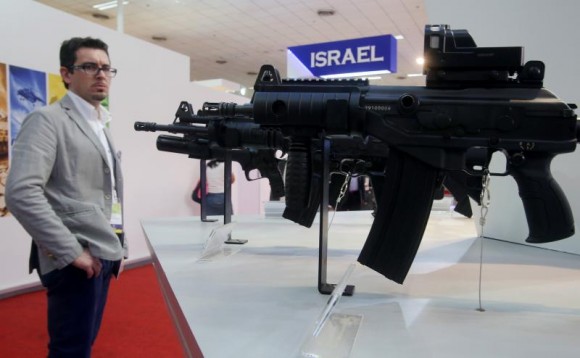
Around the two-year anniversary of Operation Al Aqsa Flood October 7, 2023 attack, Israeli Prime Minister Benjamin Netanyahu referred to the looming threat of a military embargo, stating that Israel must become “Super Sparta.” In doing so, Netanyahu re-opened an age-old debate in Israel on what is the sustainable path to maintain Jewish supremacy in the settler colony. Indeed, the reference to Sparta recalls Vladimir Jabotinsky’s Iron Wall essay in which he clarifies that the Indigenous Palestinians will never accept a European colonizer and that the Zionists will have to fight eternal war to realize their colonial project in Palestine.
While the “Super Sparta” reference is misleading in some respects by attempting to mystify Israel’s historic and ongoing dependency on the West, it does mark a significant departure in how Israel represents itself internally and to the world at large. By invoking it, Netanyahu upended the prevailing mythological and ideological terms through which Israel has narrated its relation to Western civilization. The Israeli education system teaches the Peloponnese wars as the first subject of history in primary schools. Israeli schoolchildren learn about the war between Sparta and Athens in an allegorical fashion. Sparta, exemplifying a militaristic warrior culture with the superior army and eugenic policies is represented as a fascist state in all but name, which is contrasted to Athens. Athens, with its colonies, democracy and pluralism is positively compared to the western Allies during WW2. The lesson for Israeli schoolchildren is that Athens won out by virtue of its good international relations, and Israel, by extension, would be wise to adopt an Athenian-inspired West-European political model in order to maintain and legitimate its imperial hold over the Middle East. Indeed, it has all too often been through its allusions to Athens, that Israel has attempted to assert its claim to being the “the only democracy in the Middle East” even while openly maintaining a political system in which only a certain group enjoys rights. In other words, asserting its likeness to the ancient Athenian model has enabled Israel to claim its status as a “friendly colonizer” palatable to the liberal west.
This can be seen in the aftermath of the 1967 Six Day War where Israel repeatedly, and successfully, positioned itself as a model of military prowess for the West through claims of unparalleled martial sophistication. After dispatching the Arab armies in “only six days,” the challenge was how to maintain a military occupation over a large civilian population without turning Israel into a garrison state. The Israeli military industry adopted a professional façade, marketed under labels such as counter-insurgency (COIN), counterterrorism, the occupation as a “laboratory,” “capital-intensive warfare” and after the September 11 attacks in the U.S as “homeland security.” In essence, advanced Israeli technology of surveillance and incarceration was sold as a force multiplier to allow a small number of soldiers and officers to control the lives of millions while minimizing interaction with them.
This image, which Israel has carefully cultivated over many decades, has sustained its relations with the EU to great effect. ELNET, the Israeli lobby organization and the European equivalent of AIPAC, uses liberal language and promotes images of co-existence, and has played a significant role in facilitating arms sales between Israel and Europe. It is this charade that enables figures like EU president Ursula von der Leyen to give her racist “make the desert bloom” speech in defense of Israel. This image has also served as the basis of Israel’s marketing strategy vis-à-vis the West at large and Europe in particular, which historically hinged on the argument that Israel possesses a technological solution for Europe’s problem: how to achieve security without harming liberty. In order to sell its weapons to Europe, Israel had to convince Europe that Israel is both secure and democratic. Indeed, Israeli technology was supposed to be attractive to European customers who wish to preserve the image of liberal democratic states respectful of human rights, but also keep “undesired” populations under control.
In the 2013 film The Lab, Yoav Gallant, who would become a fugitive of the International Criminal Court over his role in the Gaza genocide, summarized Israel’s marketing strategy thus: “There’s a lot of hypocrisy: they condemn you politically, while they ask you what your trick is, you Israelis, for turning blood into money.” Through “turning blood into money,” Gallant referenced Israel’s propensity for investing in “non-lethal” and “high-precision” military technology, which ostensibly minimizes civilian fatalities, and offers a ready-made technology of domination to be marketed abroad.
Netanyahu’s Sparta comparison sought to at least rhetorically upend this status quo and thereby mobilize the Israeli public to accept the hardships that could result from the potential absence of European military support. Unsurprisingly, then, Netanyahu’s remarks have been met with at least some Israeli opposition, led by Israeli politician Yair Lapid, who accused Netanyahu’s government of threatening to destroy Israel’s relations with Europe. In his short stint as foreign minister, Lapid prioritized repairing relations with the EU, favorably invoking the so-called Oslo “peace process” as a high point in Israeli-European relations.
Yet, Lapid is swimming against the general tide. Whereas prior to October 7 Israeli leaders had worked tirelessly over many decades to craft a sanitized global image as the “start-up nation” exemplifying sleek martial prowess, credentials in “homeland security”, democracy and boasting of having the “most moral” army in the world, since then the majority of Israeli leaders have effectively doubled down on the image of Israel as a security state fully dedicated to war and the pursuit of martial values that allusions to Sparta connote. In other words, reversing decades of unrelenting hasbara-led manoeuvring to disavow the Zionist project’s settler-colonial underpinnings and consistent “addiction to violence” in the words of Fayez Sayegh, contemporary Israeli leaders have now fully shed Israel’s longstanding attempts to represent itself to the world as a friendly colonizer palatable in Western capitals. Indeed, whereas hasbara strategies were explicitly devised in the 1980s as a means to counter Israel’s emerging image as a pariah state and colonizer, in the present it seems that the preferred approach has been to essentially abandon Israel’s prior pretences to justice, morality, law, or professionalism. As such, Israel is now increasingly being represented by its own leaders for what it is: an anachronism. The embrace of the “Super Sparta” thus signifies how Israel’s fundamentally backward-looking orientation is being increasingly unmasked by the ongoing genocide.
Israel’s new weapons marketing strategy
The unmasking of this orientation is reflected in the tactics and strategy deployed within the genocide campaign itself. Indeed, as Israel began the onslaught against Gaza, it relied heavily on weapons imported from the U.S, which were designed for high-intensity conventional war, such as heavy artillery, tanks, and jet fighters. The mask of the friendly colonizer has fallen off in favor of naked calls for genocide. This is also reflected in how weapons of occupation and apartheid are increasingly being supplemented and replaced with weapons of mass slaughter, evidencing a shift from a strategy of domination to elimination.
This transformation is also reflected in the shifting contours of production and export of Israel’s much-discussed weapons and security industries that have become visible over the past three years. Even before the genocide, Israeli arms dealers openly commented that the Ukraine war could become a bonanza for Israel, thereby prefiguring a reset in their approach to Europe. Yair Ramati stated in March 2022 that European states are loath to recruit more soldiers and build large armies, and instead look for technological solutions and more advanced weapons, thereby making Israel the purveyor of choice. From the outset, the far-right Israeli government sworn in in January 2023 also openly abandoned any trappings of democracy.
But Operation Al Aqsa Flood and the genocide that followed accelerated these shifts dramatically. The operation spectacularly shattered Israel’s mythology of technological and economic exceptionalism. On October 8 the New York Times noted how “a Hamas force that had been widely seen as a ragtag collection of militants, has delivered a psychological shock to Israel so great that its very foundations are being questioned: its army, its intelligence services, its government and its capacity to control the millions of Palestinians in its midst”, stressing that Israel’s “wealth, vibrant start-up culture and increasing acceptance in the Middle East could not forever mask a fundamental Israeli instability.” Ran Heilbronn called Israel’s technology dependency a “factory of blindspots.” The Operation’s fallout not only damaged the prevailing image of Israel’s sleek martial efficiency but also the parallel exceptionalist claim underpinning it, namely that Israel had successfully resolved its political problems through high-tech “solutions” and that such “success” was a global, replicable standard for the West and the wider world. In other words, Israel’s longstanding claim to successful “conflict management” collapsed and ceased to be convincing to foreign powers.
Israel’s shifting policy towards the indigenous Palestinian population from domination to elimination in the course of the genocide has required the development of a new legitimation strategy and marketing policy for Israeli weapons and security technologies abroad.
Initially, the strategy to address this collapse was to simply disavow such revelations. Neve Gordon observed in 2024 that Israeli military technology manufacturers would never admit this and, indeed, had “a vested interest in showing that the failure was not due to their technologies.” Yet, Israel’s shifting policy towards the indigenous Palestinian population from domination to elimination in the course of the genocide has required the development of a new legitimation strategy and marketing policy for Israeli weapons and security technologies abroad. Indeed, once genocide began to unfold and the arms trade became a critical economic and military lifeline for Israel, where every sector of the economy except for the arms sector was negatively impacted by the war, Israel’s new marketing strategy became increasingly defined and visible. Israel’s new marketing strategy for its weapons no longer promised a democratic or ‘humane’ technological solution for Europe’s political problems. Rather, Israeli officials simply argued that Europe now has no choice but to buy Israeli weapons. This was the case, they argued, because Europe’s (misguided) attachments to human rights, international law, and democracy have made it weak, and therefore dependent on the “tough” Israeli garrison state, which has no such qualms.
Israel’s new marketing strategy for its weapons no longer promised a democratic or ‘humane’ technological solution for Europe’s political problems. Rather, it argued Europe’s attachments to human rights, international law, and democracy have made it weak.
This strategy is apparent from three recent articles. The Economist published an article in September 2025 with the title “How Israel’s arms exports have made it sanctions-proof” and the Wall Street Journal followed up with an article in December 2025 with the title “Israel’s latest military tech: tested in Gaza, wanted by the West.” The Economist article replicates the argument of the “Palestine Laboratory”, namely Israel has turned the occupation into an economic resource by marketing its weapons as “battle-tested.” The article was immediately translated into Hebrew and published in Haaretz. Both articles make roughly the same argument: even if Europe may have aspirations for ethical procurement and international law, and European leaders at times criticize Israel’s brutality in Gaza and may even believe that they are legally obligated to impose sanctions on Israel, in the face of the Russian threat they have no choice but buy Israeli weapons.
A recent Drop Site News article similarly reports that at a recent military technology conference held in Tel Aviv, “Israeli weapons companies made some of their most explicit remarks yet connecting the value of their products to the real-world testing of that firepower on Palestinians in Gaza.” Based on remarks from Gili Drop-Heistein, executive director of the Blavatnik Interdisciplinary Cyber Research Center, the article suggests that “the past two years of slaughtering Palestinians with Israeli weapons technologies has helped to shift Israel from a “startup nation” to a major player in the global defense industry. The article concludes that this strategy appears to be working, noting that data on global arms sales “suggests the boasting at the conference reflects genuine upward trends for Israel’s weapons industry.”
What the Economist failed to consider, however, is that European militaries are making themselves vulnerable by equipping themselves with weapon components from a criminal state, which is facing growing outrage and even sanctions worldwide. Some of these protests have also had direct consequences, such as the recent hunger strike in the UK that forced the cancellation of a £2 billion contract between the UK government and Elbit systems. If such movements and sanctions take hold, this would leave these European armies missing key replacement parts and technical support once their arms suppliers would be held accountable. The process of Europe implementing a military embargo is slow, but the direction is unmistakable, as international law leaves no interpretation which permits arms trade with Israel. Sooner or later, European armies will likely find themselves cut off from the companies which supply and maintain key military systems.
Has Europe really learned from its history?
Even amid the growing public outrage against European complicity in the genocide and efforts by some European lawmakers to sanction Israel, there is mounting evidence to suggest that Israel’s shifting approach to Europe is bearing fruit. Even as customers in the Global South have reduced orders from the Israeli arms industry, Europe has increased them with European officials lauding Israeli martial prowess.
Maurizio Rossi, co-founder of Italy’s Innovation Way, called Tel-Aviv “the heart of global innovation” a month after Israel broke the ceasefire in March 2025 and committed the Ramadan Massacre. When the 12 months that the International Court of Justice gave Israel to withdraw from the Occupied Territory elapsed, the research organization SOMO revealed that the EU is the biggest investor in Israel, defying the court’s advisory opinion, which warned against financial and trade relations with the occupation. In recently announced arms export figures, the EU represents the single largest purchaser of Israeli arms, buying 54% of the total exports in 2024, up from 35% in 2023, with Germany being cited as the single largest individual customer. The EU has thus played a formative role in the shift of Israel’s economy of occupation to one of genocide, as documented by UN Special Rapporteur Francesca Albanese.
Although Israel’s military relationship with Europe has always been founded on hypocrisy, this hypocrisy is becoming ever more flagrant. In the past, as long as European leaders turned a blind eye to Israel’s apartheid, they could claim that Israel was an ally with “common values.” Yet, European leaders’ recent justifications for doubling down on their relations with Israel increasingly echo elements of Netanyahu’s embrace of Super Sparta. These officials ever more shamelessly embrace overtly colonialist language to justify giving Israel special treatment. Indeed, Europe’s prior deference to Israel as the “friendly colonizer” is increasingly being replaced with a new image, namely that of Israel as the attack dog of Europe. To quote German Chancellor Friedrich Merz from June 2025, “Israel is doing our dirty work for us.”
For Israel, which is the most militarized state in the world, the economic and military necessity of deepening its arms trade with Europe is obvious, but for Europe, it demands more explanation. To be sure, the arms trade is underpinned by rampant corruption, and the material benefits to European officials, politicians, and unions are extensive and well-documented. Israel’s largest arms import from Europe has been the Dolphin-class submarines from Germany, a deal that saved the giant German arms company ThyssenKrupp from bankruptcy. The political benefits are also significant, because Israel’s technology of oppression, surveillance and population control, tested on Palestinians and then marketed worldwide, is attractive to right-wing, racist and xenophobic European leaders who wish to emulate Israeli practices of state violence against Muslims, Arabs and refugees.
The growing recognition of Israel’s genocide in Gaza threatened to throw a spanner into the cordial military relationship between Israel and the EU, particularly after South Africa charged Israel with genocide at the International Court of Justice (ICJ) on December 29, 2023. Eighteen days later, the ICJ issued an interim order to Israel to cease actions under Article 2 of the Convention for the Prevention and Punishment of the Crime of Genocide. The order triggered an obligation for third-party states to suspend military ties with Israel, including the export, import, and transit of both weapons and dual-use items. The law is very clear on this issue. Israel ignored the ICJ orders. EU members are bound not just by the ICJ’s order and the convention against genocide, but also by the Arms Trade Treaty (ATT), the Common Position of the European Council, and by many specific treaties.
In response to South Africa’s case, Israeli legal scholar Amichai Cohen gave an interview to the Israeli media on January 8, 2024. Cohen did not object to Israel’s atrocities in Gaza but explained that Israel depends on arms imports for its operations in Gaza, and that if the ICJ issues interim orders to Israel to stop, Europe will no longer be able to sell weapons to Israel, as it is bound by international law and treaties. Cohen suggested that the U.S, by contrast, could be expected to scoff at international law, though it was itself not capable of providing Israel with all the weapons it needed to continue its assault in Gaza. While Cohen’s predictions about the U.S. were accurate, those about Europe proved naïve. In the face of the ICJ order, Britain, Denmark, France, Germany, Greece, Ireland, Italy, Poland, Spain, and Sweden violated the law and continued arms trade with Israel.
To justify this complicity, European leaders have repeated their longstanding mantra about “Israel’s right to exist” by treating the State of Israel as a representative of the Jewish people. While the Holocaust was a crime committed in Europe, not against Israelis but against Jews, an unflinching pro-Israel stance has been a core commitment of most European leaders, but especially those on the political right. As the moral justifications for European support for Israel as it carries out a genocide in plain sight have begun to ring ever more hollow, European leaders clearly cannot claim to have learned anything from their own genocidal history. What the ongoing insistence by European leaders that they need to trade weapons with Israel against international law reveals, however, is that moralistic arguments to support Israel by invoking Holocaust guilt have always been a ruse. Europe is now willingly making its armies dependent on Israeli military technology in ways that actively legitimize the kinds of racial discrimination, invasive surveillance, and chilling repression which this technology is self-consciously engineered to produce.
As we have shown, Israel’s abandonment of its prior script of successful “conflict management” was sparked in no small measure by the revelations of Al Aqsa Flood. But as it embarked on its vengeful genocidal campaign in Gaza, Israeli arms companies have begun to shift their marketing strategy accordingly. Instead of relying on claims to Israel’s exceptional expertise in the oppression of large civilian populations, arms companies have embraced a new mantra: only the ruthless and unscrupulous use of force can provide their customers real security.
Even though some customers of Israeli weapons have retreated when the mask of the “friendly colonizer” came off, a number of ministries of defense in European capitals have been unfazed. This ongoing commitment speaks for itself. These countries were never truly interested in trying to become less oppressive and violent. What the “friendly colonizer” image offered them was the opportunity to have things both ways, namely purchasing tools of subjugation whilst being able to maintain their Western, liberal credentials. But now that the friendly colonizer myth has fallen away and the new marketing strategy is taking hold, Europe’s commitment to Israel is now plainly apparent for all to see: naked political and economic support. Where things go from here is yet to be determined. But Europe’s liberal democratic credentials have already been badly damaged by these commitments.
Shir Hever
Dr. Shir Hever is the managing director of the Alliance for Justice between Israelis and Palestinians and a scholar of Israel’s arms industry. He is the author of The Privatization of Israeli Security (Pluto Press, 2018)
Rhys Machold
Dr. Rhys Machold is Senior Lecturer in International Relations at the University of Glasgow. He is author of Fabricating Homeland Security: police entanglements across India and Palestine/Israel (Stanford University Press, 2024). His scholarly articles have appeared in a range of scholarly Political Geography, Security Dialogue and International Political Sociology as well as popular outlets like Jacobin and Jewish Currents.
I was reading that ‘Iron Wall’ document – Iron Wall – you mean Jabotinsky actually used the word ‘colonisation‘ ??
“My readers have a general idea of the history of colonisation in other countries. I suggest that they consider all the precedents with which they are acquainted, and see whether there is one solitary instance of any colonisation being carried on with the consent of the native population. There is no such precedent. The native populations, civilised or uncivilised, have always stubbornly resisted the colonists, irrespective of whether they were civilised or savage.”