AIPAC has finally notched a couple wins this election season.
In Illinois’s 2nd district Democratic primary, Cook County Commissioner Donna Miller thwarted Rep. Jesse Jackson Jr. comeback attempt with the help of $4.5 million from the AIPAC-connected group Affordable Chicago Now.
Rep. Melissa Bean prevailed over progressive Junaid Ahmed in the state’s 8th district primary, where AIPAC shell PACs like Elect Chicago Women and Chicago Progressive Partnership spent over $4 million in support of Bean.
“I think it’s fair to say that Illinois made AIPAC the comeback kid,” a centrist House Democrat told Axios.
Is AIPAC really the “comeback kid”, though?
AIPAC spent roughly $5 million backing Chicago Treasurer Melissa Conyears-Ervin in Illinois’ 7th district primary, where she lost to Illinois state Rep. La Shawn Ford. Notably, this is the only primary where they were somewhat transparent about their spending, donating to Conyears-Ervin via their United Democracy Project Super PAC.
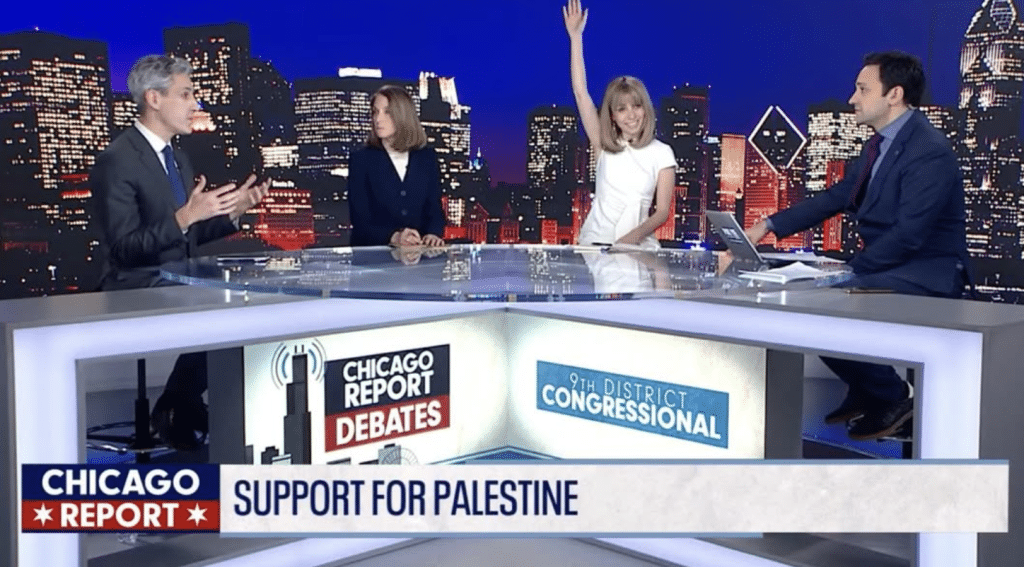
The most closely watched race was Illinois 9th district, where former Evanston Mayor Daniel Biss beat out a crowded field.
On social media, the lobbying group celebrated the loss of Palestinian American activist Kat Abughazaleh, who came in second, and other would-be Squad members, claiming that the results were a major triumph.
“Building a campaign around attacking Israel and demonizing pro-Israel Americans is a losing strategy” read one tweet.
“Illinois voters rejected half a dozen anti-Israel candidates across several heavily Democratic open-seat races,” said another. “These results further demonstrate that campaigns defined largely by opposition to AIPAC, our members, and the values we represent continue to fall short on election night.”
“Being pro-Israel is good policy and good politics!,” the group declared.
This is exceptionally rich stuff.
For starters, AIPAC chose to spend its money through shell PACs because they know Israel is tremendously unpopular among Democratic voters. This was largely true before October 7, which is one of the major reasons AIPAC created its own Super PAC in the first place. A recent NBC News poll shows that just 13% of Democrats view the country positively, and nearly 60% of them view it negatively.
If being pro-Israel was really good politics, AIPAC wouldn’t be hiding its fingerprints from the ads that it bankrolls.
It’s also amusing to see AIPAC take credit for stopping 6 “anti-Israel” candidates, when one of them is Bushra Amiwala, an activist who also ran for the 9th district seat. AIPAC spent last-minute money on an ad promoting Amiwala’s candidacy in hopes that they would cleave votes from Abughazaleh. Amiwala denounced the ad in an Instagram post.
However, most importantly, AIPAC backed a pro-Israel candidate in this race and spent money trying to stop Biss.
The organization spent at least $7 million supporting Senator Laura Fine. If there ever was a pro-Israel candidate, it was Fine, who calls the country a “beacon of democracy” and rejects all calls to condition military aid. Turns out this wasn’t “good politics,” as she came in third place.
AIPAC hit Biss with a barrage of attack ads, and of course none of them mentioned Israel at all.
Biss would certainly never be mistaken as pro-Palestine. He met with AIPAC at the start of his campaign, won’t refer to Israel’s actions in Gaza as a genocide, and even dumped a running mate over their BDS support when he ran for Governor in 2017.
However, as the base has shifted on this issue, centrists like Biss have had to tweak their position and criticize Israel more. An Overton Window shift is bad news for a group like AIPAC, which demands unfettered support for the apartheid state.
“There is no safe liberal Zionist, centrist position that a candidate can take that will keep AIPAC off their back,” JVP Action’s Beth Miller told Jewish Currents earlier this month. “AIPAC is making it very clear that if you support Palestinian rights at all, and you are a possible contender, then you’re on their list.”
On the campaign trail, Biss leaned into his opposition to AIPAC and its influence on U.S. elections.
“Everyone knows that that’s AIPAC’s money, but they’re hiding behind these new shell organizations to pretend otherwise,” he told reporters.
“The 9th District of Illinois is enormously diverse and includes a large and diverse and deeply engaged Jewish community, the overwhelming majority of which does not want to see this kind of hardline far-right politics,” he added. “And so we are going to do everything we can to tell the truth of not only who is providing this money, but what they are demanding in exchange.”
Biss specifically called out AIPAC while celebrating his victory on social media.
“This was one of the most hard fought, closely watched primaries in the country because this district is a bellwether for the entire Democratic party,” he wrote. “Tonight the 9th District made its voice heard loud and clear by rejecting AIPAC’s money and electing a true progressive fighter!”
If this kind of result can be celebrated by AIPAC, then it demonstrates how thoroughly their definition of victory has been altered. It wasn’t long ago that presidential hopefuls would dutifully address the group’s annual conference and pledge their support for Israel, in what was seen as a necessary move. Now the group spends $22 million in a state’s primaries to go 2 for 4.
AIPAC remains a powerful force in U.S. politics, and reports of their demise have been greatly exaggerated, but the ship is clearly sinking.