Author

Yumna Patel

Browsing
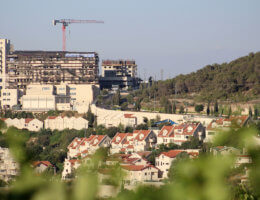
The Israeli settlement of Efrat within the Gush Etzion settlement bloc between the Palestinian cities of Hebron and Bethlehem in the West Bank on June 30, 2020. (Photo: Mosab Shawer/APA Images)

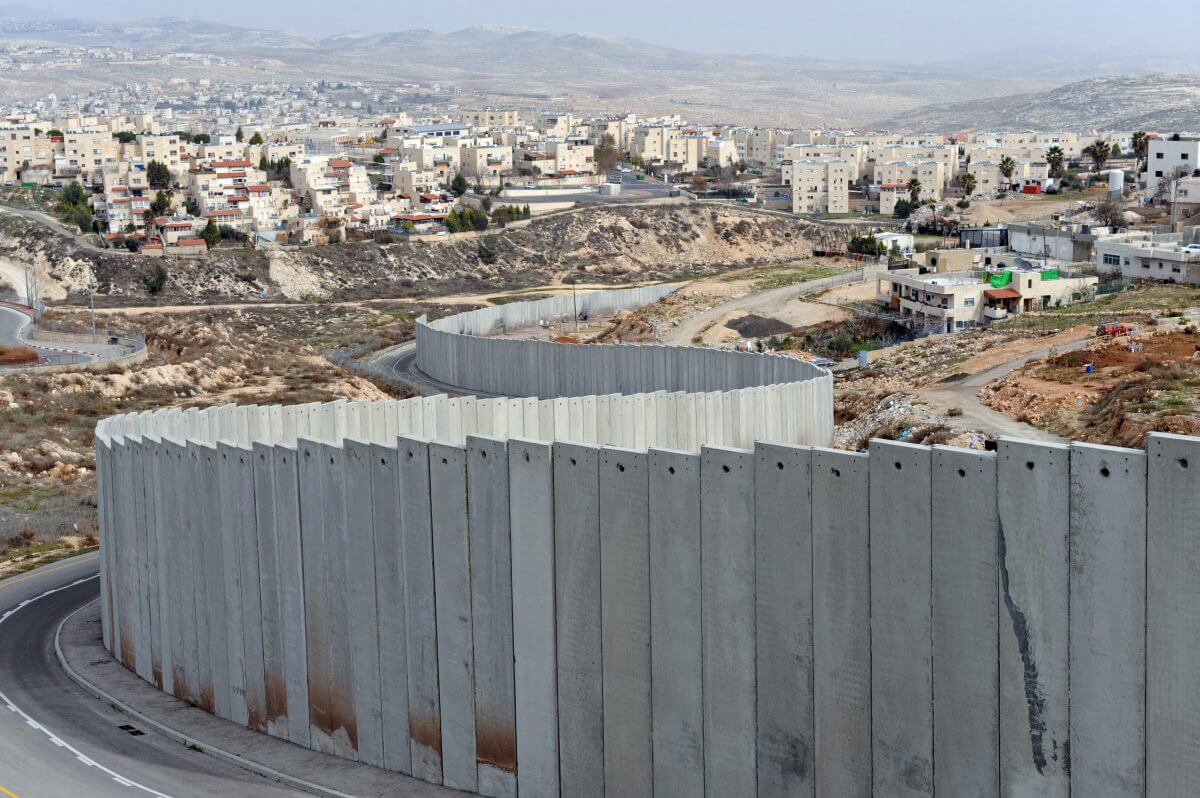
On Wednesday, Israel issued tenders for more than 2,500 new settlement housing units in the occupied West Bank and East Jerusalem a mere hours before US President Joe Biden was sworn into office. The Israeli government has now approved and promoted thousands of new settlement housing units in the first few weeks of 2021, while also continuing to deny Palestinians the right to build on their land in Area C — the more than 60 percent of the West Bank under full Israeli control.
Israel’s Education Minister announced a ban this week on human rights groups from entering Israeli public schools, a move seen by many as a response to a bombshell report from B’Tselem calling Israel an “apartheid state”. But it didn’t stop the organization from speaking to 12th grade students at the Hebrew Reali School in Haifa this past Sunday. “The Israeli government will have to contend with us until the apartheid regime ends,” B’Tselem director Hagai El-Ad tweeted.

Israeli human rights group B’Tselem has labeled Israel as an ‘apartheid regime’ for the first time in the group’s 30 year history of documenting human rights violations in the occupied Palestinian territory (oPt) of the West Bank, East Jerusalem, and the Gaza Strip. “What happens in the Occupied Territories can no longer be treated as separate from the reality in the entire area under Israel’s control,” B’Tselem says. “The terms we have used in recent years to describe the situation – such as “prolonged occupation” or a “one-state reality” – are no longer adequate.”

Palestinians gather as Israeli forces demolish the house of Rasmi Abu Aram in Khirber Ar-Rakeez and the house of Hatem Makhamra in Khirbet at-Tuwani, November 25, 2020. (Photo: Mosab Shawer/APA Images)

Yumna Patel interviews Rasmi Abu Aram, the father of Harun Abu Aram who was shot by Israeli forces on New Year’s Day as he attempted to protect a neighbor’s house from demolition. “My son Harun is so young, he’s only 24. He had his whole life ahead of him, and now he might die because the soldiers had nothing better to do than shoot him over a generator,” Abu Aram tells Mondoweiss.

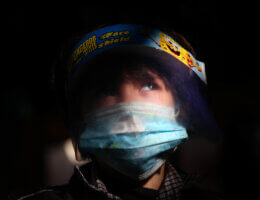
Palestinian children, clad in masks and face-shields due to the COVID-19 coronavirus pandemic, play inside their kindergarten, in Gaza City on November 23, 2020. (Photo: Mahmoud Ajjour/APA Images)

If there ever was a year in recent history that was truly unforgettable, 2020 is it. In Palestine, COVID-19 did not stop the occupation, and in many cases exacerbated the devastating effects of 53 years under Israeli military rule. On top of the pandemic, we witnessed major shifts in global politics with widespread regional normalization, and the defeat of US President Donald Trump. Meanwhile, global movements for justice like Black Lives Matter, and the fight for justice in Palestine continued to transcend borders, thrusting marginalized voices into the mainstream in ways that were once unimaginable.