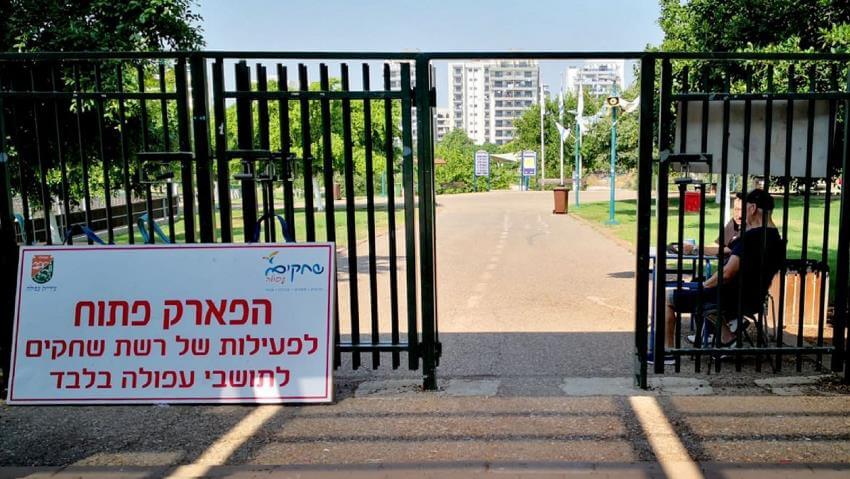
Following an international media controversy and intense pressure from Palestinian rights groups, the northern Israeli city of Afula will end its “residents only” ban on its parks, which was used to prevent the entry of Palestinian residents of surrounding areas.
Palestinian residents of the northern West Bank village of Kafr Qaddum have been staging weekly Friday protests for the past eight years against Israeli land confiscations and the closure of roads in their town. What started out last Friday as a typical demonstration quickly turned into a nightmare for the villagers, when Israeli snipers shot 10-year-old Abdul Rahman Shteiwi in the head.
It’s been two years since Haneen Adi, an English literature and writing teacher at Ramallah’s Birzeit University, has left the occupied West Bank. Israel has refused to renew Adi’s visa to stay and teach in the West Bank since November 2017 and she is not alone. Adi is one of dozens of international academics at Palestinian universities in the occupied territory who has been denied a visa by Israel in recent years. Now, Birzeit, which has ranked within the top three percent of universities worldwide, is fighting back.
The “Philistine-Palestinian” debate has been brought to the forefront again, this time by Israeli Prime Minister Benjamin Netanyahu. Archaeologist Dr. David Wengrow said a report being pushed by Netanyahu was a “clear-cut case where modern genetic studies are being (mis)used to revive outdated arguments about ancient migrations that have their origin in racial theory.”
Mondoweiss speaks with Palestinian businessman Sam Bahour, a vocal critic of the US “Deal of the Century”, about last month’s “Peace to Prosperity” conference in Bahrain, what he thought of the conference, its implications, and his predictions for the future of American-led peace negotiations.
Tuesday July 9th marked the fifteenth anniversary of the International Court of Justice (ICJ) decision to declare the Israeli separation wall in occupied Palestinian territory as illegal under international law.
US Ambassador to Israel David Friedman and White House Middle East Envoy Jason Greenblatt helped inaugurate a tunnel in an Israeli settlers’ archaeological dig under a Palestinian neighborhood in occupied Jerusalem. Friedman said the tunnel confirms the Jewish presence in ancient times in Jerusalem, and Palestinians responded with outrage to the American officials’ participation.
Even Christine Lagarde of the IMF questioned the effectiveness of Jared Kushner’s proposal for $50 billion investment in Palestinian prosperity, saying without a political solution to the Palestinian issue, investments will not succeed. Her skepticism was widely shared.
This spring, the latest salvo in the battle surrounding Palestinian advocacy came to a head on two university campuses: the University of North Carolina at Chapel Hill and Emory University. Following condemnations and investigations from their respective universities and communities, Mondoweiss spoke to students and faculty involved in both incidents at Emory and UNC to understand, from their point of view, the events that took place, and the wider implications for pro-Palestine activism on their campuses, and on university campuses across America.
Last week, the news broke in Israeli media that Israel’s Ministry of Strategic Affairs had launched a “stealthy campaign” that resulted in the shuttering of some 30 bank accounts affiliated with the Boycott, Divestment, and Sanctions movement. Ramallah-based human rights NGO, Al-Haq, slammed Strategic Affairs Minister Gilad Erdan’s smear campaign against Palestinian rights groups as “spurious, unsubstantiated and libelous,” constituting what it called an “illegal interference” with Palestinian civil society under the Hague Regulations.