Israeli settlers conducted attacks against Palestinians and their property across the occupied West Bank, including a settler’s ramming of a young disabled Palestinian man, and settlers pepper-spraying a four-year-old in the face.
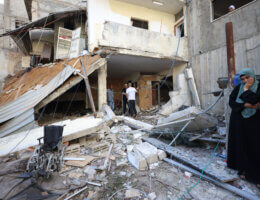

Israeli settlers conducted attacks against Palestinians and their property across the occupied West Bank, including a settler’s ramming of a young disabled Palestinian man, and settlers pepper-spraying a four-year-old in the face.

Israel has renewed its deadly onslaught on the armed Palestinian resistance in Jenin and Aqbat Jabr refugees camps, while in Gaza, another Palestinian was martyred during protests at Gaza’s border fence.
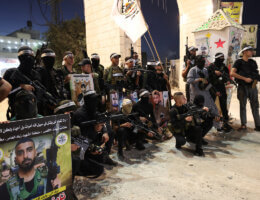
The Palestinian Authority has not let it up on its campaign of arresting resistance fighters, recently leading to rising tensions and armed confrontations in Jenin. But despite the PA’s efforts, resistance brigades continue to spread.

Thirty years on, the legacy of Oslo has given birth to two parallel worlds — one that rejects the order that Oslo created, and one that will stop at nothing to preserve it.

Thirty years after the Oslo Accords were designed to institute Palestinian defeat, resistance continues, and so does the cycle of loss.
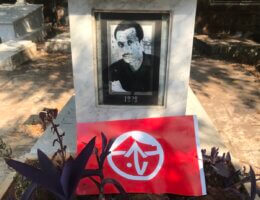
Louis Allday’s introduction to the newly reissued biography of Ghassan Kanafani outlines the choice Kanafani made between being an organic participant in the resistance and his life as a writer. Kanafani chose, and in doing so, chose his fate.
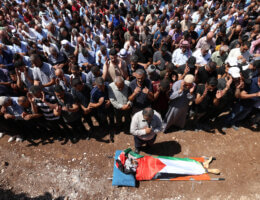
The West Bank has become a crucial front for the battle over political legitimacy among Palestinian factions as a new phase of armed resistance rises.

It appears Israel claimed victory in Nablus prematurely as the resistance in the city has made a resurgence, successfully detonating an IED that injured four soldiers during an Israeli invasion.

Tulkarem, Nablus, and Jenin have historically made up the “triangle of fire,” demarcating a geographic entity hostile to colonial rule. Today, the Tulkarem Brigade is fighting to preserve that legacy.
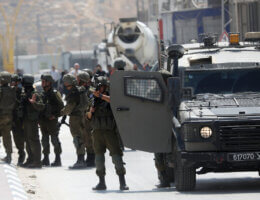
Huwwara and Hebron have been put on lockdown by the Israeli army as a manhunt has ensued following two “lone wolf” shooting operations in those areas, while Israeli settlers carry out revenge pogroms against Palestinians.