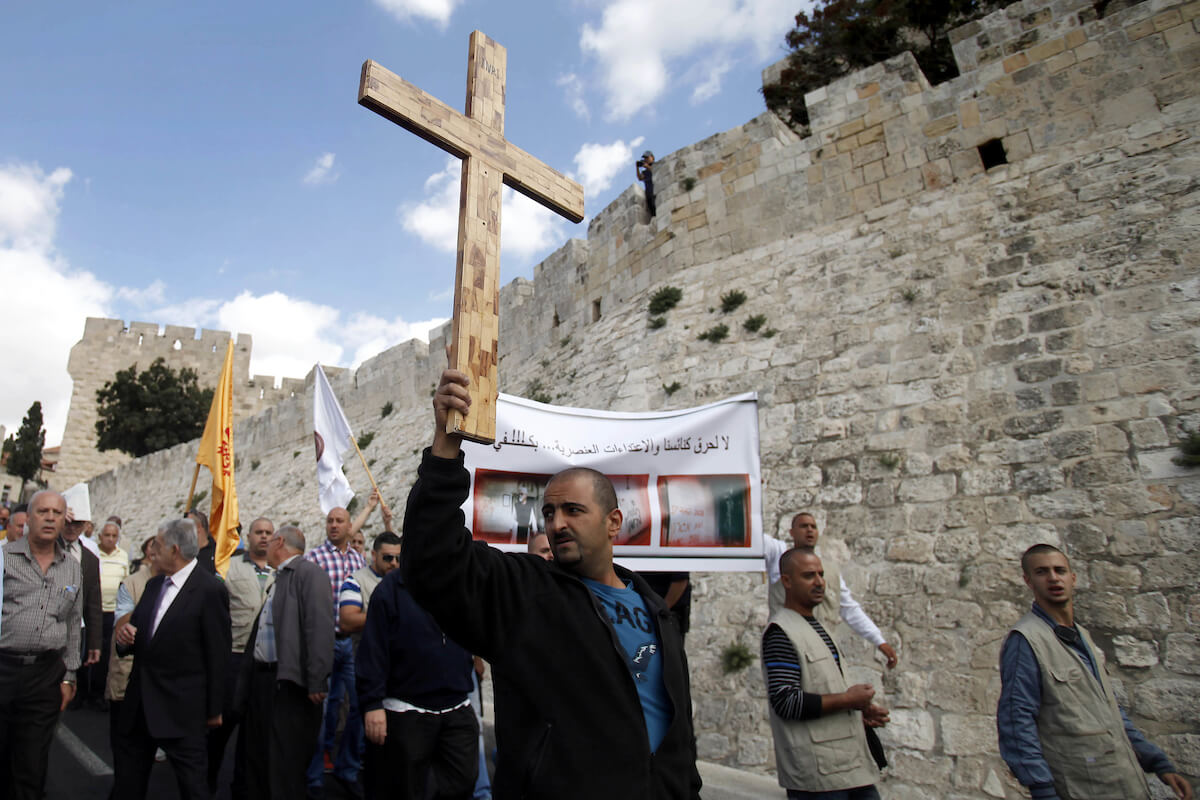
It has become clear that the Christian presence in the Holy Land is in grave danger from Jewish fundamentalists empowered by the new Israeli government.


It has become clear that the Christian presence in the Holy Land is in grave danger from Jewish fundamentalists empowered by the new Israeli government.

During Christmas week, settlers backed by Israeli police took over land owned by the Greek Orthodox Church in the Jerusalem neighborhood of Silwan, displacing the Palestinian family renting it.
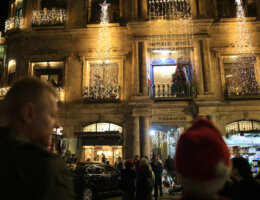
Last week, His Beatitude Theophilos III, Greek Patriarch of Jerusalem, led the annual interfaith lighting of a Christmas tree inside Jerusalem’s Jaffa Gate. The lighting this year took place at the Imperial Hotel, a Greek Orthodox property that Israeli settlers sought to occupy earlier this year.
“This simple ceremony of the lighting of a tree shows us the way and shines as a sign of hope in the darkness,” he said. For Palestinians, the celebration of Christmas—on town squares, in churches, and in homes—is itself a creative act of nonviolent resistance.
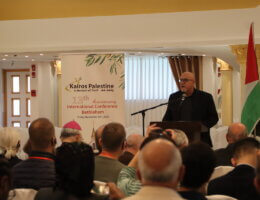
Kairos Palestine, the most extensive Palestinian Christian ecumenical movement, hosted 180 participants in the West Bank town of Beit Sahour for its 13th annual international conference.

Every year thousands of Christians from around the world travel to Bethlehem to celebrate Christmas. But just 46 miles away, an entire community of Palestinian Christians is banned from traveling to the city, even for the holidays.

Zionism has fragmented the multi-religious population in Palestine geographically, religiously, socially, and politically. In the process it has denied them one of the simplest rights a human being could ever yearn for — the right to pray in peace.

Led by Representatives Joaquin Castro (D-TX) and Gus Bilirakis (R-FL), eight members of Congress sent a bipartisan letter to Secretary of State Antony Blinken expressing their “[deep concern about] the rise in attacks against the Christian community in Jerusalem.”
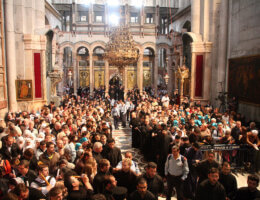
Archbishop Atallah Hanna’s Easter Sunday sermon: “We pray to God that the whole world will come together to fight the pandemic and then continue to be united in facing all the other pandemics in our universe—especially racism, hatred, injustice, occupation, oppression, and degradation of human dignity.”
Palestinians are wondering why, after seven weeks, the New York Times hasn’t published a single word on B’Tselem’s landmark “apartheid” report.
The Peace and Justice Commission of the Assembly of Catholic Ordinaries of the Holy Land has written a brief but incredibly important book for all who are concerned about Christian Palestinians and justice in Palestine and Israel, especially in the light of President Trump’s peace initiative.