Columbia University issued suspensions, expulsions, and temporary degree revocations to students connected to the April 2024 occupation of Hamilton Hall, as ICE agents reportedly arrested a second Palestinian Columbia student on Friday.
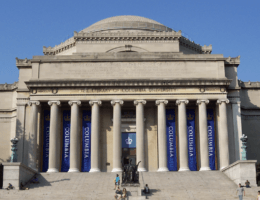

Columbia University issued suspensions, expulsions, and temporary degree revocations to students connected to the April 2024 occupation of Hamilton Hall, as ICE agents reportedly arrested a second Palestinian Columbia student on Friday.

The fight to free Mahmoud Khalil is not merely about preserving First Amendment rights, it is about whether we will allow our government to criminalize resistance to its complicity in human rights abuses and genocide.

In a stark escalation in the Trump administration’s campaign against Palestine activism, on Saturday night, ICE agents raided the home of Mahmoud Khalil and detained the activist who had been among the leaders of Gaza protests at Columbia University.
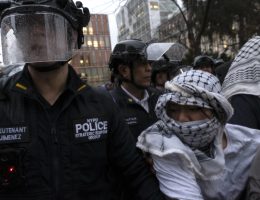
Nine students were arrested after Barnard College called police onto campus to break up a sit-in staged by pro-Palestine demonstrators over the recent expulsion of three student protesters.

As social movements in the U.S. plan ahead for the Trump administration, we should look to the campus Palestine movement for lessons on how to organize under the repressive conditions we will all soon face.
Columbia University staff are being suspended and terminated for participating in last Spring’s Gaza Solidarity Encampment, even if they were off the clock at the time. Similar cases are being seen across the country.

Documenting one year of revolt from the occupied West Bank to the East Coast.
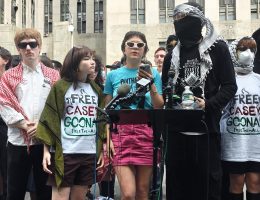
Protesters arrested for seizing Hind’s Hall at Columbia University are refusing any deals unless protesters at CUNY are offered the same, and they stand in solidarity with those facing the most extreme repression in the movement.
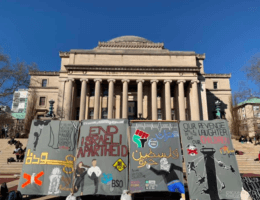
When the board of the Columbia Law Review clumsily censored a pro-Palestinian article it revealed the degree to which pro-Israel ideology is enmeshed in the U.S. power structure. Luckily, a generational shift is changing this before our eyes.

Students at Columbia University continue to disrupt business as usual for Gaza and have birthed a radical re-imagining of society in the process.