Israeli authorities are failing to provide essential information on the vaccine in Arabic, to establish vaccine centers in Palestinian neighborhoods in East Jerusalem, and to provide sufficient vaccines in Bedouin clinics in the Negev. These failures are “not a coincidence”, rights groups say.
While Israel will have vaccinated two million by the end of January, Palestinians are not part of the distribution plan.
Below the headlines celebrating Israel’s vaccination rates lies a far darker story about health inequality.
“How do 3 million West Bank Palestinians feel about the fact that their ‘neighbors,’ several hundred thousand Jewish settlers, are getting vaccinated and they are not?” The New York Times is unable to ask that simple question about apartheid in an article gushing over Israel’s rollout of vaccinations.
At 65, having worked at this site for 15 years, I’ve thought about how to move on. But the murder of Ali Abu Alia in Palestine reminds me of my commitment. My Jewish privilege gives me a lot of responsibility.
If there ever was a year in recent history that was truly unforgettable, 2020 is it. In Palestine, COVID-19 did not stop the occupation, and in many cases exacerbated the devastating effects of 53 years under Israeli military rule. On top of the pandemic, we witnessed major shifts in global politics with widespread regional normalization, and the defeat of US President Donald Trump. Meanwhile, global movements for justice like Black Lives Matter, and the fight for justice in Palestine continued to transcend borders, thrusting marginalized voices into the mainstream in ways that were once unimaginable.

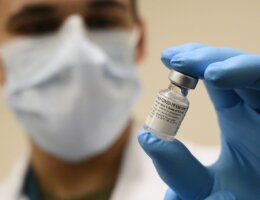
The rollout of the COVID-19 vaccine perfectly illustrates Israel’s apartheid system. While Palestinians living under Israeli occupation in the West Bank and Gaza will not receive vaccines from the Israeli government, the hundreds of thousands of Israeli settlers living illegally in the West Bank are getting vaccinated every day.
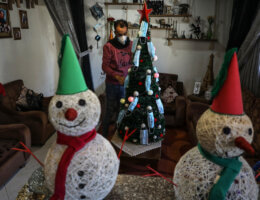
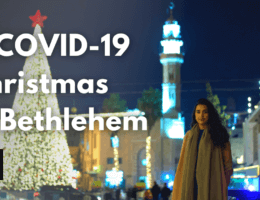
Streets are quiet in the West Bank, Gaza and Israel, for an understated Christmas as health officials are still working control the spread of the coronavirus with closures, and prevent further cases of a mutated strain that originated in the UK.
In the city of Bethlehem, the birthplace of Jesus Christ, Christmas is the biggest day of the year. The holiday typically draws thousands of Palestinians and foreigners alike to the city, which adorns its streets and churches in beautiful lights and decorations for the season. But this year, COVID-19 has changed all of that. Manger Square and the Church of Nativity have been emptied of their usual visitors, and Palestinian Christian families have been forced to spend their most precious day of the year under lockdown.