Palestinian journalists in Gaza are carrying on a tradition of “committed journalism” that began decades ago. They, like their predecessors, were killed in the line of duty because they were working for a cause.
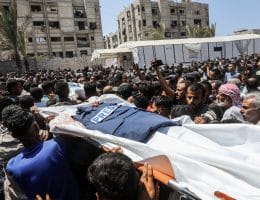

Palestinian journalists in Gaza are carrying on a tradition of “committed journalism” that began decades ago. They, like their predecessors, were killed in the line of duty because they were working for a cause.
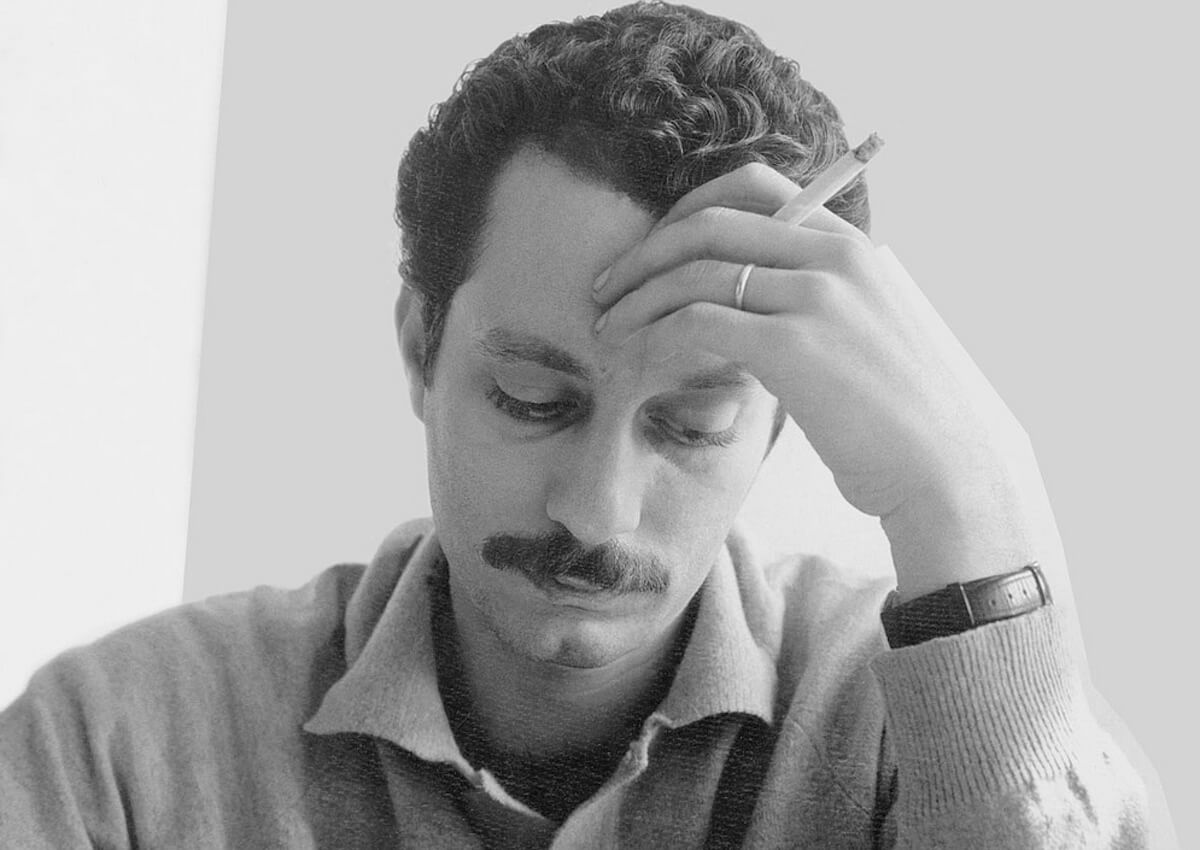
Ghassan Kanafani’s ‘The Revolution of 1936-1939 in Palestine’ examines the mass uprisings against Zionism and for independence from British colonialism. A new English translation of the book offer news insights into the pivotal text.
The editors of “Ghassan Kanafani: Selected Political Writings” talk to Mondoweiss about what the Palestinian icon’s writings can teach us about resistance to genocide in Gaza today.
Louis Allday’s introduction to the newly reissued biography of Ghassan Kanafani outlines the choice Kanafani made between being an organic participant in the resistance and his life as a writer. Kanafani chose, and in doing so, chose his fate.
What role does literature play in the Palestinian liberation movement? Though the question itself isn’t subversive, it feels that way. There are many considerations, but it’s hard to imagine what a poem can do in the barrel of a gun.

Writer Isabella Hammad discusses her approach to history as a novelist, her sense of political commitment as an artist, and her thoughts on the prospects for Palestinian liberation.
Complicated themes of exile, marginalization, death, and history recur throughout (post)colonial fiction. It is no surprise that Palestinian students in Gaza connect with them on a personal level.
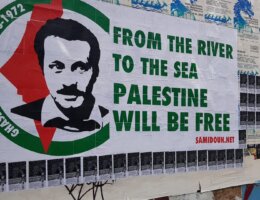
To honor Ghassan Kanafani’s memory, we must demand freedom “from the river to the sea”
July 8, 2022 marked the 50th anniversary of the assassination of Ghassan Kanafani, a towering figure in Palestinian cultural and political life. Haidar Eid writes that Kanfani’s fiction remains essential because it is characterized by a realism that moves us towards a new perception and understanding of art, revolution, and, of course, Palestine.
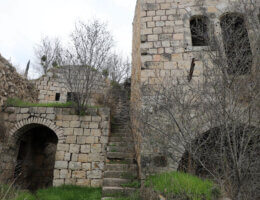
Yara Hawari’s “The Stone House” is a story of unending Palestinian trauma rooted in the Nakba. However, it is also an expose of steadfastness, resistance, and I dare say – hope.