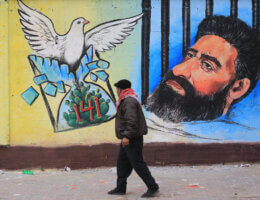
On August 9, Israeli forces killed four Palestinians in the West Bank, including notable Palestinian resistance fighter Ibrahim Nabulsi, “the lion of Nablus,” during a daytime military raid. Nabulsi’s killing is also connected to the ongoing struggle of hunger striker Khalil Awawdeh, who continues to be held under administrative detention in Ramleh Prison. All of these incidents are part of the same story — the Israeli campaign to eradicate Palestinian resistance.
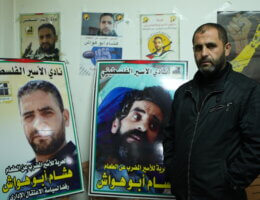
Hisham Abu Hawash’s hunger strike will go down in the history of Palestinian resistance as one of the longest and, arguably, most consequential.
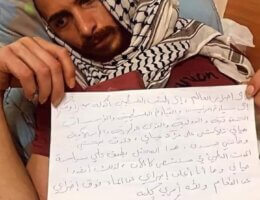
Palestinian prisoner Hisham Abu Hawash entered his 140th day on hunger strike on Monday, and according to his family is in such critical condition that he could “die at any moment.”
An Israeli court formally indicted this week the six recaptured Palestinian prisoners, who last month achieved a historic escape from a maximum security Israeli prison last month that shocked the world. On Monday, the Palestinian Detainees and Ex-Detainees Affairs Commission said that one of the prisoners, Mohammed Ardah, had began a hunger strike in protest of the “punitive measures against him and the harsh conditions of his solitary confinement.”
Ghadanfar Abu Atwan has been on a hunger strike for 62 days in protest of his administrative detention by Israel, and recently began refusing water. “His health situation is dire,” Warda Abu Atwan tells Mondoweiss. “We are scared that he could die at any moment.”
Whenever I conduct an interview with a Palestinian prisoner or their family, I am told, repeatedly, that “no one cares. But is this really the case?
After nearly two months of arbitrary detention, brutal interrogations, a hunger strike, and sexual harassment, 31-year-old Suha Jbara is expected to be released from Palestinian Authority custody in the next two days. Jbara, a Palestinian activist with American and Panamanian citizenship, was arrested by PA security forces on November 3rd over accusations that she collected and distributed money through “illegal methods,” a claim herself and her family vehemently deny. Her father spoke to Mondoweiss about the “nightmare” that his daughter and family have experienced over the past two months.
Palestinian leaders announced the end of the prisoner hunger strike as a major success last week, but Israel has denied it ever negotiated and stated no demands were met. Reports have since emerged alleging a secret meeting took place between Israeli and Palestinian officials where the two sides set terms to end the strike but neither has disclosed the deal. Sheren Khalel talks with one hunger striker who says if the reports are true the strike can easily start again. “In two or three months if we see the demands haven’t been met, we will go back on strike, and the next time won’t be the same as the last, a second hunger strike would be much stronger,” Ali Brijieh says. “If the Israelis think that we are not able to do another hunger strike, I can promise you they’re wrong.”
Palestinian-American social worker Aida Qasim writes a poem inspired by the more than 1,000 Palestinian prisoners on hunger strike who entered their 25th day of strike on May 11, 2017.
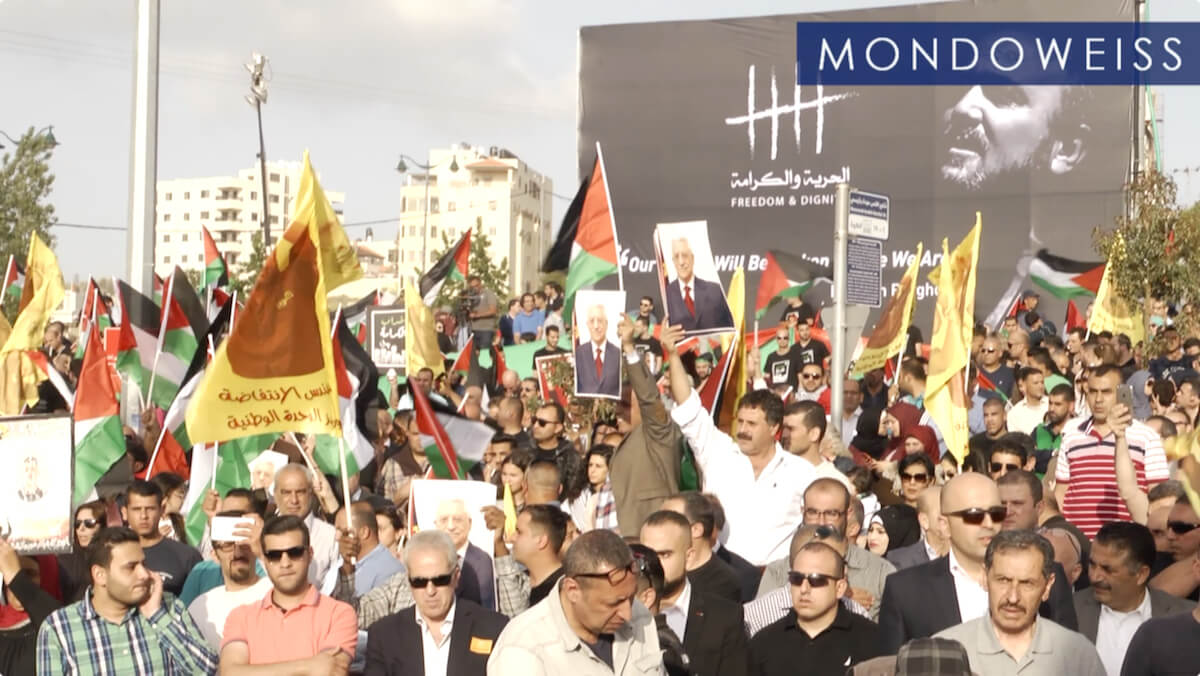
Thousands of Palestinians gathered in Mandela Square in Ramallah on Wednesday to support the more than 1,000 Palestinian political prisoners who have been on hunger strike for 17 days in Israeli jails. Demonstrators took to the street while Mahmoud Abbas was meeting with U.S. President Donald Trump. According to Haaretz, the Trump administration has asked Abbas to end government payments to the families of prisoners in Israeli jails. Palestinians will strongly disapprove if Mahmoud Abbas concedes to Trump’s request. Ahmad Al Akra, a demonstrator in Ramallah, said, “[Abbas] has been compromising more of our freedom and so far nothing has been accomplished. And I think this might be the final straw.”