The Instagram account of a well known anti-Zionist Jewish comedian was deleted after Meta’s Public Policy Director for Israel and the Jewish Diaspora viewed one of his stories. This is just one example of the anti-Palestinian bias across Big Tech.


The Instagram account of a well known anti-Zionist Jewish comedian was deleted after Meta’s Public Policy Director for Israel and the Jewish Diaspora viewed one of his stories. This is just one example of the anti-Palestinian bias across Big Tech.

After two and a half years of living abroad, Abdelrahman Abuabed decided it was time to visit his family. He arrived in Gaza days before the May escalation between Hamas and Israel. “A terror-stricken burden of waiting for the next massacre looms over every house in Gaza and an insane feeling of wishing it will be far away from you and from anyone you know.”
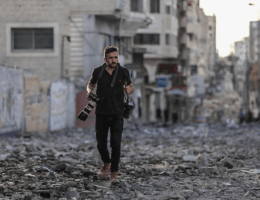
During its recent attacks on Gaza, Israel targeted several high-rise towers that housed dozens of media outlets. Over the course of a week, photojournalist Mohammed Talatene worked out of three towers that were destroyed by Israeli airstrikes. Then his house was bombed. His story mirrors that of many journalists across Gaza.

If our commitment as social media users is truly to solidarity and allyship, then we must move past virtue signaling through shares and actually engage with like-minded users in the real world to work towards collective action.

In recent weeks Palestinian rights advocates have faced varying forms of censorship across social media while the same heavy-handed regulation has not been enforced for Israeli content, allowing hate speech and incitement against Palestinians to spread unfettered. Former Facebook executive Ashraf Zeitoon tells Mondoweiss, “This is part of a smart system and it is a deliberate, systematic silencing of Palestinian voices due to pressure from the Israeli government…there is no sugar coating it.”