Michelle Alexander’s excellent New York Times column on speaking out on Palestine is getting huge attention is already clearly a watershed moment, but why has Alexander prompted such a huge reaction? James North has some tentative explanations.


Michelle Alexander’s excellent New York Times column on speaking out on Palestine is getting huge attention is already clearly a watershed moment, but why has Alexander prompted such a huge reaction? James North has some tentative explanations.

Much has been made of a recent New York Times piece about Rouzan al-Najjar, the Palestinian volunteer nurse who was killed while treating injured protesters at the Great March of Return. While many saw the reporting as a sympathetic portrayal of Palestinians, Eric Maddox writes, there are still shortcomings.

Perceiving Michelle Alexander’s opinion piece on Palestine and Martin Luther King in the New York Times as a huge blow to Israel’s reputation among elites, and to the traditional alliance of blacks and Jews, Israel’s cheerleaders leaped to denounce Alexander. Michael Oren says the article is a “strategic threat” to Israel, David Harris says MLK would be “appalled” that Alexander “hijacked” his legacy!

For more than a generation, Palestinian voices have been suppressed at the New York Times. But under the new publisher A.G. Sulzberger, 38, the paper is serving notice that the torch has been passed to a new generation of Americans who want open debate. This explains Michelle Alexander’s groundbreaking piece saying it’s time to end the progressive silence over Palestinian rights.
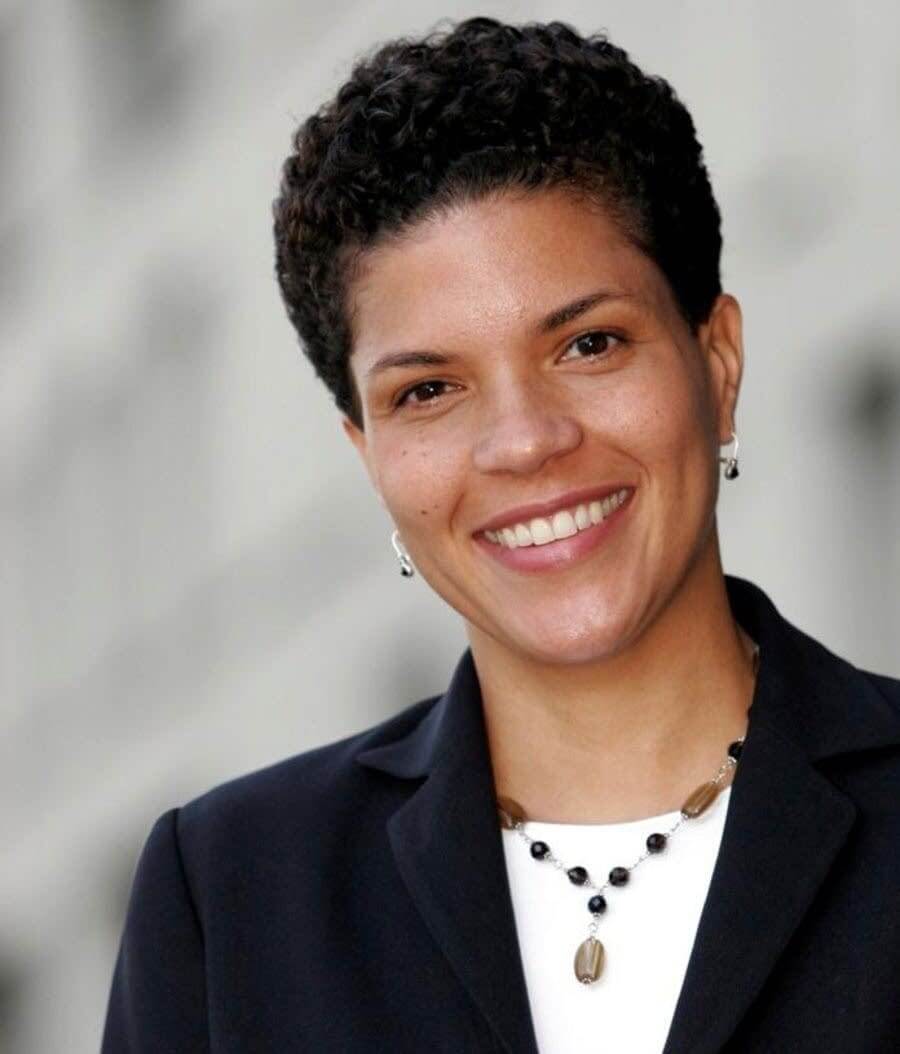
Progressive politicians are silent about Palestinian human rights because of the power of the Israel lobby, and “civil rights activists and organizations have remained silent as well… because they fear loss of funding from foundations, and false charges of anti-Semitism,” Michelle Alexander writes in a groundbreaking piece in the New York Times. Guided by MLK, she says she will be silent no longer.
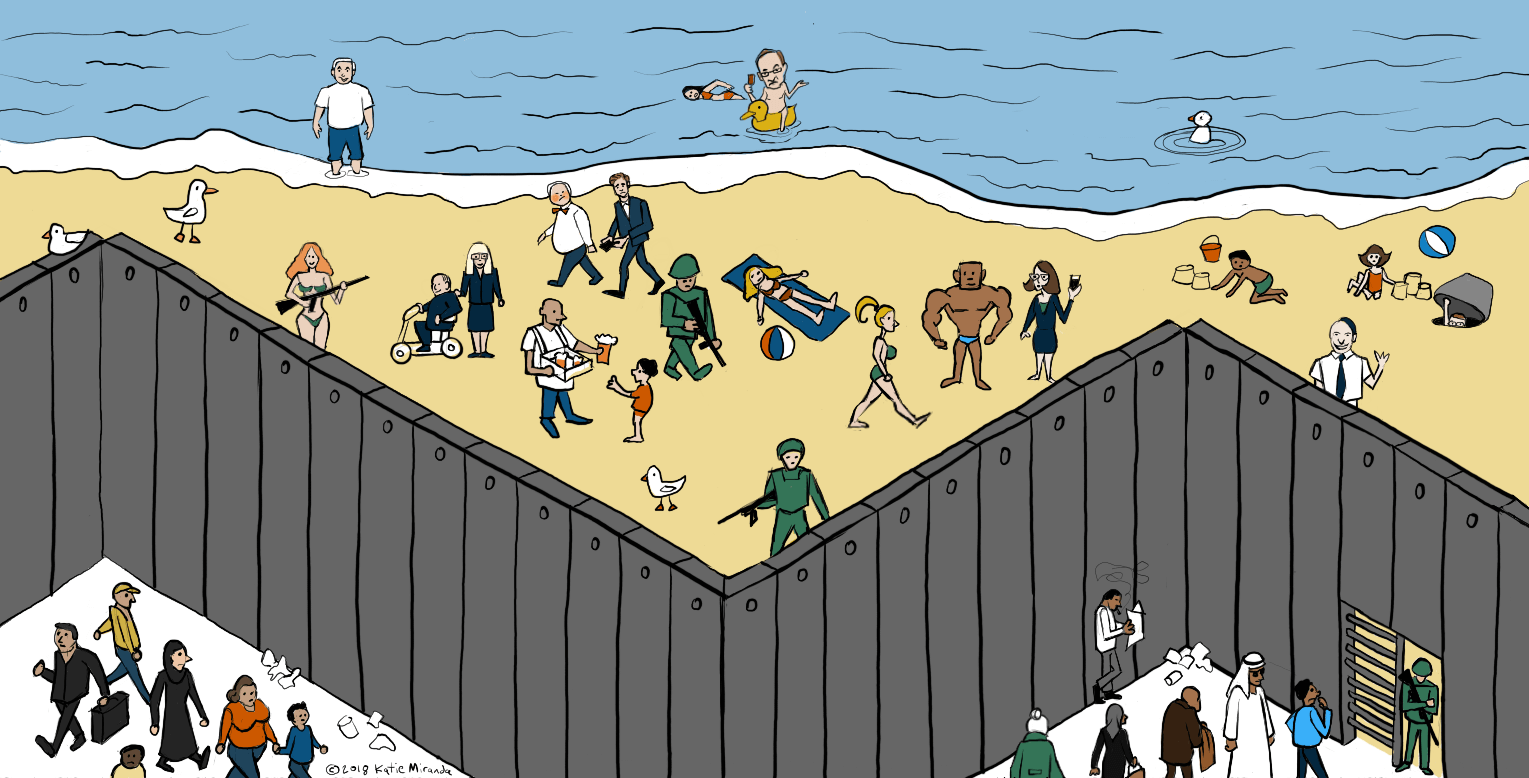
Jeffrey Goldberg, Jennifer Rubin, David Frum, Bret Stephens and the other American Bibi-ists went from All Netanyahu all the time to No Netanyahu ever, Yakov Hirsch explains. Because they can’t be leading the moral charge against Trump’s “evil plan to crush the press,” while offering obfuscation about Netanyahu’s actual evil plan to crush the press, as they once did, when they were empowering the now-run-amok prime minister.

Marc Ellis writes that the rescinding by the Birmingham Civil Rights Institute of an award to Angela Davis raises issues about the Black-Jewish alliance and the ability of Jews to set parameters for African Americans to speak on Jewish questions, including Israel. There is a war over that question. The Jewish establishment sees Angela Davis as an enemy. Jews of Conscience see her as an ally.

Zionism was founded on the Romantic nationalist idea that Jews really are a people apart from other peoples and that’s why we deserve a homeland, Joseph Levine writes; and liberal Jews who rejected the idea worried that Zionists would undermine their status in western countries. So dual loyalty was an issue long before US Rep. Rashida Tlaib was accused by Marco Rubio of raising an anti-Semitic “canard.”
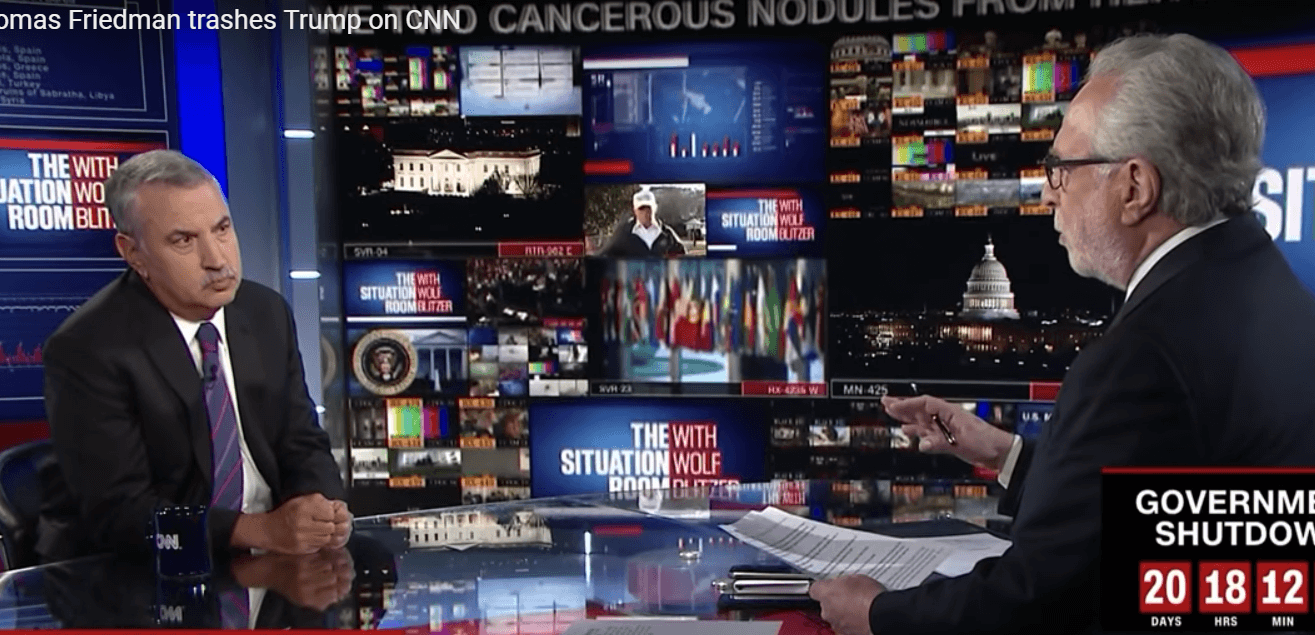
“I wouldn’t have just moved the embassy to Jerusalem and not asked for something in return from Netanyahu or, or the Palestinians,” Tom Friedman says on CNN. Really? The embassy move was a kick in the gut to Palestinians, and the gaffe just reveals the reflexive need of a mainstream pundit to blame Palestinians for the conflict, even when they are blameless.
A study of 100,000 headlines in the five leading US newspapers in the last 50 years shows that mentions of Palestinian refugees have declined by 93%, Israeli sources are nearly 250% more likely to be quoted as Palestinians; and the number of headlines centering Israel were published four times more than those centering Palestine. Edward Said was right, Palestinians lack the permission to narrate.