The Trump administration’s extraordinary and unprecedented move to effectively expel South African Ambassador Ebrahim Rasool was done for one reason: South Africa had the audacity to hold Israel accountable for the Gaza genocide.


The Trump administration’s extraordinary and unprecedented move to effectively expel South African Ambassador Ebrahim Rasool was done for one reason: South Africa had the audacity to hold Israel accountable for the Gaza genocide.

Today marks one year since South Africa filed the landmark case against Israel at the World Court, charging Israel with the crime of genocide.. But as the slaughter in Gaza continues, the question remains: what, if anything, did the case achieve?

The South African anti-apartheid movement in the U.S. made its most significant gains during Ronald Reagan’s second term in office. There are lessons for the Palestine movement as Donald Trump returns to the White House.
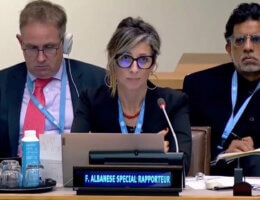
A new report by Francesca Albanese, the UN Special Rapporteur on the situation of human rights in the Palestinian territories, warns that Israel’s genocide in Gaza is spreading to the West Bank.

Activists in South Africa recently upended a high-profile “peace” conference over its agenda of obscuring Israeli apartheid, colonization, and the ongoing genocide in Gaza.

South Africa returned to the ICJ to argue for an immediate halt to Israel’s genocidal assault on Gaza warning that a full Rafah invasion is “the last step in the destruction of Gaza and its Palestinian people.”

Foreign Minister Dr. Naledi Pandor on the indivisible bond of solidarity between South Africa and the Palestinian people, “forged by the crucible of the two nations’ respective liberation struggles.”
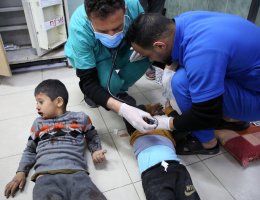
The International Court of Justice imposed new provisional measures in South Africa’s case against Israel for its genocide in Gaza, ordering Israel to ensure the entry of food and other supplies in order to stop the spreading famine.
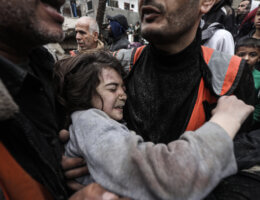
At least 20 Palestinians have died as a result of malnutrition and dehydration in Gaza, health officials say. Meanwhile, new reports from Israeli media say 27 Palestinian captives who were being held in Israeli “makeshift cages” have died.
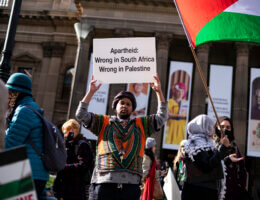
Solidarity through music. That is what the new song “Palestinian-South African Ballad of Love” is all about.