Stanford student Molly Horwitz says she was the target of anti-Semitism during an interview with a coalition of students of color who endorse student candidates. Horwitz, who recently won a senate seat, says she was asked how her Jewishness would impact a vote on divestment–a charge that has been met with denials. She quickly became a cause celebre, but the students who Horwitz says asked her that question have released a strongly worded statement denying the charges. The result is two diametrically opposed, and unresolvable, narratives that have become the latest fodder for a nationwide debate on anti-Semitism and criticism of Israel at American colleges.

Republican Jewish consultants say Obama’s policy is sending big Jewish donors to the Republicans, thereby threatening Hillary Clinton’s ability to win
Marc Ellis first met Cornel West almost thirty years ago when he was invited to share the podium with him on the subject of Israel and the Palestinians. Since then West has become a leading African American public intellectual and has taken daring stands in support of Palestinians, including during Israel’s attack on Gaza last summer. Ellis reflects on West’s career and prophetic voice in light of Michael Eric Dyson’s New Republic article excoriating West. Ellis writes, “Though Dyson’s predicted fall of Cornel West is clearly exaggerated, his penchant for disciplining West’s prophetic voice should be taken seriously.”
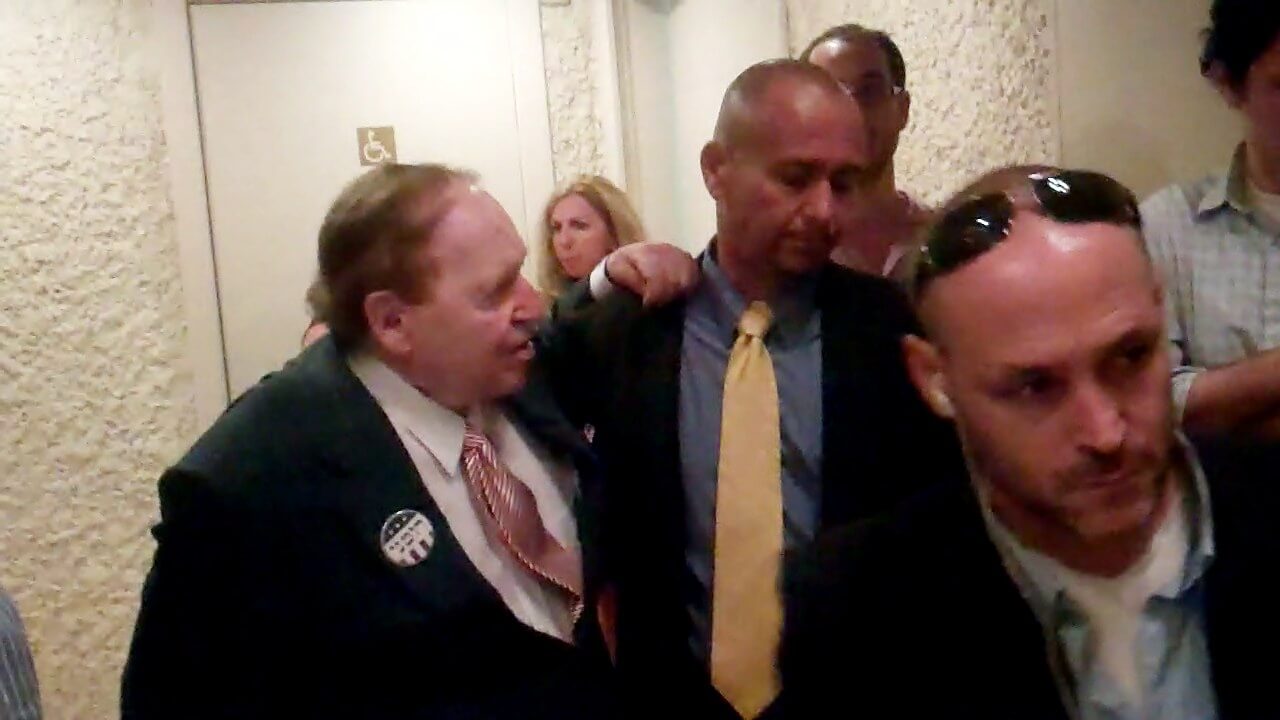
“If I put together a finance team that will make me financially competitive enough to stay in this thing…I may have the first all-Jewish cabinet in America,” Sen. Lindsey Graham joked, but he is telling the truth about the political process, and reporters have an obligation to explore the role of the Israel lobby in our politics. So far, crickets.
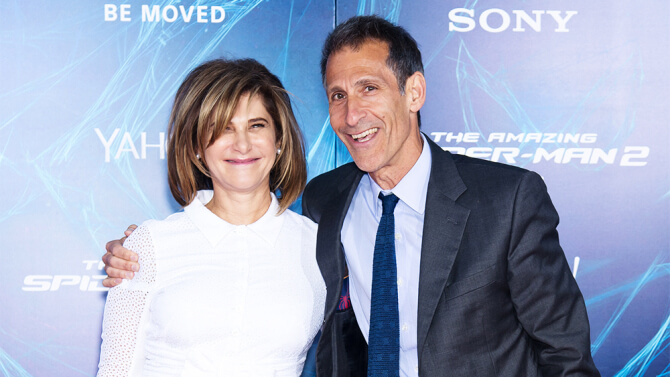
Top Hollywood bosses enjoy a strong relationship with the Israeli government and various pro-Israel lobbying groups across the United States, according to a cache of Sony internal emails leaked to Wikileaks and published for the first time last week.
NYT reporter Jodi Rudoren publishes unadulaterated hasbara glorifying Israeli army, and soldier killed in 1973, defending occupied Sinai, though the Times never tells you that
Sami Sulaiman writes that if Armenian-American college students felt betrayed in the past day, he would not blame them. Yesterday the umbrella organization United States Council of Muslim Organizations released a statement on the 100th anniversary of the Armenian genocide that said President Obama should not refer to the “events of 1915” as a genocide without further investigation. They call for a more “balanced” approach through academic consensus based on Turkish archives that Turkey refuses to open to establish a “just memory.” Sulaiman says that USCMO member American Muslims for Palestine should know better.
Leading Rabbi David Ellenson and Holocaust scholar Deborah Lipstadt first publicly criticized Israel last December in the Wall Street Journal, after a member of the Israeli Knesset urged them to come forward. Where will young American Jews go for leadership?
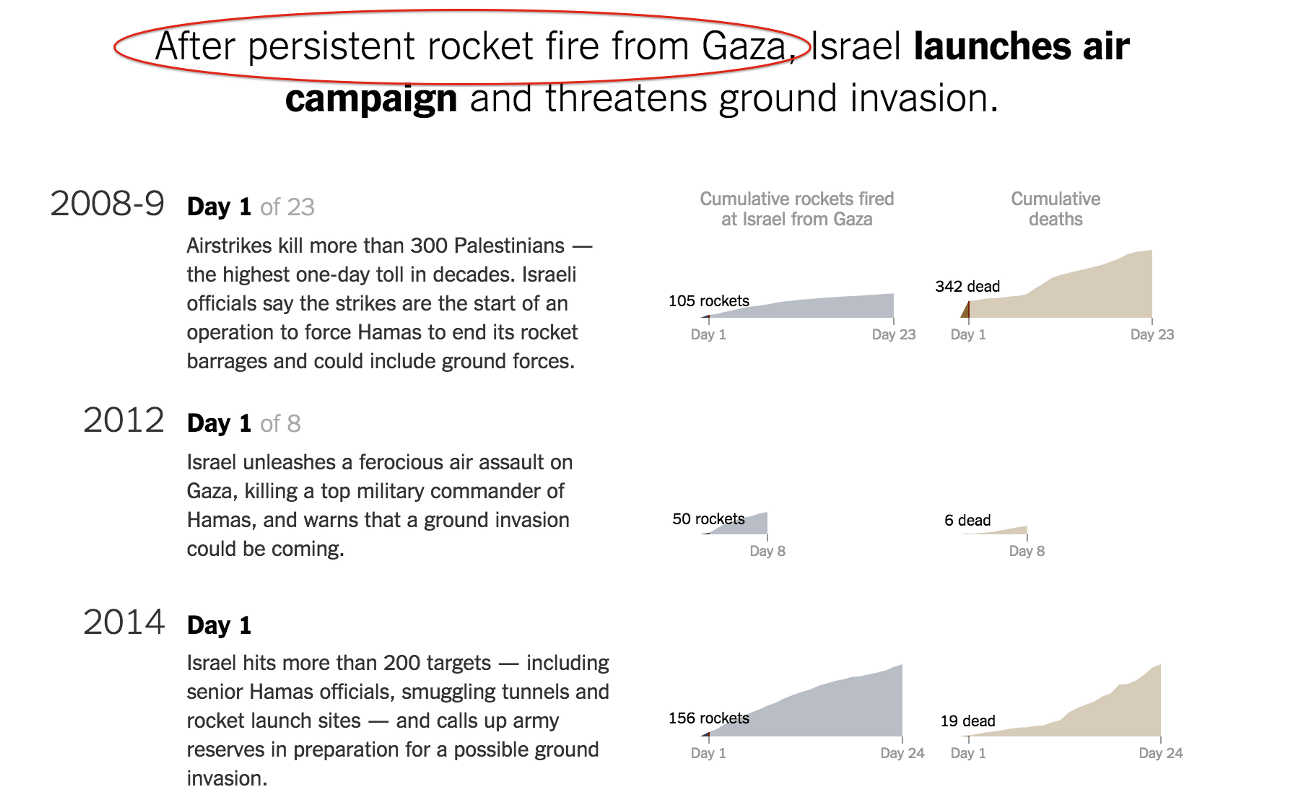
On July 31, 2014, the New York Times published an interactive article about the Israeli assault that was underway in Gaza. In an expertly designed data visualization, the Times guided us through its own version of events, which boils down to: Hamas started it, and Israel responded in self-defense. A common misconception about data journalism is that it’s somehow less biased than traditional print journalism, but Anna Flagg and Moiz Syed breakdown some ways that design can be misused to tell a slanted story. This New York Times article reminds us that design is just as much an editorial tool as it is a tool of aesthetics.