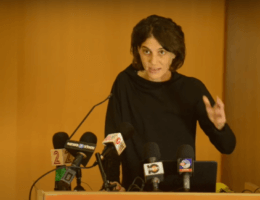
“Nobody ever invited me to tell the story in any other way but that we must live by the sword,” Yuli Novak says of her upbringing in the Israeli elite. In a new memoir excerpted by Haaretz in Hebrew this weekend Novak says that the moment she ceased to be obedient, “the system turned against me.” She came to the understanding that a South Africa style political struggle is necessary to bring peace and equality to Israel and Palestine.
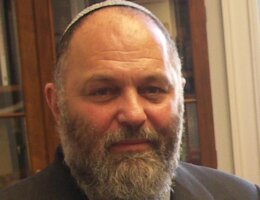
Former general turned far-right politician Effi Eitam lives in an illegal settlement in the Golan and has long advocated the ethnic cleansing of Palestinians from the occupied territories, as well as the crushing of basic civil rights for non-Jews inside Israel. He is also Benjamin Netanyahu’s choice to be the next leader of Yad Vashem, the world-renowned Holocaust museum.
In Yishai Sarid’s novel, Israelis act out rituals of grief and mourning for the Holocaust and come away repulsed by their ancestors, the victims of a horrific genocide, and admiring of the Nazis in their “Hugo Boss” uniforms. “That’s what we should do to the Arabs,” one whispers. Yet US media have failed to grasp the novel’s moral about Palestinian dehumanization.
Israel supporters are outraged that Orla Guerin of BBC mentioned Palestinians in the context of Holocaust trauma. Robert Cohen says her remarks were entirely appropriate because the Holocaust is still resonating through Jewish history and is intimately connected to Israel’s history and actions against Palestinians.