Endangered Palestinian village gets int’l media attention– except from the U.S.

hajsami

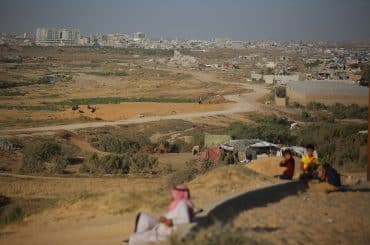
Haj Sami Sadeq is a mayor in Palestine. Behind him is the Jordan Valley. Around him are the lands of his little village, Al Aqaba.

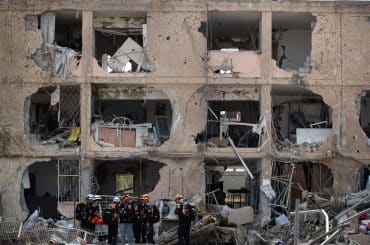
The entire village is under Israeli demolition orders. In fact, the Israeli army bulldozed the road to his village on Sept. 15, 2 weeks before I shot this picture. They want his lands. And they seem to be cutting his village off from the rest of the world.

Despite the fact that Haj Sami is in a wheelchair because he was crippled by the Israeli army when he was 16 years old and just walking on his family lands, despite the fact that  the people of Al Aqaba village are not allowed to drill for water on their own land and they have been slowly leaving this starved village-- their mayor believes in peace. Here is the mural on the wall of his school. pencil2Inside the school these days is an American volunteer, Morgan Bach, 24, below, teaching kindergartners the ABC's.

Morgan Bach is not just in Al Aqaba to teach-- but to make sure that the Israeli army doesn't tear the village off the map. The Rebuilding Alliance paid Morgan's airfare, but nothing more. The village feeds her. 

And this brave young woman, who not long ago was living in a sorority house in Walla Walla, stays in Al Aqaba to protect the village-- something no international government body is willing to do for Haj Sami or his people.morgan2I've been a journalist all my life. I think this is a pretty good story.

But below is a video I shot of Haj Sami the night I stayed in his village. He had just given me dinner. Then I asked him how much media attention he's gotten.  Highlights: At :48 he tells where all the media have come from. At 2:55-4:00 he tells about his visit to the U.S. in 2008, and people don't even know where Palestine is. I wonder why...Update: There's a campaign to raise money for Al Aqaba right now, at Rebuilding Alliance's website. Can you help out?

About Philip Weiss

Philip Weiss is Founder and Co-Editor of Mondoweiss.net.
Posted in Israel/Palestine

{ 44 comments... read them below or add one }

  1. It’s beyond disgusting. Yet the myriad of apologists and deniers just ignore the daily evidence like this, and turn away from people who have done nothing, harmed no-one, and pretend they don’t exist. Or, in other words, deny their right to exist, and delegitimise a whole people who, incidentally, have genuine claims to their own land, unlike Israelis, who have an entirely fictional claim.

  2. pabelmont says:

    We also need a video of the class learning ABCs (English? seems NOT Arabic). Nothing so humanizing as children.

  3. bindup says:

    Al Aqaba has a comprehensive plan to rebuild and TODAY they’re crowd-sourcing the funds to begin. Every dollar donateduntil 9 pm tonight will be matched by Global Giving by 30%

    In any other place in the world, planning & building homes is normal civic activity; in Area C, it’s civil disobedience. Maybe we here on Mondoweiss can give them a big boost!

    • You are right — this village is not getting the U.S. media attention it deserves. An Op-ed by Award-winning Palestinian Architect Hani Hassan about his work with Al Aqaba was turned down by all the major newspapers. It went live in Arabic this morning: link to wafa.ps

      Mondoweiss, would you publish it in English?

    • With 4 hours left in the competition, the “Rebuilding to Remain” in Al Aqaba program is now in 13th place on the GlobalGiving Leader Board!

      By total number of donors we’re in 5th place.

      Take a look: link to globalgiving.org

      —————–
      You may wonder if this stuff matters — it does. We helped Al Aqaba build that kindergarten where teacher Morgan Bach is teaching then the Japanese, Belgians, and Norwegians built the 2nd floor. We helped Haj Sami build the housing for visiting teachers and used the Spring Global Giving Matching grant to set-up the visiting teachers program. And in the June Global Giving Matching Grant Competition we came in 2nd with our Architectural Design Charrette project. A month later we were there with the villagers for 10 days designing these remarkable affordable homes. Now the villagers are ready to build. This competition is a good way to get started!

    • annie says:

      13 more minutes here on the west coast! donate!!! edit..i was just there and it said 2 more hrs. so please donate. it was 5 more donations when i did it so that makes only 4 more…find the ‘monthly’ option and donate an easy amount (if small monthlies are a viable option for you), or whatever. just do it.

  4. American says:

    Would everyone please start calling this continous destruction what it is..Genocide.

    Elements of the Crime of Genocide
    From the Report of the Preparatory Commission for the International Criminal Court, 6 July 2000
    Articles 6 of the Rome Statute of the International Criminal Court of 1998 and Article II of the the Convention for the Prevention and Punishment of Genocide of 1948

    Crime:
    Genocide by deliberately inflicting conditions of life calculated to bring about physical destruction.
    1. The perpetrator inflicted certain conditions of life upon one or more persons.
    Note: The term “conditions of life” may include, but is not necessarily restricted to, deliberate deprivation of resources indispensable for survival, such as food or medical services, or systematic expulsion from homes.
    2. The conditions of life were calculated to bring about the physical destruction of that group, in whole or in part.
    3. The perpetrator intended to destroy, in whole or in part, that national, ethnical, racial or religious group, as such.
    4. The conduct took place in the context of a manifest pattern of similar conduct directed against that group or was conduct that could itself effect such destruction.
    Note: The term “in the context of” would include the initial acts in an emerging pattern; – The term “manifest” is an objective qualification .
    Final draft text of the Elements of Crimes, agreed upon by the ICC.
    American October 17, 2011

    For gawds sake…call it what it is! It isn’t just deplorable, it isn’t just ‘not helpful, it’s a f****** crime under international law, it’s Genocide. Period.

    • Proton Soup says:

      i know Samantha Power isn’t exactly everyone’s favorite person around here, but there is one key thing i learned from her book. and that is the story of Raphael Lemkin. link to en.wikipedia.org

      and in the last couple of years, i’ve had to ask myself some questions about my own ignorance of the man. why didn’t i know who he was? why is he never mentioned in the movies? why has Spielberg not made a hero of him? there are only a couple of obscure plays. as Joel Stein pointed out in the LA Times just a few months before his column dries up, Hollywood is most definitely led dominantly by jewish people, and there’s nothing inherently bad in pointing that out.

      given this, why is Lemkin a leper ? well, i have no smoking gun here, but i think i know why: he’s damn inconvenient. Lemkin and his Genocide did more to throw a wrench in the plans for an expansionist Israel than any other figure, living or dead. this all would have been settled decades ago, were it not for this one man, and their perpetual gyrations to avoid his judgement. i’m convinced that this man is hated, and it’s precisely for the topic you bring up.

      yes, it looks like genocide. and no, most people won’t recognize it because the public has not been educated as to what exactly genocide entails (i certainly wasn’t). and yes, they are not unaware. on the contrary, they are very aware, and will be waiting with all the legal loopholes to prove to you that this is not quite exactly what it appears to everyone else to be.

      • annie says:

        from lemkin’s wiki page

        Lemkin’s views on the Ukrainian genocide remained obscured for 55 years. His perceptive analysis of the Ukrainian tragedy remained virtually unknown and hardly ever figured in publications on the famine of 1932-1933 or studies of genocide. The text was brought to public attention only in 2008. Lemkin’s holistic approach to the Soviet regime’s systematic destruction of the Ukrainian nation was highly innovative in its time and has not lost its significance today.
        [edit]

        why don’t they call it the Holodomor? strange. even the spell check doesn’t recognize this word.

        Lemkin died of a heart attack at the public relations office of Milton H. Blow in New York City in 1959, at the age of 59. Only seven people attended his funeral.[13]

        strange. but how did throw a wrench in the plans for an expansionist Israel than any other figure, living or dead

        were people even listening to palestine then?

        • Whizdom says:

          I suspect that thye reason is Lemkin’s other body of work – a study of Axis plans for Poland, and how those plans and their implementation constituted an International crime.

          Germany’s plan was a total disenfranchisement of the Polish population, further, even elimination by murder or displacement of many of them, to make way for their colonial project. The plan was to establish a network of cluster”island” settlements of industrial and agricultural concentrations, connected by “germans only” roads, and protected by a strong military force. The residual polish population was left to govern themselves, with the German state having no responsibility for them with the exception of brutally suppressing any resistance to the German project. The polish were not to be allowed any form of government or organization or national sentiment. They existed only to provide plentiful labor for the German colonizers.

          Lemkin formulated this as a crime, coined as genocide, and linked it to other crimes of type.

          “Generally speaking, genocide does not necessarily mean the immediate destruction of a nation, except when accomplished by mass killings of all members of a nation. It is intended rather to signify a coordinated plan of different actions aiming at the destruction of essential foundations of the life of national groups, with the aim of annihilating the groups themselves. The objectives of such a plan would be disintegration of the political and social institutions, of culture, language, national feelings, religion, and the economic existence of national groups, and the destruction of the personal security, liberty, health, dignity, and even the lives of the individuals belonging to such groups. Genocide is directed against the national group as an entity, and the actions involved are directed against individuals, not in their individual capacity, but as members of the national group.”
          “Genocide has two phases: one, destruction of the national pattern of the oppressed group; the other, the imposition of the national pattern of the oppressor. This imposition, in turn, may be made upon the oppressed population which is allowed to remain or upon the territory alone, after removal of the population and the colonization by the oppressor’s own nationals

        • annie says:

          thank you whizdom, yes i knew genocide scholars were divided over the definition of genocide but i did not know this division was specifically or primarily tied to support for israel. silly me. there is harsh always harsh pushback for describing what’s happened to palestinians as genocide. but there’s pretty clearly a present and past intention to extinguish the palestinian culture.

        • Hostage says:

          i knew genocide scholars were divided over the definition of genocide but i did not know this division was specifically or primarily tied to support for israel.

          Lemkin and many other experts viewed population transfers and settler-colonialism conducted under a military occupation regime as inherently genocidal. Some of them, like Dr Ralph Bunche, are hidden in plain sight (more below). Lemkin wrote about the subject in “6. The Problem of Colonists”, in “Axis rule in occupied Europe”, 1944, Carnegie Endowment, page 45. See also John Docker, Raphael Lemkin’s History of Genocide and Colonialism, Paper for United States Holocaust Memorial Museum, Center for Advanced Holocaust Studies, Washington DC, 26 February 2004; and John Docker and Ned Curthoys, The Gaza massacre, Australian Broadcasting Corporation, 9 January 2009.

          In the late 1940s, all of the “Great Powers” were colonizers. They were unwilling to declare their recent state practices illegal in a Genocide Convention. A few decades later there were more than enough newly-minted non-aligned states to forge ahead and adopt the UN resolutions which formally outlawed the practice of colonialism. In 1977 the Geneva Diplomatic Conference adopted Article 85 of the 1st Additional Protocol which designated the related practices of colonialism and apartheid grave breaches and war crimes.
          link to icrc.org

          There really isn’t a practical dispute in the legal community, since causing mental harm to members of the group; prevention of births; and forcibly transferring children of the group to another group do not entail the physical destruction of the targeted members of the group. All of those are nonetheless listed as constituent acts of the crime in the Genocide Convention. Various international courts have ruled that rape and other acts that destroy group cohesion, can constitute genocide even in cases where they don’t result in the physical destruction of the targeted group members. See Jorgic v. Germany and The ICTR Prosecutor v. Jean‑Paul Akayesu starting on pdf page 8 link to un.org

          Many people are acquainted with Dr. Ralph Bunche’s work as a member of the UN Secretariat staff for the UNSCOP; as Director of the United Nations Trusteeship Office staff tasked with responsibility for implementing the Corpus Separatum; or as the UN Mediator for the Question of Palestine. Most people are unaware of his lifelong role in combating colonialism. His doctoral thesis at Harvard, French Administration in Togoland and Dahomey (1934), was devoted to the subject of the application of the League of Nations system of mandates. His post-doctoral study in anthropology was done:

          “with the world’s most eminent anthropologists — Melville Herskovits at Northwestern University, Bronsilaw Manilowski in London and Isaac Schapera in Cape Town, South Africa — together with research field trips in West Africa, East Africa, South Africa and Southeast Asia gave him first-hand knowledge and experience in the problems of colonialism in Africa and elsewhere in the world.

          link to ralphbunche.com

          Bunche was instrumental in developing and proposing the system of UN trusteeships to eliminate the abuses and colonialism that were pervasive under the mandates. In 1936 he wrote:

          The contemporary world, torn with hatred and fear, restive and confused, bordering on political, economic and moral chaos, presents an awesome picture to those disadvantaged and minority groups whose lot has so long been one of oppression and exploitation. There is more than ample evidence that the great nations of the world, discarding even the subtleties of diplomacy, are rushing pell mell to embrace unblushingly the old doctrine that only force will prevail in the world—that only the strong and the privileged have the right to freedom and a decent existence. This is easily understood when it is considered that these nations are relentlessly forced into conflicts and wars by their greedy, profit-motivated economic systems which must feed upon new markets for goods and capital, new reservoirs of raw materials and human labor to exploit.
          .
          The doctrine of Fascism, with its extreme jingoism, its exaggerated exaltation of the state and its comic-opera glorification of race, has given a new and greater impetus to the policy of world imperialism which has already conquered and subjected to systematic and ruthless exploitation virtually all of the darker populations of the earth. — Ralph J. Bunche, French and British Imperialism in West Africa, The Journal of Negro History, Vol. 21, No. 1 (Jan., 1936), pp. 31-46

          link to jstor.org

        • I am surprised that I’ve never hear of Raphael Lemkin. In all my travels, I’ve certainly heard of Germany’s plan of “total disenfranchisement of the Polish population, further, even elimination by murder or displacement of many of them, to make way for their colonial project.”

          I want to learn more about this man.

    • Hostage says:

      For gawds sake…call it what it is!

      Some of us are consciously or unconsciously doing that very thing when we discuss the crime of apartheid. The portion of the Genocide Convention that you cited appears verbatim in Article 2 of the Apartheid Convention.
      link to www1.umn.edu

      The preamble of the International Convention on the Suppression and Punishment of the Crime of Apartheid explains that, the Convention on the Prevention and Punishment of the Crime of Genocide contains certain acts which may also be qualified as acts of apartheid and constitute a crime under that denomination in international law. Those acts of Genocide/Apartheid were explicitly and implicitly cited in the written submissions of the Secretary-General and the interested state parties in the 2004 ICJ Wall Case. For example:

      “The construction of the wall and the resulting situation correspond to a number of the constituent acts of the crime of apartheid, as enumerated in Article 2 of the International Convention on the Suppression and Punishment of the Crime of Apartheid, adopted by the General Assembly on 30 November 1973: that is to say, the denial of the liberty and dignity of a group, the deliberate imposition on a group of living conditions calculated to cause its physical destruction in whole or in part, measures calculated to deprive a group of the right to work, the right to education and the right to freedom of movement and residence, the creation of ghettos, the expropriation of property, etc. Such actions constitute measures of collective punishment.” — See Written Statement of Lebanon

      link to icj-cij.org

      The close association of military occupation and settler colonialism with displacement, eviction, apartheid and genocide are reflected in the subject matter of the UN Convention on the Non-Applicability of Statutory Limitations to War Crimes and Crimes Against Humanity:

      Crimes against humanity whether committed in time of war or in time of peace as they are defined in the Charter of the International Military Tribunal, Nürnberg, of 8 August 1945 and confirmed by resolutions 3 (I) of 13 February 1946 and 95 ((I) of 11 December 1946 of the General Assembly of the United Nations, eviction by armed attack or occupation and inhuman acts resulting from the policy of apartheid, and the crime of genocide as defined in the 1948 Convention on the Prevention and Punishment of the Crime of Genocide, even if such acts do not constitute a violation of the domestic law of the country in which they were committed.

      link to icrc.org

      • American says:

        Hostage, if you see this reply I think we would all be interested in your opinion on the Genocide Convention where it deals with “intent”, “motivation”,”patterns” and ‘results” in establishing prosecution for genocide.

        • Hostage says:

          Hostage . . .we would all be interested in your opinion on the Genocide Convention where it deals with “intent”, “motivation”,”patterns” and ‘results” in establishing prosecution for genocide.

          That’s a lot of territory to cover in a comment. Motivation: Genocide and Apartheid result in criminal liability regardless of the motive involved. The old reliable excuses of “national security”, “self-defense”, & etc. are not a valid defense against prosecution.

          The preamble of the original draft of the Genocide Convention submitted by the Secretary General alluded to the difficulty of proving intent in most cases, but didn’t mention it in the operative subsections. The proposal to include “intent to destroy” in the definition of the crime came from the United States. It obviously made prosecution much more difficult, but that really doesn’t matter as much these days.

          In the period between the Nuremberg and Yugoslavian Tribunals, it was impossible to prosecute crimes against humanity unless there was a nexus to an armed conflict. That wasn’t the case with the crime of genocide. Today a prosecutor can obtain the same results (a life sentence) for crimes against humanity: murder, extermination, and persecution; or genocide. No connection to an armed conflict is required. So intent is not a get out of jail free card.

          In addition, the Courts have developed tests for intent which facilitate prosecution for genocide. Intent can be inferred based upon common sense patterns of behavior and the results.

          I could go on and on until your eyes glaze over with the if, ands, buts, and maybes, but that’s a simplified overview.

        • American says:

          @Hostage

          Thanks. I’ve read and read and re read the conventions numerous times….and in my non attorney view the “pattern” seems like it would be a important part in nailing Israel…….but then as you say there are always ifs, ands and buts.

        • annie says:

          Courts have developed tests for intent which facilitate prosecution for genocide. Intent can be inferred based upon common sense patterns of behavior and the results.

          i like that

        • Hostage says:

          I hope that the real take away message is that genocide used to be the only way to prosecute crimes committed in a peace time context. The real watershed was the ability, after 1993, to prosecute crimes against humanity without establishing a direct connection to an armed conflict. There really is no difference between a life sentence for genocide or a life sentence for the corresponding crimes against humanity.

          Israel is rather infamous for picking and choosing the laws of war that it applies and for deliberately conflating jus ad bellum and jus in bello, while ignoring jus contra bellum entirely. So elimination of the nexus to armed conflict was a very important step in prohibiting crimes against humanity at all times and places. We obviously aren’t quite there yet, since the ICC statute requires that the victim be a “state” to have locus standi to file a complaint. Many people don’t live in places that are recognized as states, e.g. Falkland Islands, Chagos Islands, & etc. Does that mean a state is free to commit crimes against them that would otherwise be prohibited? In Military and Paramilitary Activities in and against Nicaragua the ICJ ruled that the victim of aggression was in the best position to determine if there was reason to believe a crime had occurred, not the Security Council. The amendment to the Rome Statute recognizes that fact. It does not require a determination from the Security Council.

        • I understand what you are saying about the immense value of the expanded (expanding) ability to prosecute crimes against humanity. Judge Richard Goldstone at “Civilians in War” forum at Stanford University, January 20, 2011, said, ” Efficient justice is one of the only effective deterrents to human rights abuse.” He went on to say the first step toward justice consists of an independent investigation with all parties participating. My frustration is that prosecution takes so long and comes too late to stop the atrocity.

          I seek models where safety was successfully negotiated, where bad policy was changed, where the very pursuit of justice prevented further injustice. I take heart from Raoul Wallenberg’s negotiation strategies including his issuance of ribboned Swedish passports and from a contemporary U.S. human rights law called the Leahy Law.

          In one of our other Rebuilding Alliance projects, Abir’s Garden: a Safe Place to Grow, we are working with Combatants for Peace to help them build playgrounds in memory of a child killed by a soldier’s rubber bullet. To make those playgrounds safe (also part of our mission), Rebuilding Alliance has worked to invoke the Leahy Laws on her family’s behalf. Because her case was recently dismissed by the Israeli High Court of Justice even as the Israeli Civil Court awarded damages to the family, this has become an important test case to invoke the U.S. Leahy Law. I believe the investigative process of invoking this law can be a way to strengthen moderate voices and threaten punishment of those who would join in criminal behavior.

          In 2009, with the help of the Carter Center, I arranged for Attorney Michael Sfard to meet with the State Department to present the status of the criminal case appeals on behalf of Abir Aramin’s family. Michael Sfard told them, “One may think that if one does nothing, human rights abuse will stop. Instead if one does nothing, it gets worse.”

          What steps can we take, right now, to assure Al Aqaba Village their right to exist? What arguments will engage Congress and assure their intervention (privately or publically) on behalf of constituents who care? I hope the Rebuilding to Remain building projects will be a catalyst for all, and so engage policy change for positive impact on all 149 Palestinian villages in Area C.

        • Hostage says:

          What steps can we take, right now, to assure Al Aqaba Village their right to exist?

          I think in the short term, the brightest prospect is that Palestine will become a UN observer state and formally become a state party to major multilateral treaties. Recognition by the executive branch would not be automatic, but an unrecognized state is not a legal nullity. Some of the provisions of those treaties are enforceable in our courts, e.g. Common Article 3 and Title 18, § 2441. War crimes + Title 28, § 1361. Action to compel an officer of the United States to perform his duty. The Congress may repeal a treaty, but it can’t really sanction the courts for enforcing one while it remains in force.

          You’ve mentioned one of the Lehy Acts, but it is only applicable to discretionary spending. Lehy also sponsored the Torture Victim Protection Act (TVPA) which was one of the bases of Samantar v. Yousuf, 130 S.Ct. 2278 (2010). I think the FSIA immunity ruling in that case opened the door to successful suits against Israeli officials under the other statutes that provide an Alien’s action for tort. All of the major Jewish groups filed unpersuasive amicus briefs on behalf of Samantar. So they obviously think it opens their favorite officials to liability too. You can read about the case here: link to cja.org

        • This looks like an important law for torture victims but not a clear path to assure the village its right to exist. Interesting to see Cooley Goddard Kronish offering pro bono counsel – the Virginia offices of the same Cooley Goddard Kronish that is here in Palo Alto.

          An important earlier note in this discussion is that “genocide” is now defined broadly enough to include the demolition of homes and villages. What would it take to extend the term, “gross violation of human rights” to include home demolitions as well?

          That inclusion would mean that the Leahy Laws must respond by investigating, reporting, then cutting off U.S. aid and training from the Israeli military unit that carries out demolitions of Palestinian homes, schools, and shops. With 12,500 demolition orders outstanding in the 62% of the West Bank governed solely by Israel, a Leahy investigation could be a useful diplomatic requirement, though insufficient to guarantee the village its right in the near-term.

          We need a solid outreach and advocacy plan, and we’ll need it soon. Al Aqaba village plans to start new home construction in a few weeks time.

        • Hostage says:

          This looks like an important law for torture victims but not a clear path to assure the village its right to exist.

          No, the FSIA immunity ruling was that: foreign states enjoy immunity, but that foreign officials do not enjoy immunity under the Foreign Sovereign Immunity Act. Here is the decision. The part on FSIA is in the first few paragraphs: link to supremecourt.gov

          That should open the door to more suits against individual Israeli officials for any sort of violation of customary international law or treaty under the Alien Tort Statute 28 U.S.C. § 1350
          link to codes.lp.findlaw.com

  5. Woody Tanaka says:

    The Israeli state really is run by the scum of the earth. Truly.

  6. annie says:

    i realized how familiar this was so i went to check my old drafts, here was one that didn’t get published last month. it really touched me when i read it because it was written by Sami himself.

    by Haj Sami Sadeq

    Mayor of Al Aqaba and Chair of Al Aqaba’s Village Council

    (Thursday morning, without warning, the Israeli Army surrounded Al Aqaba Village, made 3 families homeless and ripped up Peace Street for a 2nd time.)

    September 17, 2011

    Brigadier General Moti Almoz
    Head of the Civil Administration in the West Bank
    Israeli Army Base within Settlement Beit El

    Dear Brig. General Almoz,

    I write to you in my capacity of mayor of Al Aqaba, a village near Tubas in the Jordan Valley of the West Bank, because you are the Israeli Army commander who administers building plans and permits for 149 Palestinian villages, including mine.

    No doubt you are aware that Thursday morning, Sep. 15, 2011, without notice, Israeli military bulldozers demolished a home and water cistern in Al Aqaba, leaving 22 people, including 12 children, homeless. The military bulldozers also ripped deep trenches through Peace Street — for the 2nd time — and destroyed another of Al Aqaba’s roads, deeply impacting the ability of our school bus to get nearly 200 children to and from school.

    You may be unaware, however, that these demolitions occurred just three weeks after our village submitted its third Town Plan to the Israeli Civil Administration, revised yet again following denial twice before.

    We were made aware by a B’Tselem article of your recommendation on September 6th to end Israel’s policy of demolishing Palestinian structures built without a permit in the 60% of the West Bank solely administered by Israel.

    In your recommendation, you noted that Israel’s discriminatory planning policy makes it impossible, in practice, for Palestinians to build with permits in Area C – and that has been our experience.

    For twenty years, from 1983 to 2003, the Israeli Army used our homes for live-fire training exercises. During this time, 12 villagers were killed and 36 were wounded. All were innocent civilians. I was one of them. At the age of 16, I was shot three times in the back and have been in a wheelchair ever since.

    When the Israeli High Court required the army to remove its training camp from Al Aqaba’s land in 2002, we celebrated with positive action to rebuild our community. On village-owned land, we built a kindergarten (with help from the American NGO Rebuilding Alliance and the Japanese, Belgium and Norwegian governments) and a medical center (with help from the British). However, at the same time as we were striving to rebuild our village and our lives, the Israeli Civil Administration issued demolition orders to 97% of our homes, to our mosque, to our medical center and to our kindergarten.

    For years, we have worked tirelessly to petition for the fair application of law. All we ask is to build our homes on our own land within our own community. Our ethos is peaceful and we are determined to be good neighbors. However, despite our ceaseless efforts to achieve this goal within the law, Israeli law appears determined to thwart us, pressuring us through demolitions to abandon our homes and our land.

    I know that Israeli people cherish their homes. Therefore, I am sure that you can understand how the terrifying destruction yesterday strikes painfully at the very heart of our community, particularly our children. I need a way to reassure everyone of their future security. To this end, I respectfully request a meeting with you, here in Al Aqaba Village. I would like you to visit the families whose home your army demolished. Come see our kindergarten and look at the roads that have been destroyed. Find a way to respect our Village Council’s right to issue building permits in accordance with our Town Plan. Find a way to fix what you’ve broken.

    Let’s meet as soon as possible. Please provide a date and time.
    I look forward to your reply.

    Sincerely,

    Haj Sami Sadeq
    Mayor of Al Aqaba and Chair of Al Aqaba’s Village Council
    Cell phone: +970 599 068 808″

    (Al Aqabah is just one of 149 Palestinian Villages facing demolition orders in Area C, that 60% of the West Bank governed solely by Israel. Israeli soldiers and bulldozers are now demolishing homes every day. According to BIMKOM, over 12,500 demolition orders are outstanding against Palestinian families who built homes on their own land — that means more than 125,000 people are at risk.)

    ps, phil, i am really glad you wrote this today, i didn’t even realize when i was watching the movie before it was the same man and the same village. just heartbreaking

    • There’s follow-up to this. The Mayor’s letter did reach the Brig. General — word is that a meeting is to be scheduled.

      • annie says:

        really? wow, hopefully that will make some sort of difference. the more light we can continue to shine on this town and keep it in the public eye the better. please let us know by follow up.

        • There are four human rights groups advising. The PA Minister of Local Government will be attending the meeting with Haj Sami. The Brig. General’s office is expected to reply after the holidays.

          One of the human rights groups is reporting a possible opening re. water for the village and also for initiation of the building process. We’ll keep you posted. Here is our overview following our meeting with the man who delivers demolition orders, Mr. Asher Rosalit of the Israeli Civil Administration:
          link to rebuildingalliance.org

        • annie says:

          thanks for the video, i think this needs more attention. very strange life of mr rosalit. ‘we walked out wondering why he does what he does.’

          i’ll say.

  7. bindup says:

    I think the village is still trying to arrange a meeting with General Almoz. (And then there’s a lower level official, one man who has been delivering demolition notices to the village for over 10 years.) Is Phil still in the area and able to report about that?

    And please, publish Hani Hassan’s article if you can! Getting these voices heard is what MW is all about. So grateful for your work.

  8. Real Jew says:

    We need more people like Morgan Bach in this world. What an amazing wonderful exceptional human being

  9. annie says:

    phil, just realized Morgan Bach is the same woman from Why isn’t Kusra killing on the front page of our newspapers?.

    And Morgan Bach of Seattle, Washington, a 24-year-old volunteer teacher in another village near Nablus, gave this report of Badran’s funeral.

    filisteenola.blogspot.com

    it was thru the reading of her post i realized she was describing the very video, she was there. god bless her for her work.

    • RoHa says:

      I thought Morgan Bach was a Welshman.

      This line struck me:
      “then the Japanese, Belgians, and Norwegians built the 2nd floor.”

      Japanese, Norwegians, and Belgians can get along with Palestinians. (Even though we keep being told that Belgians can’t even get along with each other.)

      Remind me. Who is it who just can’t get on with the Palestinians?

  10. An amazing young girl . A little bright star in the dark sky
    What a terriffic example of a modern day, quiet, fairly unknown hero.
    She makes me believe that a generation of young people is not lost.
    I only wish I would be that brave, that determinded, that unselfish, like she is when I was her age.
    A wonderful girl.

  11. That night, more people donated and our project total morphed to over $13,000. Yesterday, a generous donor pledged $15,000, the amount needed to fund the affordable revolving mortgage loan for one family in Al Aqaba! As of right now, Al Aqaba’s Rebuilding to Remain Campaign is at $31,013! We are nearly halfway to our goal.

  12. Today is another GlobalGivingMatching Grant Competition Day! Today, March 14th, GlobalGiving will match 30% for each donation to help Al Aqaba Village build 3 new homes — this is the first Palestinian Village in Area C to issue its own building permits. Please share the risk with them because nearly the whole village is under demolition orders.

    To give, please go to link to globalgiving.org