

Great op-ed by Pankaj Mishra in the New York Times today says that it’s time for the US to get out of the Middle East, the same way it got out of Vietnam. You’ve shot your wad here. Maybe you can come back later as a friend. The piece includes repeated references to Israel as our client state over there:
Franklin D. Roosevelt was only slightly more conciliatory when, in 1940, he proposed mollifying dispossessed Palestinian Arabs with a “little baksheesh.” …
It is not just extremist Salafis who think Americans always have malevolent intentions: the Egyptian anti-Islamist demonstrators who pelted Hillary Rodham Clinton’s motorcade in Alexandria with rotten eggs in July were convinced that America was making shady deals with the Muslim Brotherhood. And few people in the Muslim world have missed the Israeli prime minister’s blatant manipulation of American politics for the sake of a pre-emptive assault on Iran….
Although it’s politically unpalatable to mention it during an election campaign, the case for a strategic American retreat from the Middle East and Afghanistan has rarely been more compelling. It’s especially strong as growing energy independence reduces America’s burden for policing the region, and its supposed ally, Israel, shows alarming signs of turning into a loose cannon…
America’s retrenchment is inevitable. The only question is whether it will be as protracted and violent as Europe’s mid-20th century retreat from a newly assertive Asia and Africa.
A lot to chew on there. Bruce Wolman anticipated this, writing here that the I/P conflict will be resolved when the Arab countries kick us out of the Middle East… Fawaz Gerges wrote in The Nation that Israel was just a crusader kingdom, doomed to a short life… Jeff Halper has said recently that Israel could be turning out not like South Africa but Algeria… Finally, I wonder whether NYT op-ed editor Sasha Polakow-Suransky, whose book The Unspoken Alliance repeatedly describes Israel as a “pariah nation,” words that are unspoken at the Times, is smuggling that intelligence into the Times with such fine op-eds as this one. A vital journalistic contribution.
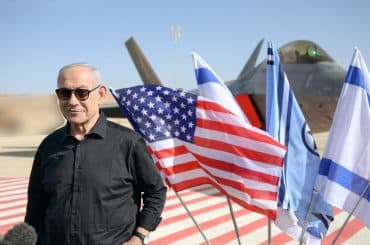
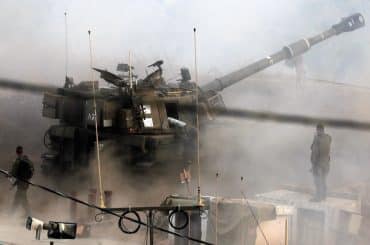
“Although it’s politically unpalatable to mention it during an election campaign, the case for a strategic American retreat from the Middle East and Afghanistan has rarely been more compelling.”
I don’t know if there anything to this, but lately a lot of the insider politco talk has been about the US turning it’s attention to Asia and China. Not militarily, but as where US interest are now and will be most important. If Washington does make Asia of great concern, mostly economically, and as in the inroads and alliances China is making with other countries thru economic cooperation and mutually benefiting ventures the US is not doing and therefore losing out on —-it could be the justification for supplanting of and lessening of our involvement in the ME.
The US could replace the ‘Green Peril of the ME’ with the “Asian Economic Menace” as their new cause.
The times, they are changing.
Color me skeptical.
China isn’t going to be a superpower, their most pressing issues is domestic.
The same true, by the way, for America.
But America has all the connections, infrastructure in play. They have the gulf states, the saudis and so on. They have a finger in Libya, and Egypt is still dependent on American largesse. Not just the 1.5 billion they get annually but also from the IMF, which America essentially controls together with the Europeans.
Sure, the Chinese want a seat at the table but they are a long, long way from the kind of influence America has.
As we saw in Libya, it doesn’t take much for America to topple governments. The same is true in Syria, which is only held up because Iran is frantically trying to keep Assad in power, together with the help of Iraq.
Can America invade? No. But it has shown it has become much more efficient during the Obama era of low-scale, high-impact power plays. Just fund a few rebels, send a few trainers and so on.
After a decade in the middle east, America has the manpower(translators, human intelligence contacts etc) to stay relevant in the region for a long time.
You have to remember that Pankaj Mishra is a self-described anti-Imperialist.
He has a horse in this race.
He deludes himself that Asia is somehow in unison against the West.
Does he expect countries like Iran(which he counts as part of Asia) to be on equal cultural terms with China? Does he expect Japan and China to get along? Pakistan and India?
India is incredibly weak, and whose growth rate has significantly slowed.
China’s working-age population peaked this year and will decline every year from now(due to very low birth rates). China will get old before it gets rich(on a per-capita basis).
America will be weaker, but it’s challengers are not up to par. Asia is heavily divided by bitter in-fightning and Pankaj has been a ferocious critic of all things Western. He is projecting his own fantasies in this Op-Ed.
The only part where he is right is on Israel as well as the excesses. We won’t see major American invasions(more like Libyan/Syrian operations). And Israel will continue to be cut loose.
There’s already a ‘pivot to Asia’, but America still largely influences the region. From North Africa, to Saudi, to Iranian isolation, to Syria.
Iraq is an interesting case. The Obama administration has largely bungled that one.
Still, the Western oil companies has done far better as of now than the Chinese and the Kurds are under the thumb of Western intelligence officers, frustrating Baghdad.
All in all, America will continue to play an outsized role the way Europe never could(because they were all divided among themselves and competed against each other and no nation was even close as powerful as America is today).
It won’t be just as monolithic as it used to be, but it will continue to be enormously powerful, essentially propping up Egypt(just like before), spreading it’s influence from Sunni to Shia states alike.
China can’t even get two small islands under it’s control against Japan, despite the fact that it’s only off their own coast, so what do you expect from them?
Again, Mishra is projecting his own anti-Western fantasies here.
He’s right on the margins: Yes, the influence won’t be as thorough but it will still be massive for decades, Israel will be more isolated etc, but he is pulling pure conjecture out his own hat, as usual. It’s called wishful thinking, y’know.
There won’t be any pan-Asian movement. It’s already a bitter joke.
And Chinese influence is still marginal even at their own borders.
India is basically a client state of America.
Krauss, your knowledge of Asian situation is sketchy at best.
On a larger scale, if America will go to far in Asia, it can face a calamity and Americans can be booted out from quite a few places. The reason that USA “plays outsize role” is basically a hobby of our elite, a very expensive hobby. USA cannot attack Iran, or allow Israel to do so because of red lines drawn in places controlled by China and Russia. Turning against USA is expensive, but doable and for a cause it would happen. In other words, try to attack Iran and see who will be isolated.
On a smaller scale, you present illusions and misinformation. Among the illusion: Western intelligence controls Iraqi Kurds. The fact is that Kurdish politics (or resistance, national movement, whatever) is controlled for decades by the same pair of families. As usual, they seek support from outside, but they have goals of their own. For example, they have their own diplomatic contacts with Iran. If indeed they are “frustrating Baghdad” it is not due to any outside influence, nefarious or not, but simply it is not in their interest to have a centralized state.
Among misinformation: Senkaku islands are very close to Taiwan, but not to mainland China. The main American naval base is not very far away. Chinese government is in no need for securing several rocks with no habitation, but perhaps it felt a need to press a nationalist button. Militarily, it is hard to imagine more difficult target for China than Senkaku (between Taiwan and Okinawa). They have a ton of other territorial disputes where they could actually “achieve the objective” on a short notice. But not being a little s…..y state with a big patron, they have to think what would happen the next day.
Much of the analysis one sees here, and elsewhere, is based on the fallacy of seeing nation states as primary actors. Post war foreign policy is hardly explained by the interests of the United States as a nation state. Once Western democracy fossilized into a system where elections are choices between two multinational corporate funded candidates, then expecting these candidates to optimize nation state interests is illogical. This is not to say that there is not pluralism, but it is the pluralism of think tanks, foundations, political parties all funded by sub sets of a committe of transnational corporations. And this committee has wide corruption influence in every international organization and on the ground in every region of the world where resources and trade matter.
In light of this , it is a mistake to see Israel or its settlers as prime actors , rather mass advertising and manufacturing of consent uses religious ideology to expand the crusader state , a long term asset investment of European trasnationals, and their economic allies in MENA. BP-Shell_Total-Stadt-eni is not just the european caspian oil cartel, it is also the leading funding source for foreign policy debate in the us and israel, and the cartel is closely aligned with saudi aramaco, the GCC, and Petro-China.
The link between cartelism and fascism was well known to American anti trust efforts in the rebuilding of europe and japan after WW 2. For national security reasons, decartelization efforts were suspended. Transnational Oil and Weapons dealers remained interlocked powers exogeneous to the nation state.
The International Petroleum Cartel, Staff Report to the Federal Trade Commission, released through Subcommittee on Monopoly
link to mtholyoke.edu
Interlocking directorates explained Fascism then, and the failure of western democracy, Israel/Palestine, now, see image
link to mtholyoke.edu
“Growing energy independence”
Does that refer to shale oil and tar sands ? Very much a long shot IMO.
I think people see the fact that oil is available in many new places and can be produced in many new ways – there was great excitement over Iowa corn around the 08 election, I remember – and fail to see the fact that it is always much more expensive to produce than the old ME product. It’s not only oil that we need but cheap oil. I saw a Financial Times headline the other day about how everyone was hoping for a rise in Saudi production so as to bring prices down. Always the same. No independence yet.
The U.S. will likely see at least 3 mb/d in extra production from tight oil.
Aside from this, it will see more NGPL production(which are good oil-replacements at the industrial level) which in turn is derived from more shale gas production.
Biofuels is pretty stable where it is as of now.
This means that “all liquids” will rise to about 13-14 mb/d by 2020.
U.S. Petroleum consumption is now at about 18 mb/d and falling slowly. If it can reach 15-16 mb/d by 2020, the U.S. would be self-sufficient in a sense since it would only need to import it’s oil needs from Canada, which can increase it’s export(not production) from about 1 mb/d to about 2 mb/d by 2020(it can be done, Canada has the capital and the geology on it’s side, but that doens’t say it will be a walk in the park).
Still, by 2020, the world(such as India, China and other countries, particularly in Africa) will consume much more. Will the world keep up? Probably just barely, as it has so far. And America is very dependent on the world economy, so even if the U.S. could meet all it’s petroleum needs from domestic sources+Canada, it can’t isolate itself from the world economy and hence it will never really become “energy independent” since energy and the world economy are so tightly linked.
The Palestinians were dispossessed in 1940?
No, FDR proposed that they be dispossessed in 1940 and that the leaders of the receiving Arab states be given monetary incentives from the Zionists for talking them in.
A number of other hair-brained schemes like that one were documented in Rafael Medoff, “Baksheesh Diplomacy: Secret Negotiations between American Jewish Leaders and Arab Officials on the Eve of World War II”, Lexington Books, 2001.
America’s certain withdrawl from the Middle East has roused a horror. A horror peaking ’round the corner and only whispered very infrequently… A whisper called “Expulsion”.
Get used to that word…”Expulsion”. You’ll hear it more and more often, propelled by the urgency of Zionists to get it done before America is completely out of the Middle East.
Am talking about the “final solution” Zionists have been preparing for Palestinians. The expulsion of all Palestinians from Palestine.
It’s coming. Neither you nor I can do one whit about it, but it’ll be soon upon us. Even though we aren’t Palestinians, get ready to cry.
What with global warming, we do not (repeat NOT) need new sources of oil. We need, instead, to lead the world in finding ways NOT to need oil (or gas or coal).
It is the wrong-headed compartmentalization of thought that allows one part of the national “brain” to speak of “finding new oil” and the other part to say, “we must stop using it”. Systematic thinking (where the system is the world-system) would establish time-lines for getting off fossils and would acknowledge that the huge energy density of fossils (lots of energy in a small space) will have to be replaced by less energy-dense sources (electricity, made in many ways) and our profligate use of gasoline (cars, aircraft) and oil and gas (home heating) will need reformation.
That unavoidable reformation will make past history look like a tea party. Our resolute failure to do any planning whatever delivers us to an unplanned catastrophe, not to some wonderful la-di-da “let the market solve the problems” fantasy of the capitalists.
As to I/P: I’m hoping that the Israeli crazies will push so hard that Israel will cross some line (which will later be recognized as a red line) which will “compel” the USA and UNSC and EU and everybody else to SPEAK and then to ACT.
Meanwhile let’s twiddle our thumbs.