

How to cover an important story that doesn’t classify as one?
At journalism school, I was taught to recognize a newsworthy story and to package it in an attractive headline. Journalistic jargon would call such stories “sexy,” because they supposedly break the monotony of established patterns. Sometimes these stories will open with something shocking, hoping to pull readers in and get them to read to the end. And if the story itself doesn’t have “it,” it must not be worth covering.
During my years as a freelance journalist, I had to find new ways of convincing outlets to accept my pitches. Though it might seem like an easy task in a place like Palestine, violence is so regular that it becomes its own kind of monotony. People lose their lives or livelihoods every day, and violations of human rights are more common than car accidents.
For international, mainstream outlets, the criteria are even stricter. Narratives are defined and carved in stone, laying out known parameters for newsworthiness. The Israeli occupation has been going on for decades, and in recent years, its violence has been escalating. More Palestinians are dying, getting arrested, or losing their homes. Our stories seem less like breaking news, and people are less shocked by them. And that was before October 2023.
What followed October 7 was a goldmine of “sexy” stories, because Palestinians didn’t just die — they died spectacularly, in mass numbers, and with a background narrative that incited endless debate over the events of that day and their interpretation. Arguments over the narrative and attempts to catch your opponent in a “gotcha” moment became the main focus of the conversation.
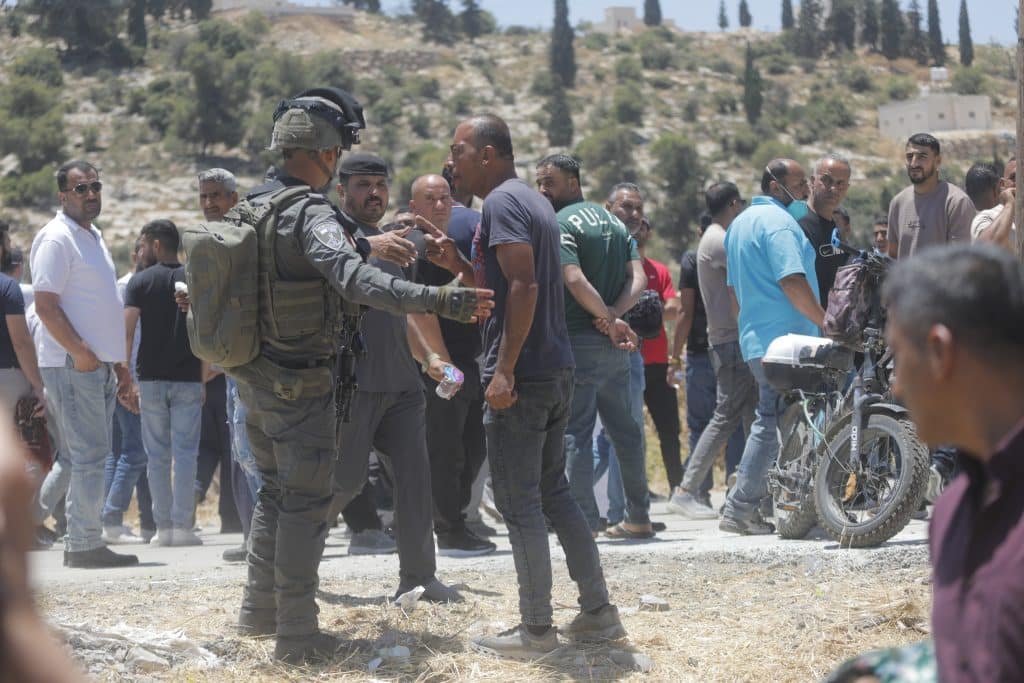
That same month of October, Israeli settler groups began a series of violent displacements of rural Palestinian communities in the West Bank, accompanied by accounts of wanton violence, some of them hard to describe. In any other moment, that would have been a newsworthy story, but in light of the genocide, it wasn’t. It took most mainstream journalists several days, and even weeks, to begin sounding the alarm about what was happening in the eastern slopes of Ramallah, the Nablus countryside, and in the Jordan Valley. Those attacks spread across the West Bank and haven’t stopped to this day.
What is happening in the West Bank today is an extension of what was started by the Israeli settlement apparatus two and a half years ago. It is also a turning point in Palestine’s history, and a clear signal of what is yet to come for Palestinians. Israeli settler groups’ attacks on Palestinians are daily, violent, and often deadly. They are not random but planned, well organized, and well-supported.
These attacks have successfully isolated dozens of Palestinian villages and towns from their farmlands, turning many of them into ghettos inside their urban areas. Israeli settler violence has put an end to any Palestinian presence in almost all of the Jordan Valley, and with it, generations of a rural way of life, culture, and economy. At the same time, the Israeli government paves the way to replace this Palestinian existence in real time. In less than a year, the Israeli government broke its own record of settlement growth in a single decision — twice. The Israeli government also made a series of decisions to allow settlers to claim property in Palestinian lands.
Meanwhile, Israeli army forces have restricted Palestinians’ freedom of movement to unprecedented levels, turning entire towns into actual cages within iron gates, and increasing their raids on Palestinian towns and cities under the control of the Palestinian Authority (PA). Israel has also been strangling the PA economically, pressuring the Palestinian population, bringing the health and education sectors to the brink of collapse, and depriving some 200,000 workers of access to their workplaces inside Israel. All this happens under the ongoing, explicit threats of Israeli leaders, from ministers’ statements to Knesset laws and resolutions voted with overwhelming majority to annex the West Bank, dissolve the PA, and kill any possibility of a contiguous Palestinian entity — let alone a state — in the West Bank.
But there is a problem, and it’s a media problem. This is not happening with drums of war and mass bombings. There isn’t a West Bank version of armed resistance that the Israeli government can use as a justification. Rather, the transformation is happening one methodical step at a time, under boring bureaucratic names, resolutions, and complicated political procedures that require explanation.
This story is not big; it is huge. It is about the future of the Palestinian people in what remains of Palestine, along with Gaza and east Jerusalem, and it is accelerating at an alarming rate, unopposed by anyone. But it is not a “big event.” Media-wise, the process that Israel is carrying out in the West Bank has the face of a series of repetitive, “normal” events, which now include every new escalation. But it isn’t newsworthy, because it doesn’t fit the mold.
How do we cover it? Or rather, how do we cover it fairly? How do we make sure its magnitude is understood? If nothing else, how do we cover an extraordinary story that the broader media ignores?
I have to step away from what I learned in journalism school and look at reality without the mainstream media narrative. This is not about shocking an audience into keeping them engaged; it is not about what happens between the audience and their screen after dinner, at breakfast, or on the train. This is about what happens in the lives of people whose future this story is about.
This is the story of Palestinian villagers who fear for their lives in their own villages and homes. This is the story of families who lose their lifetime sweat and struggle when their homes are demolished. It is the story of Palestinian workers who are trapped between misery, irregular jobs, and risking their lives jumping over the Israeli wall to bring food and clothes home. It is the story of farmers who cling to the little land they have left, of patients who can’t afford medicine in public hospitals, and of public teachers giving class only three days a week, without proper salaries, just to keep the education of young children going.
This story is about ordinary people, men and women, mothers and fathers, just like any of our readers, living in extraordinary conditions not of their own choosing. And they’re doing what any person in their place would do to keep their dignity.
The story that Palestinians are currently living in the West Bank — just like in Gaza, Jerusalem, or any other place — is a story worth telling.
The answer to how we tell it starts with what we’ve learned not to do. In Palestine, we’ve learned to remove the camera lens between ourselves and the people who allow us into their lives and share their stories with us. Palestinian journalists do that because we know there is somebody who cares and an audience that doesn’t look for the next sensational take.
And as long as an audience exists for those stories, we’ll continue to tell them on these pages.
Qassam Muaddi
Qassam Muaddi is the Palestine Staff Writer for Mondoweiss. He covers social, political, and cultural developments in Palestine, and has written for several outlets in English and French, including the Catholic Terre Sainte Magazine and other outlets. Follow him on Twitter/X at @QassaMMuaddi.
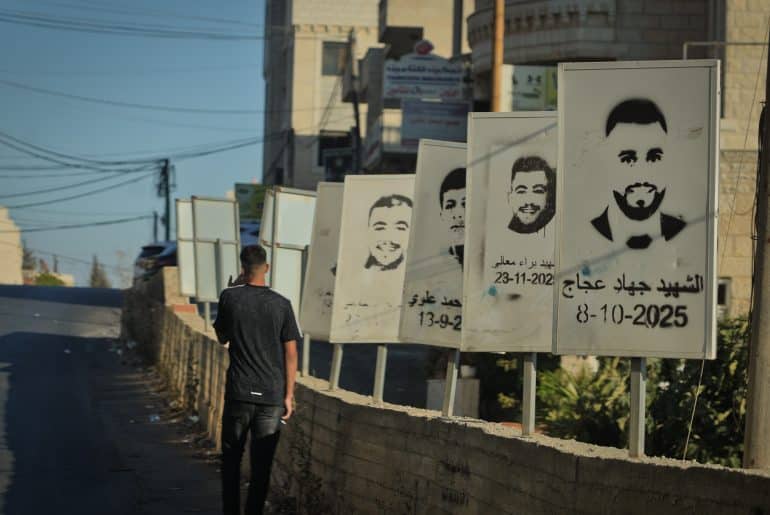
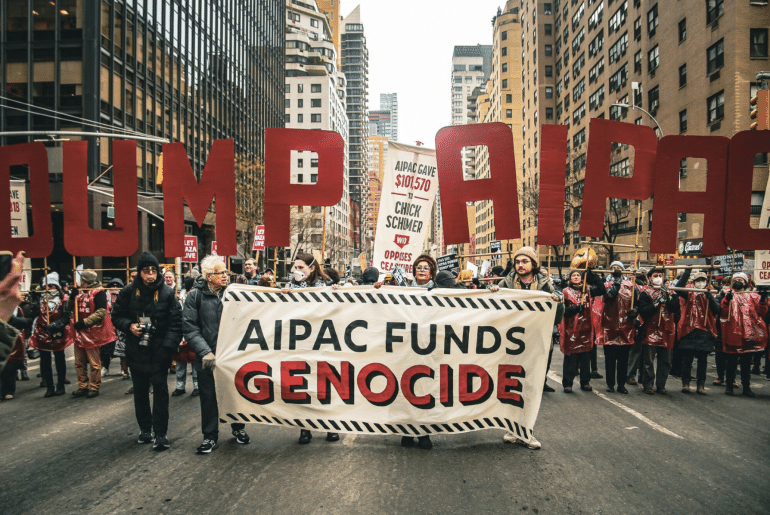
And the MSM has gotten tired of the story of the abuse of Palestinian prisoners in Israeli jails.
Al-Jazeera has put together an hour long documentary on this, partly consisting of interviews with former prisoners.
You can decide for yourself if it’s convincing.
https://www.aljazeera.com/news/2026/6/9/they-were-laughing-israels-use-of-rape-and-sexual-abuse-in-prisons
( Francesca Albanese is also featured in this documentary )
New report from Amnesty International”
Acceleration of Israel’s ethnic cleansing of Palestinians must spur global action to halt West Bank annexation…The international community’s tacit or explicit support for Israeli crimes, including genocide and apartheid, or their failure to act resolutely to stop them has emboldened the Israeli authorities to escalate a brutal campaign to forcibly displace Palestinians and expand its control over land in the West Bank, said Amnesty International. In a new report, the organization details how Israeli authorities are accelerating annexation through a state-driven campaign of ethnic cleansing targeting Palestinian Bedouin and herding communities in Area C of the occupied West Bank, while committing the crime against humanity of forcible transfer.
https://www.amnesty.org/en/latest/news/2026/06/acceleration-of-israels-ethnic-cleansing-of-palestinians-must-spur-global-action-to-halt-west-bank-annexation/
The report:
ERASING ANYTHING PALESTINIAN ISRAEL’S ETHNIC CLEANSING OF WEST BANK BEDOUIN AND HERDING COMMUNITIES
https://www.amnesty.org/en/wp-content/uploads/2026/06/MDE-1511032026-English.pdf
I’ve just clicked through to the Middle East section on the NYT’s website. The only story about the West Bank is No. 11 in the list. It’s not very good (too vague) and the writer is based in London rather than the Middle East.
The Guardian coverage is better: a live blog and eight stories dated 10 June, of which two concern the West Bank.