Archive

2015

Browsing

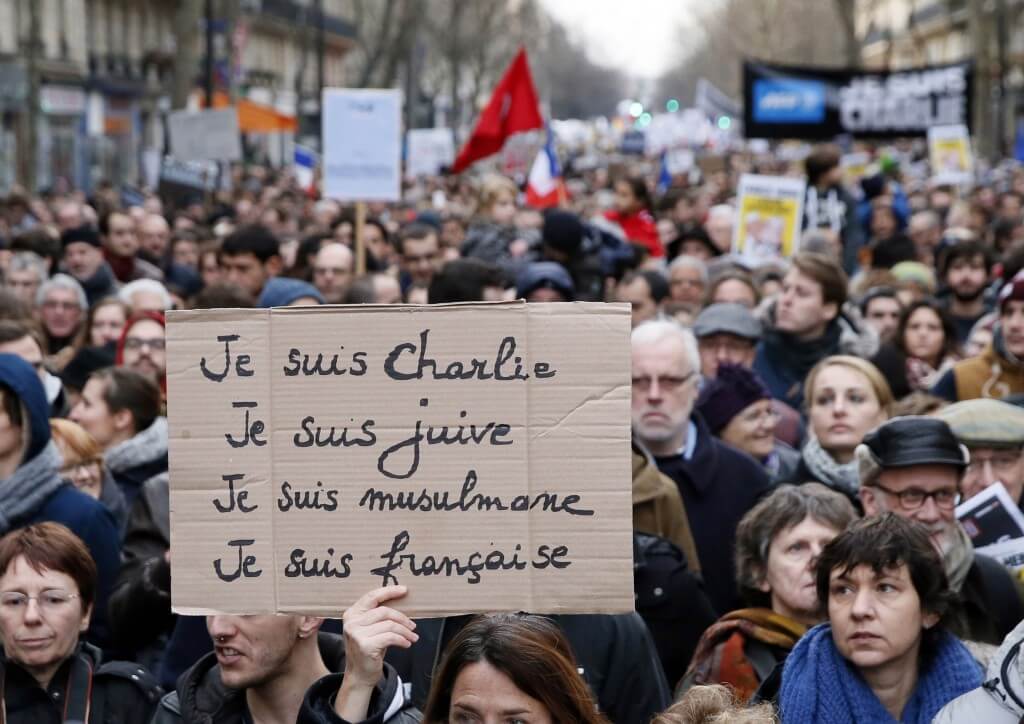
In the wake of the Charlie Hebdo killings there has been an effort to reify Islam and put a fixed meaning to this way of life/ civilization. Sabith Khan suggests we look at Islam contextually by placing our understanding of it in the milieu in which we find it instead of looking for an “essential spirit” of the religion: “American Islam is different from French Islam, which is different from that in Saudi Arabia. Speaking of ‘Islam’ as an all-consuming category, that subsumes all geographies, history and culture is not only naïve, but also dangerous.”

Celebrating Martin Luther King Jr.’s life in the era of police shootings means recognizing the racism in American society. And it also inspires Ned Rosch to work as a Jewish American for Palestinian freedom.

The stunning invitation to Netanyahu to address the Congress in March against Obama may at last politicize the “special relationship,” forcing Democrats to side with the president over Israel and unleashing a debate over our Israeli policy, including the damage to the U.S. from the unending occupation

The war in Syria and Iraq has so many sides it’s hard to keep track of the teams. In Syria, we’re fighting the Assad government, but we’re also fighting the rebels who are fighting the Assad government, putting us on both sides of that civil war. But when you throw in the other countries that are taking sides, the program becomes even harder to follow. Recently, it seems that allies are on our enemy’s side while our enemies are on our side. To be on our side, it seems, you first have to let us sanction you.

The greatest crime of the twenty-first century so far has come to the big screen, and it’s a hit. Eamon Murphy reviews Clint Eastwood’s film “American Sniper” which tells the story of Iraq war sniper Chris Kyle. Murphy writes: “There’s a generic antiwar undercurrent, but no understanding of the myriad ways in which this specific act of aggression was so monstrous. The conflicting signals were probably part of a strategy to drum up business through controversy, but the movie deserves to be talked about: how a culture remembers its crimes is always of interest. We seem willing to regret the Iraq War, provided that we never have to face it; American Sniper abides by this profitable bargain.”

Holy Land Foundation President Shukri Abu Baker writes from a maximum security prison in Beaumont, Texas: “I was only 4 yrs old when Martin Luther King delivered his “I Have a Dream” speech at the Lincoln Memorial in Washington, 1963. In that speech King dreamt of a day when people of all races would be able to sing with a ‘new meaning’, “My country, ’tis of thee, sweet land of liberty, of thee I sing. Land where my father died, land of the pilgrim’s pride, from every mountainside, let freedom ring.” I sang, and I’m still singing. Even from the tight emptiness of my cell I’m singing, but I’m yet to savor the new meaning King spoke of. I’m yet to feel the breeze of liberty against the stark landscape of incarceration. Perhaps my singing carries too strong of an Arabic accent, or a hint of Islamism, or a touch of Palestinianism. Perhaps the song, was not meant for me.”

The Congressional invitation to Benjamin Netanyahu to speak to both houses of Congress, purposely upstaging President Obama’s State of the Union speech on Iran and terrorism is a shocker that the MSM can’t ignore. More Iran sanctions would be like throwing “a grenade” into negotiations, John Kerry warns, while US media reflect shock that Congress would invite Netanyahu to urge such a course. The White House and State Department say they won’t meet with Netanyahu on the visit, the Israel lobby calls it a snub.

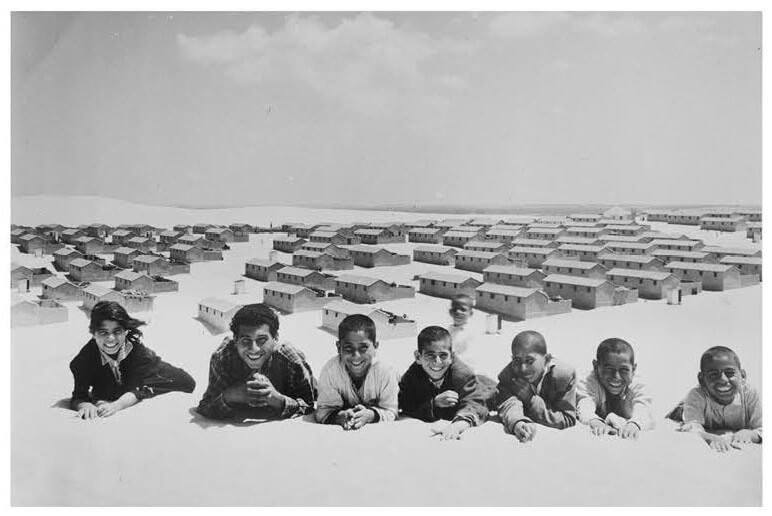
Palestinian refugees in the Yarmouk neighborhood of Damascus took to the streets on January 18th to protest the siege imposed by the Assad government. Since December 2012, civilians in Yarmouk, the largest Palestinian refugee camp in Syria—what some refer to as the “capital of the Palestinian diaspora”—have been under siege and constant attack by the Syrian regime.

“Europe will forever be tainted”, wrote Haaretz journalist Anshel Pfeffer in the wake of the terrorist attacks against Charlie Hebdo magazine and the kosher supermarket in Paris. “It will always be the continent of expulsion, blood libels, numerus clausus, ghettos and the Final Solution.” European Jews’ feelings of insecurity are real and can’t be easily dismissed. But they are not an argument for an ethnically-exclusive state in the Middle East. Our modern communities must be built on multiculturalism and human rights, Antony Loewenstein argues.