‘Fake News’ isn’t news, and it isn’t new either. When considering the Trump administration’s efforts at media manipulation it would be helpful to remember the path that led the United States to war in Iraq.


‘Fake News’ isn’t news, and it isn’t new either. When considering the Trump administration’s efforts at media manipulation it would be helpful to remember the path that led the United States to war in Iraq.
BDS movement: The global Boycott, Divestment and Sanctions (BDS) movement for freedom, justice and equality of the Palestinian people is an inclusive, nonviolent human rights movement that rejects all forms of racism and racial discrimination. The principles of the BDS movement call for proactive solidarity with oppressed communities worldwide and with all the victims of racist acts and rhetoric, as ours is a common cause.

Michael Sfard, an Israeli lawyer and political activist specializing in international human rights law, tells Mondoweiss it is difficult to know how Israel’s controversial new law aimed at barring boycott activists from entering the country will actually be enforced, but he says the law is in direct violation of international law. “Countries have wide discretion to allow are deny entry to foreigners,” Sfard says. “However, International Human Rights Law prohibits discrimination on the basis of a person’s opinion and provides freedom of conscious and thought. The law is definitely a violation of both.”

Haaretz reports Trump’s pick for U.S. ambassador to Israel, David Friedman has a “leadership role in an organization that raises funds for the West Bank settlement of Beit El [that] is frequently cited as grounds for disqualifying him from becoming U.S. ambassador to Israel. It now emerges that Friedman’s financial ties to the settlement movement run deeper than Beit El. Friedman has also made contributions over the years to Ateret Cohanim, a right-wing organization that buys land in the Muslim Quarter of Jerusalem’s Old City and Arab East Jerusalem for creating a ‘Jewish presence’ there.”
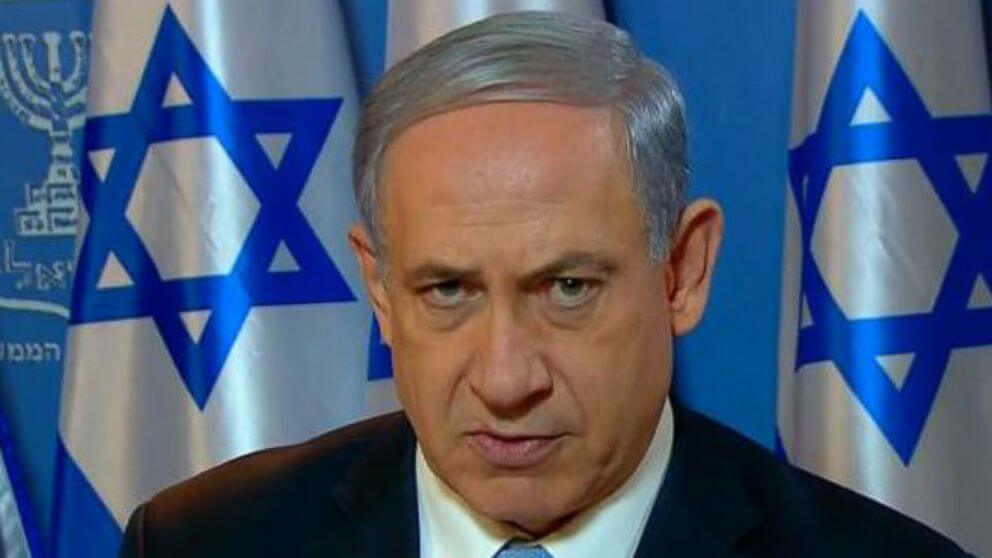
Legislation passed by the Israeli parliament on Monday night forbids entry to anyone who supports a boycott, even if it is only of the settlements. Israel has long denied entry to Arabs and deported those such as migrant workers and African asylum seekers who might ‘pollute’ the Jewish state with non-Jewish genes. Now it is openly targeting Jews whose politics do not align with the far-right government of Netanyahu.

The spike in antisemitic acts following the start of the Trump administration has rekindled an old question: are Jews white? But Mark Tseng-Putterman says this is the wrong question: “Let’s not ask if European Jews are white. The more urgent question is: what price have they paid in colluding with whiteness? The price of heritage, of language, and of culture? Or the price of dignity, of accountability, of moral authority? Far from giving white Jews a free pass on confronting their own white privilege, I hope that answering this question might just lead more of our Jewish communities towards truly joining the multiracial, multi-faith fight against white supremacy.”

British pro-Israel blogger David Collier purports to discover that 42 percent of Palestinian solidarity campaigners are anti-Semitic. Jonathan Ofir exposes his methods as laughable and ideological.

The cancellation of a lecture by journalist Rania Khalek, who was invited to speak on the University of North Carolina – Chapel Hill campus by Students for Justice in Palestine on February 27, 2017, raises important issues of tactics and strategy within movements for social change. An open letter from journalists, intellectuals, and activists says in part, “when a group seeking justice in Palestine subjects speakers or members to a political litmus test related to their views on Syria, it inevitably leads to splits, silencing, confusion, and a serious erosion of trust. It runs contrary to the possibility of people learning from one another, changing their minds, and educating one another through their activism. Disagreements about political issues exist inside every movement coalition. They must not be made fodder for targeted vilification of activists in the movement.”
Israeli Defense Minister Avigdor Lieberman announced in the Knesset that the Trump administration warned Israel that imposing sovereignty over the West Bank would cause an “immediate crisis” between the U.S. and Israel.
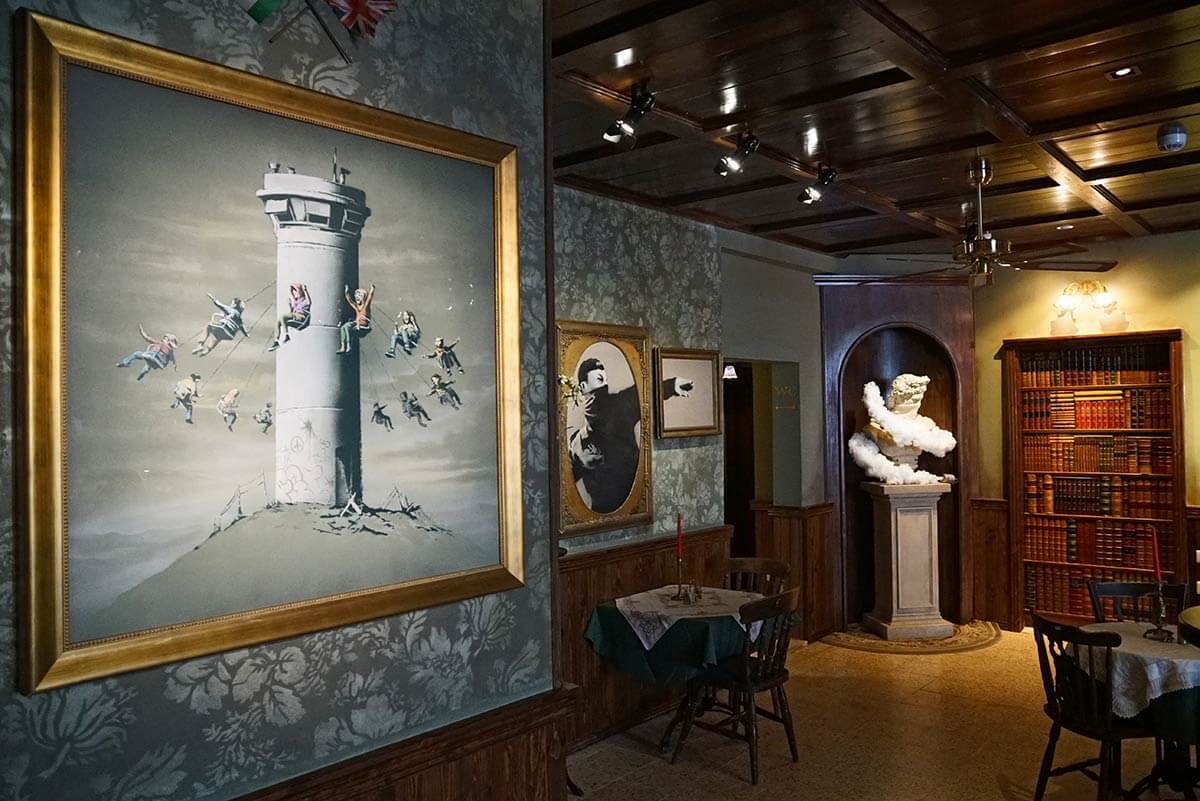
Banksy’s new hotel has drawn much praise from the international community for its initiative to attract tourists to the West Bank and educate them through space as a medium and an object of art, but Tamara Nassar says, “Banksy’s hotel is a form of gentrification that exploits Palestinian suffering and imposes an ‘art space’ that thrives on fulfilling an example of white fantasy in travel, in order to witness war zones as an educational and historical amusement when in fact it is very present and happening in real-time.”