AIPAC’s Super PAC, the United Democracy Project, spent $33 million on ads aimed at defeating Dr. Abdul El-Sayed in Michigan’s Democratic primary, but he still defeated the pro-Israel Haley Stevens.
The loss has seemingly had no impact on the group’s long-term strategy, as it essentially told its donors that a little more money would have secured the win.
“The messaging coming out from some of the Lobby groups was, basically, yes, we lost Michigan, but maybe another $5 million could have made the difference,” the Quincy Institute’s Eli Clifton told Mondoweiss last month. Certainly from a fundraising standpoint, that’s a smart thing to say, but whether that’s actually substantiated in fact, I think it’s probably a different matter.”
A recent New York Times report confirms Clifton’s suspicions, noting that multiple AIPAC donors were left “flummoxed” after Stevens outspent El-Sayed and still lost.
The piece quotes former hospitality executive Mike Leven, who has donated $120,000 to AIPAC this cycle and questioned an official at the organization after the primary.
“The answer I got was that they did move the needle from where it was in the beginning to only losing by one point,” explained Leven. “They felt that that was successful.”
AIPAC has publicly downplayed such tension, but the reality is that the organization is spending more and more money to deliver fewer and fewer wins. They have been the largest outside spender in the 2026 races, but they have endured major primary defeats in New York, Texas, Illinois, and several other states.
“AIPAC’s problem isn’t money,” declares a report from the campaign finance website Inside Political Money. “United Democracy Project entered the cycle with an enormous war chest and has repeatedly demonstrated that it can drop millions — or tens of millions — into a race almost overnight.”
“What’s different from 2024 isn’t AIPAC’s capacity,” the post continues. “It’s the opposition. Until 2026, AIPAC contested Democratic primaries without organized counter-PAC opposition or a revolt among the party’s voters. This year’s results increasingly suggest that AIPAC’s involvement can itself become part of the argument against the candidate it is trying to help.”
That was certainly true during Michigan’s Democratic primary, where El-Sayed repeatedly cited Stevens’s connections to AIPAC throughout his campaign, but it could also emerge as a major issue in the general election.
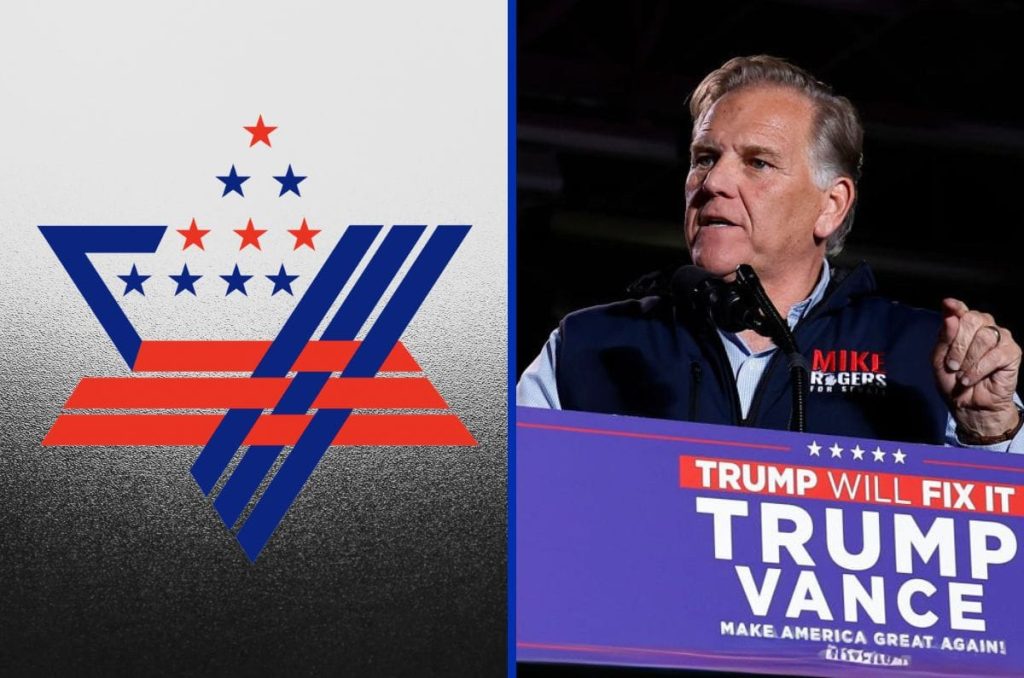
In August, Axios revealed that GOP candidate Mike Rogers had asked the polarizing lobbying group to refrain from advertising on his behalf, “triggering a rupture” with the organization.
“The extraordinary tension underscores how far AIPAC’s political standing has fallen amid voters’ anger over the war in Gaza,” explains the article. “Even Rogers — a staunchly pro-Israel Republican — fears the group’s public support could be a liability in the Nov. 3 election.”
Questioned about the story during a recent debate, Rogers made it clear that he would accept the group’s support.
“Anybody that wants to help my campaign stop a guy who can’t condemn terrorism in our own country because he’s so close to the people who are supporting the Muslim Brotherhood, again, I’ll take all of that help,” he told the crowd.
Less than 24 hours after Rogers publicly embraced their support, AIPAC spent $95,000 targeting 130,000 Jewish voters via an anti-El-Sayed mailer that criticizes his response to the March attack on a Michigan synagogue.
American Prospect editor David Dayen points out that this is a strikingly small investment for a group that has a war chest of $55 million and wonders whether Rogers initial apprehension cost AIPAC its shot at spending more on the race.
“The airwaves in Michigan are clogged; as far back as August, there were $45 million in ad reservations, and by October 1, after well over $100 million spent, ad reservations were at $65 million,” he notes. “Even if UDP could find any airtime at all to broadcast a spot, it would be prohibitively expensive relative to the locked-in reservations. UDP would have to spend fantastical amounts to get the same relative reach as the $94,620 mailer.”
“It’s hard to know at this point what kind of ad inventory is available in Michigan and what it would cost,” Dayen continues. “But it’s just a fact that earlier ad reservations would be more plentiful and cheaper. In this sense, AIPAC’s reputation could account for the relatively puny expenditure thus far in the race: The group may have had to wait so long to get the tacit all-clear from their preferred candidate for their influence campaign that they got shut out of television.”
A September Marist poll of registered Michigan voters has El-Sayed ahead of Rogers, 51% to 44%, while a new survey from the conservative Rasmussen Reports shows El-Sayed leading 46% to 44%.
“You know Mike Rogers is in trouble when he begs AIPAC to start spending against me,” tweeted El-Sayed in response to the mailers. “Why do they hate me? Because I want to keep your tax money here to spend on your kids rather than spend it to kill kids somewhere else.”