Even the most optimistic observer was surprised by the massive rebuke of Donald Trump and the MAGA agenda that we saw on Tuesday. No one could have missed the outsized role the disastrous war on Iran played in this Republican downfall.
But the story doesn’t end here, and the war is certainly not over.
In terms of American policy in the Middle East, including not just the war, but also the Gaza genocide and our relationship with Israel overall, Tuesday’s election was not only a rejection of Trump’s far-right agenda; it was a clear departure from the long-term, pro-Israel, AIPAC-backed policies of the Democratic old guard.
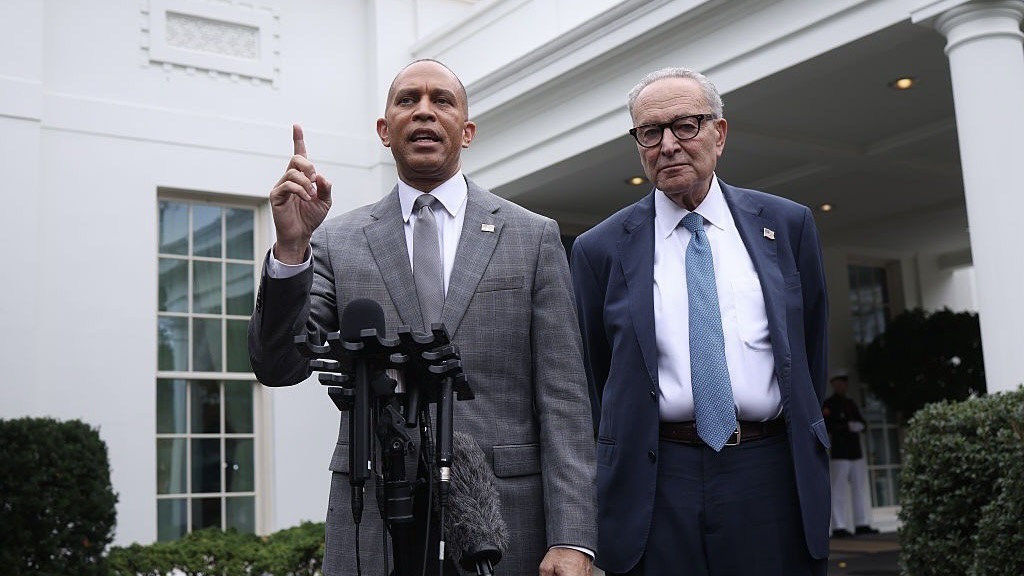
But an election does not necessarily lead directly to policy. Democratic leaders remain in place. It is a virtual certainty that Jared Kushner’s BFF and AIPAC darling Hakeem Jeffries will be the next Speaker of the House.
Meanwhile, Chuck Schumer faces a bit more of a challenge in the Senate, but it is still very likely he will be the Majority Leader. Congress’s leadership, committee assignments, and intra-caucus business are strongly insulated from democratic and popular input.
But even if Jeffries and Schumer retain their leadership positions, enormous potential for change remains. Much of that depends on continued engagement from activists who have been working hard to change policy on Palestine and to end the war on Iran.
If that engagement continues, a wide swath of House Democrats, far beyond the growing ranks of the Squad, could put powerful pressure on party leadership for change. The same is true in the Senate.
Why? Because AIPAC, for all its money and experience on Capitol Hill, is a toxic product now. That doesn’t make it powerless, but it does mean that their still considerable strength is much more resistible to members of Congress.
That resistance is strengthened by a movement for peace and human rights in the Middle East that has never before been anywhere near this active, this well-funded (even if it still needs much more funding), and most of all, so strategically sound and grounded in real political education.
The playing field has shifted dramatically. What does that imply for the short and long term?
The lame duck months
This moment is the most dangerous in terms of the Iran war.
Trump has suffered a defeat so bad that even he couldn’t deny that’s what it was, and he knows that Iran’s ability to withstand the American-Israeli assault was a major factor in that defeat. He has sent mixed signals for weeks about whether he would attack Iran or sue for peace after the midterms, but given his history of using negotiations as a cover for a surprise attack, renewed war seems more likely.
More than that, the pressure he will be getting from Israel is going to be even more desperate.
The new Knesset will be seated on November 10, making this moment the best one for Prime Minister Benjamin Netanyahu to restart the full-blown war on Iran. Once the new Knesset is in place, a bevy of legal questions will arise about what a caretaker prime minister can and can’t do. Netanyahu may not care about the law too much, thinking that once a war starts with Iran, the recriminations will be put off until after it’s over.
The question for him will be political: how will launching a war of dubious legality under Israeli law affect his ability to stay in office, a prospect that already looks gloomy for him?
For Netanyahu, if the war starts before the new Knesset is seated, there will be less question about his right to have sparked it. After the Knesset is in place, the arguments will get fiercer, as opposition leader Gadi Eisenkot has stated that he will oppose any attack on Iran unless Iran attacks Israel first.
Trump will therefore be hearing it from Netanyahu, loudly and often, over the next few days. While Republicans, even outgoing ones, will want Trump to move toward ending the war, Trump knows that continuing the war on Iran will become much more difficult in January, when the new Congress is sworn in. So, while his sense of urgency might not be quite as immediate as Netanyahu’s, it is still there.
Meanwhile, the war on Iran is far from Israel’s only concern in Washington.
Trump’s announcement that aid to Israel would be ending with 2026, despite its inaccuracy (the current agreement for annual aid runs through FY 2028), was not a lie. As I reviewed elsewhere, this is part of a plan Netanyahu cooked up with the late and unlamented Senator Lindsey Graham to maintain American support for Israel’s genocide and aggression while bypassing the public fight over annual aid by greatly expanding public-private partnerships between the U.S. and Israeli governments and corporations.
One major part of that plan is the clause in the National Defense Appropriations Act (NDAA), Section 219, that would legislatively cement Israel as a policy priority, regardless of Israel’s actions, and would essentially link the Israeli and American defense and tech sectors to ensure a flow of taxpayer dollars without it being labeled as “military aid.”
The NDAA is a must-pass bill, meaning it can be negotiated, debated, and amended, but eventually there has to be a final product that both houses of Congress pass and the president signs into law. Therefore, Section 219 has to be removed before the bill comes to the floor for a final up-or-down vote.
The House of Representatives has already passed it. However, it has stalled in the Senate. Some of the main concerns about the NDAA include the size of the appropriation request, funding the Iran war, and Section 219.
The bill calls for a defense budget of $1.5 trillion, a sum not only huge but also more than a 50% increase over the current, already obscenely large defense budget. Section 219 has also drawn scrutiny.
The outgoing Congress will consider the NDAA in December, and Republicans will certainly make a concerted effort to pass the bill with as much of Trump’s agenda included as possible before the year ends.
This will be a major test for the incumbent Democrats who will remain in the Senate next year. There are 41 of them, plus the two Independent senators who caucus with Democrats. Will they fight to block the NDAA from passing at this size, with funding for the war on Iran, and including Section 219?
If they do, they can hold the bill over until the next Congress and could change it, which will be difficult in the current, still Republican-held Senate.
If they roll over in the face of the must-pass nature of the bill (while it is must-pass, that doesn’t mean it must pass before the new Congress comes in), it will tell us a lot about the probability of a real struggle within the Democratic caucus over what policy should look like for the next two years.
And supporters of Palestinian rights will have a new obstacle to overcome in the fight to change American policy.
The longer view
While the gargantuan size of the NDAA should be a rallying cry for all Americans, let’s focus on the questions of Iran and Palestine.
On Iran, there is clearly a strong impetus to end the war, but the question is how that would be done.
The obvious path is to cut off the funding for the war, as was done with Vietnam. We absolutely should support doing that, but we should also understand the differences between Vietnam in 1973 and Iran in 2026.
Although the U.S. lost in both cases, the ramifications were quite different. Vietnam was devastated by the time the war ended, and some of its neighbors shared that fate. Vietnam was not going to emerge from that war as a significant power.
Iran will. Moreover, unlike in Vietnam, the Iran war is already leading to a major realignment of the region, as Saudi Arabia is working with neighboring states to create a new security infrastructure.
How will the United States deal with the new Middle East and the new Iran that will emerge from this war, if Democrats manage to end it?
It will be critical for regional stability and—although it may seem counterintuitive—for American interests to go beyond merely cutting off Trump’s ability to continue the war. Democrats must sharply change course from what they pursued earlier this year, when they blasted Trump for agreeing to the now-abandoned Memorandum of Understanding with Iran.
Democrats called the MOU a surrender document and used it as a political weapon against Trump. While that was a policy error, it was politically sensible, given that the midterms were looming only a few months after the MOU was signed.
Now, Democrats need to support the MOU. I made the case in June for why the MOU, while certainly giving much more to Iran than to the United States, was sensible policy and a recipe for promoting a future where Iran could rebuild relationships with its Gulf neighbors and with the United States as well.
That’s still the case.
But for the MOU to be revived and play the role only it can, it needs support. But there was scant support, even on the left, for the MOU when it was signed.
That, of course, ignored the fact that Iran wanted the MOU instituted. Since Trump walked away from it, Iran has continued to insist that any serious negotiations to end the war must begin with the MOU.
Democrats turned the MOU from a recipe for peace into a tool to humiliate Trump, ensuring he would walk away from it.
Reversing that course needs to happen right now. If all Democrats do, once the new Congress is sworn in, is cut off the funding for the war, the fighting will end but the state of tension will remain, as will the suffering of the people of Iran and the rest of the region.
Even the global economy won’t fully recover if there is only a cold truce. Fear will remain that the fighting could erupt again. Iran will still be under harsh sanctions and will not be able to settle for that status quo. Even if Iran does not respond militarily to ongoing sanctions, the fear that it will do so will keep energy prices from returning to their previous levels.
No, the MOU must be revived and fully supported, not as a bad deal that we have to accept because of Trump’s folly, but as a deal that creates a new reality in the region, one which we justly pay for after years of pointless sanctions and criminal war, but that will lead to a better future not only for Iran and the Gulf, but for us as well.
The problem right now is that Democrats all say they want to end the war, but that is not a policy proposal. We need a specific plan for what ending the fighting and stabilizing the region looks like.
If that is the case with Iran, it is even more so for Palestine.
“Free Palestine” is a wonderful slogan, but it, too, is not policy. Ending American military support for Israel is a step, a tactic, not a goal unto itself.
Blather about a two-state solution is not a policy either. At one time, there was a realistic, albeit unjust, formulation for how a Palestinian state could come into being next to Israel. Israel erased that theoretical possibility. Yet, the two-state solution remains the international consensus. How to untangle that knot?
It’s not that complicated. Simply support Palestinian rights. That means recognizing the state of Palestine, without borders. Rather like the way Israel has been recognized.
Next, insist on the end of Israel’s occupation of the West Bank, full withdrawal from Gaza, and enforcement of international law regarding Palestinian human, civil, and national rights. That will eventually force Israel to work with Palestinians to reach a permanent solution. But in the meantime, it means Israel has to stop killing Palestinians and will face pressure to fully protect, not just respect, Palestinian rights.
Will Israel cooperate with that, even under pressure? Of course not. But for now, what Washington and the incoming Democratic caucus need is policy. A policy based on defending Palestinian rights, on every level, as fully equal to Israeli rights will force a change in the status quo, and at that point, it becomes a question of tactics to continue to press Israel until the Palestinians are free.
Democrats are a long way from a policy like that, but the new wave of Democrats came into office, in part, based on supporting the belief that Palestinians are entitled to the same rights as everyone else. That is the theme their constituents need to hammer home, and the standard we must hold the new Congress to.