Even autocracies have to be concerned about angering their population too much.
That principle was on display earlier this week, when Saudi Arabia’s Crown Prince Mohammed Bin Salman (MBS) declined Israeli Prime Minister Benjamin Netanyahu’s offer of help in fighting Ansar Allah (also referred to as the Houthis), which has been launching devastating attacks on Saudi Arabia and has also been fighting Saudi and Saudi-backed Yemeni forces for control of Yemen’s coast along the Red Sea.
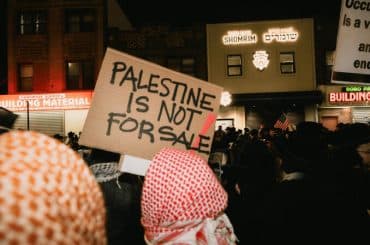
MBS cited concerns about how the Saudi public would react to Israel openly coming to the aid of Saudi Arabia, and he was right to do so. A poll conducted in 2025 by the Arab Center, DC showed that only 4% of Saudis supported the idea of normalizing relations with Israel. There will be scant support for Israel fighting alongside Saudi soldiers.
For years, it’s been clear that one faction in the Saudi royal family, led by MBS, was interested in finding a way to normalize relations with Israel, while others were staunchly opposed to this until the Palestinians have a state of their own or were otherwise freed from Israeli occupation.
The genocide in Gaza put the matter on hold entirely. Even MBS understood that he could not ignore an Israeli crime of that scale. His refusal to allow Israel to attack Ansar Allah demonstrates how much MBS still believes that he can’t draw closer to Israel without angering the Saudi population.
But how long will that last?
Ansar Allah attacks are certainly generating concern in the kingdom, and their escalation to attacking Saudi Aramco sites—the largest oil production corporation in the kingdom— poses a real threat to the Saudi economy.
That economy is already reeling thanks to the war on Iran, and the ongoing fighting with Yemen. Saudi visions of modernizing and diversifying their economy have been set back by years, possibly decades. Once seen as a safe place for investment, for global sporting events, and for tourism, the outlook for all of these sectors has taken a severe hit.
Does Saudi Arabia have anywhere else to turn? And if not, how will Israel try to leverage Saudi concerns for its own gains?
The regional balance
While it would not be true to say that either Saudi Arabia or Ansar Allah are fighting this war completely on their own, both sides are finding that key allies have to careful about their involvement.
Ansar Allah has the support of Shi’a militias in Iraq, and they have been effective in some instances. But they are only able to carry out limited attacks and are otherwise too small to offer much help to Ansar Allah.
Hezbollah in Lebanon has often lent support to Ansar Allah, but they are limited by geography and their need to focus on the Israeli invasion of Lebanon.
Iran has to walk a careful path. Though Tehran makes no secret of its support for Ansar Allah, it is reluctant to engage in combat with Saudi Arabia. Tehran and Riyadh have reached a temporary truce based on neither party attacking the other or helping their enemies attack them. Saudi refusal to allow its airspace to be used for American attacks on Iran since early in the war has been a key advantage for Tehran, while Riyadh has suffered far less damage from Iran than some of the other Gulf states, such as Kuwait and Bahrain.
Iran is certainly not unhappy about the Saudis getting hit by Ansar Allah, but they want no part of that fight. They have enough on their hands with the United States, and Iranian eyes have remained fixed on the reality that they will need to eventually work out an accommodation with Riyadh.
Ansar Allah has proven that they are not a mere ragtag militia, nor are they simply pawns in Iran’s chess game. They are independent actors, well trained, armed with far more sophisticated weapons than other regional militias, and quite capable of advanced strategic planning and meticulous tactical execution.
Iran does play a key role, however, in a deterrent capacity. Other countries are reluctant to get involved in this conflict to some degree because they do not want to end up in conflict with Iran, or to see their relationship with Iran suffer.
That is a significant consideration for Saudi Arabia’s partners in the recently-signed defense pact, called the Mecca Agreement. Both of the other countries involved in that deal—Türkiye and Pakistan—also have ties with Iran. Pakistan in particular does a considerable amount of business with Iran, and would not want to see that relationship rupture, even if it has significant ideological and strategic alignment with Saudi Arabia. They will help Riyadh, but are going to stop short of engaging Ansar Allah, much like France has done.
Then there is the United States, which has been unable to decide whether or not to come to Saudi Arabia’s rescue.
Strategically, there is little reason for U.S. President Donald Trump to attack Ansar Allah. The Yemeni group has been as good as its word and refrained from attacking American and other shipping, aside from Saudi ships, in the Red Sea. The last thing the American military needs now is another front in a war that has been a humiliating and disastrous defeat, with major political repercussions for Trump’s Republican party that are likely to be felt in the midterm elections.
But MBS does have a major card to play that, at least it seems, he has not yet laid on the table.
Trump and his family have made a considerable number of high-priced deals with Saudi Arabia. The kingdom has also pledged a tremendous amount of investment in the United States.
While Saudi Arabia would never be able to find an arms merchant that can offer the quantity, and much of the quality, of American weaponry, they can invest in other industries located in countries other than the United States. They can also find investors from other places for much of their industry, or do business with Americans other than Trump if they choose.
For a president as corrupt as Trump, this would be a significant threat. There is no indication that MBS has tried it yet, but if he does, it could push Trump into action.
Yet, even if Trump does feel enough pressure to try again to fight Ansar Allah, he may wait until after the midterms, which might be longer than MBS thinks he has.
Netanyahu waiting in the wings
This is what Netanyahu sensed when he offered to join Saudi Arabia in the fight against Ansar Allah.
And there may come a point, if MBS feels sufficiently vulnerable or the kingdom is facing significant enough losses, that Saudi desperation might overcome their concerns about working with Israel.
The opportunity to strike Ansar Allah is important to Netanyahu and to Israeli strategy. They have been largely sidelined in the war on Iran and the war in Lebanon has been frozen in place by Washington.
Israel continues to kill Palestinians in Gaza on a daily basis, and it continues to use settlers to assault Palestinians in the West Bank. But these are double edged political swords for Netanyahu.
While the ongoing killing of Palestinians fits with Israel’s program of genocide and ethnic cleansing, the incremental killings and displacements have not progressed into tangible gains for the state in the public eye, while they have brought significant costs in terms of sanctions and isolation.
None of this serves Netanyahu in his effort to hold on to power. He is seeking an opportunity not only to show Israeli voters that he is still “Mr. Security” despite his many failings, but also to make it more enticing for some of the most hawkish parties in the opposition to consider joining his coalition after the election.
Israelis have not forgotten that Ansar Allah took some of the most decisive action in support of the Palestinians at the start of the Gaza genocide, and that they did so with very little possibility of tangible gain for themselves. To Palestinians, that was an act of generosity. Israelis see it as proof that Ansar Allah hates them so much, they will use any pretext to attack “the Jews.”
Israelis across the political spectrum also very much want to see normalization with Saudi Arabia.
All of this comes together to make the idea of attacking Ansar Allah very attractive for Netanyahu, even though the prospects for real success are not particularly good. Ansar Allah withstood Israeli and American attacks before, as well as years of an American-backed Saudi onslaught. There is little reason to think what failed before will work now, especially considering that Ansar Allah is stronger now.
But that doesn’t really worry Netanyahu. Ultimate victory is a secondary concern for him. What is most important in his calculations is a short-term victory that can elevate his status in the eyes of the Israeli public and open options for his efforts to build a governing coalition after the election.
Netanyahu cannot attack Ansar Allah in support of Saudi Arabia counter to the wishes of MBS unless Ansar Allah attacks Israel first. But it wouldn’t be difficult for Israel to manufacture an excuse to attack Ansar Allah independent of Riyadh, claiming it was their own security needs that drove them to do so. MBS could then object and get himself off the hook, and by the time any concerns about a real normalization process arose, the incident would no longer be important.
It is likely that American and Israeli planners are considering something along these lines, because it will be very dangerous for Trump to escalate against Iran while Saudi Arabia is as vulnerable to Ansar Allah as it appears to be at the moment. An Israeli attack on Yemen might not trigger the kinds of regional retaliation against energy and civilian infrastructure that worries Trump so much.
For Netanyahu, however, this is just another opportunity to destabilize the region, stoke the flames of war with Iran, and, he hopes, gather support for continuing his seemingly endless time in control of Israel. He knows that both Ansar Allah and Iran are capable of hitting Israel with missiles, especially now that American regional defenses are dramatically weakened.
Saudi Arabia may want the U.S. to intervene on its behalf, but the sort of massive bombing campaign that would result is certain to bring retaliation against Saudi territory that will dwarf what it has experienced in this past week. And it is quite possible that Iran, which may well want to preempt what seems likely to be the looming American escalation by escalating themselves, will seize upon such attacks to launch retaliatory strikes at American, Israeli, and Gulf sites.
Like the U.S. with Iran, the best course for MBS is to cut losses and try to work out a ceasefire. But that is a path neither country is prepared to pursue. And, as always, Israel’s agenda is to sow as much instability as possible.