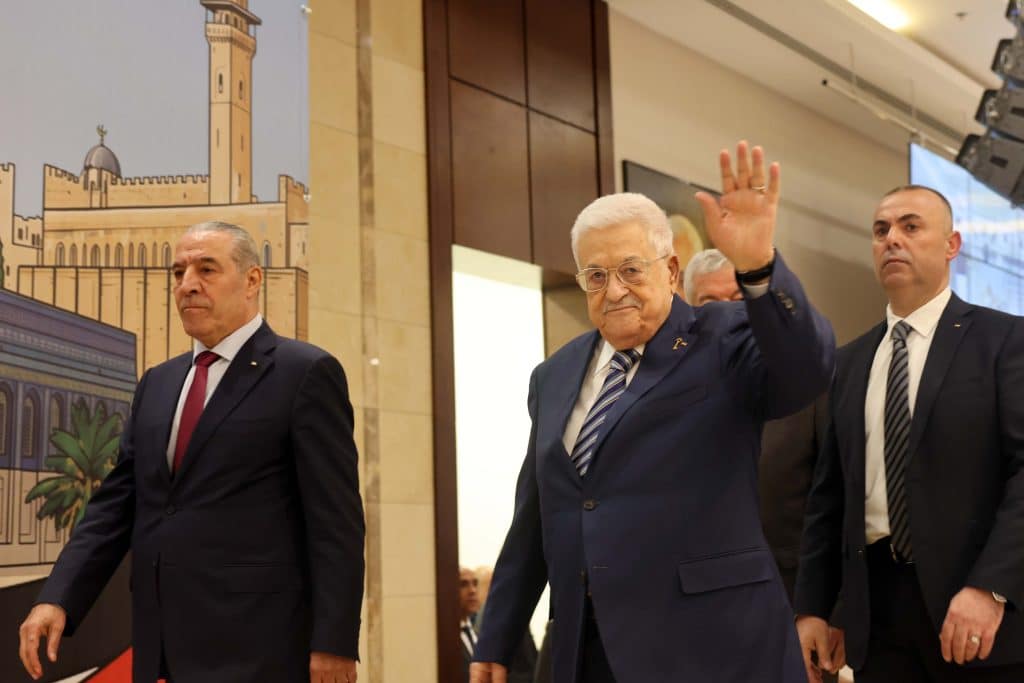
On October 10, Palestinian President Mahmoud Abbas issued a presidential decree postponing the legislative and presidential elections from November 2026, the original scheduled date, until September 2027.
Amid obstacles imposed by the Israeli occupation, the postponement was justified by a need to create appropriate political, security, and on-the-ground conditions for free, fair, and inclusive elections.
According to the official Palestinian news agency WAFA, the decree aims to allow for comprehensive national dialogue to strengthen Palestinian unity, preserve Palestinian territory, safeguard the political system, address challenges that the electoral process is facing, and ensure the participation of Palestinians in Jerusalem, the West Bank, and the Gaza Strip while protecting their political and constitutional rights.
While some expected the postponement, in light of the cancellation of Palestinian elections in 2021, it nevertheless came as a surprise to observers.
In the Gaza Strip, reactions to the decision have been divided. Some consider it to be in the national interest, arguing that the current conditions in Gaza do not permit elections. Others believe that postponing the vote, after more than 20 years without elections, undermines the national democratic process and marginalizes the role of Gaza’s residents in determining their political future.
Unjust or justified?
Fadi al-Sheikh Youssef, head of a youth-led electoral list that had been preparing to contest the elections, described the postponement as an unjust and direct denial of the Palestinian people’s democratic right.
“The elections should have continued after nearly 20 years of freezing the democratic process in Palestine,” he said. “If the Israeli occupation has imposed obstacles, the elections should have become a political battle fought by all parties against the occupation. This electoral process should have been a new opportunity to expose the occupation to the world and reveal the falsity of its claims about democratic practices and its supposed respect for freedom of expression and Palestinians’ right to political participation.”
He added that the postponement appeared to reflect an agreement among political parties to reproduce the same political landscape.
“Unfortunately, we see this postponement as part of an effort by the parties to recreate the same political scene. Even the justification of national consensus does not reflect the real wishes of the Palestinian people. If there had truly been national consensus, it should have been achieved over the past 20 years, not now, as the political landscape is being reshaped through a democratic process,” he said.
Al-Sheikh Youssef described the decision as deeply unjust and ill-suited to the current political landscape, arguing that it excluded new groups and political actors seeking to enter the arena and defend what remains of people’s dignity.
In a statement, Hamas said it viewed the decision to postpone the elections until next year as a step in the right direction, given the absence of the political, security, and on-the-ground conditions necessary for free and fair elections throughout the occupied Palestinian territories, including Jerusalem.
Hamas said the postponement should lead to comprehensive, serious and productive national dialogue. It also expressed its readiness to participate in discussions aimed at reaching clear and binding agreements for all parties, including mechanisms to reorganize Palestinian political institutions, particularly the Palestinian National Council and the Palestinian Legislative Council.
Furthermore, some Palestinian political analysts and academics offered a broader assessment of the political calculations behind the postponement and its potential consequences for the Palestinian political system.
A need for new leadership
Political analyst Adel Shadid told Mondoweiss that “despite the Palestinian demands and European pressure on the Palestinian Authority to hold elections, the PA are afraid of elections, because they know its officials know that there are real possibilities of losing, and despite that, I was surprised by the postponement of elections.”
According to Shadid, the elections were postponed in an unexpected manner. “I expected the Palestinian president Mahmoud Abbas to unilaterally call off the elections, like in 2021, but I didn’t expect all the Palestinian factions to meet in Cairo and then come out with a joint statement to call off the elections together,” he said.
Shadid pointed out that although the alliance of Hamas, the Palestinian Islamic Jihad, and the dissident Fatah currents led by Mohammad Dahlan and Nasser Al Qudwah had a very high chance of winning, these factions knew that there was still uncertainty regarding Israeli attempts to block Palestinians from voting in east Jerusalem. This would have given the PA the possibility of calling off elections by blaming the decision on Israel, exposing their unwillingness to relinquish control, while the factions wanted to make it clear that it was a Palestinian decision. Shadid also said that “the result of this decision will be that the Palestinian political scene will remain at the current stagnation, which prolongs the overall Palestinian incapacity to face the Israeli offensive.”
Shadid, who twenty years ago ran the elections campaign for Fatah in Hebron, the West Bank’s largest city, today believes that all factions, including the leadership of Fatah in the PA, act on narrow political calculations rather than the overall national interest.
“During the revolutionary years of the PLO, when it was based in exile, political legitimacy came from the role played in the struggle, or as the saying goes, from the barrel of the gun,” Shadid explained. “But since the PA was established as an embryo for a Palestinian state, legitimacy comes from a popular vote, but this transition wasn’t fully and properly made, which has created a rift between the leadership and the people.”
Despite the uncertainty, he remains hopeful for the next generation of Palestinian leaders. “The international solidarity movement today finds more Palestinian partners in civil society, where they can find more Palestinians from the young generations with whom they can cooperate, and eventually, a new Palestinian leadership will emerge and channel all this potential towards Palestinian liberation,” Shadid said.
For Palestinian analyst and academic Akram Atallah, all factions feared the elections, because their performance in the past years, especially during the Gaza genocide, was very poor. This meant that despite the wide opposition alliance, the voting rate would have shown that the popularity of all of them has fallen back.
“I wasn’t surprised by the postponement of elections, because in my opinion, president Abbas believed that Hamas, his main opponent, had lost much of its popularity and capacity of influence, but the formation of the wide opposition alliance changed his calculations, therefore, it was expected from him to postpone elections,” he told Mondoweiss.
Atallah believes that the consequences of calling off elections will be paid by the Palestinian people in general. “Elections for Palestinians meant the possibility to renew their leadership in order to counter the Israeli genocidal and expansionist project, and calling elections off means to remain in the same political weakness experienced by the Palestinian people,” he said.
For Atallah, the entire Palestinian political system is in crisis, from the PA losing influence to Hamas losing capacity to present an opposition, resulting in all factions becoming more concerned with “their share in the political pie” rather than a renewed leadership for Palestine.
Despite this, he insists that “the Palestinian people will produce new leadership, and Palestinians will continue their struggle and resilience despite the political stagnation.”
Elections in a time of genocide
On the streets of Gaza, opinions remain divided between those who support the postponement and those who oppose it.
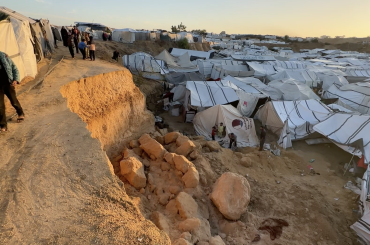
Mahmoud al-Dhahir, 41, originally from Rafah and now displaced in Khan Younis, said President Abbas had made the right decision, given the instability of the Gaza Strip’s political and security situation. According to al-Dhahir, people in Gaza are already struggling with severe problems related to food and shelter, leaving them in no position to focus on elections or think clearly about which candidates could meet their needs.
“We are now living in just 30 percent of the Gaza Strip. If elections are to be held, we at least want to be able to return to all parts of Gaza and move freely. Only then can we think about who will serve the interests of the Palestinian people and go to the ballot boxes,” he said.
Al-Dhahir had voted in the 2006 elections, hoping that conditions would improve. However, after Palestinians chose their representatives through the ballot box and Hamas’s list won, he said, Israel imposed a tighter blockade on Gaza and deprived its residents of their rights.
He argued that conditions in the West Bank might be more conducive to elections because its residents are not facing a genocide, but that the situation in Gaza is entirely different.
“The Palestinian people in Gaza have been living through a genocide that has continued for three years and has not yet ended,” he said. “It would be better to look for solutions to end this genocide before thinking about another vote or another election.”
Although some people in Gaza had welcomed the prospect of elections as a democratic process through which residents could choose their representatives, the conditions they face have left many looking for solutions to more urgent problems.
Bassem al-Masri, 51, who was displaced from Beit Hanoun and is now living in Deir al-Balah, said he was delighted when the elections were announced for a near-future date, viewing them as a long-overdue democratic right for the Palestinian people. At the same time, he said the current circumstances in Gaza were not conducive to holding elections.
More pressing priorities include enabling displaced people to return to their homes and rebuilding the houses they have lost. All of this, he argued, requires Palestinian leaders to unite before elections take place.
“Palestinian factions and leaders who want to unite and consolidate their political decisions into a single position should have taken this step to help the Palestinians devastated in Gaza, rather than doing so merely to take part in elections,” al-Masri said.