A guerrilla graffiti artist painted an image of Donald Trump on Israel’s separation wall inside of the West Bank city of Bethlehem in the early morning hours of Monday, mocking the president’s repeated statements of his intention to build a wall along the U.S.-Mexico border.
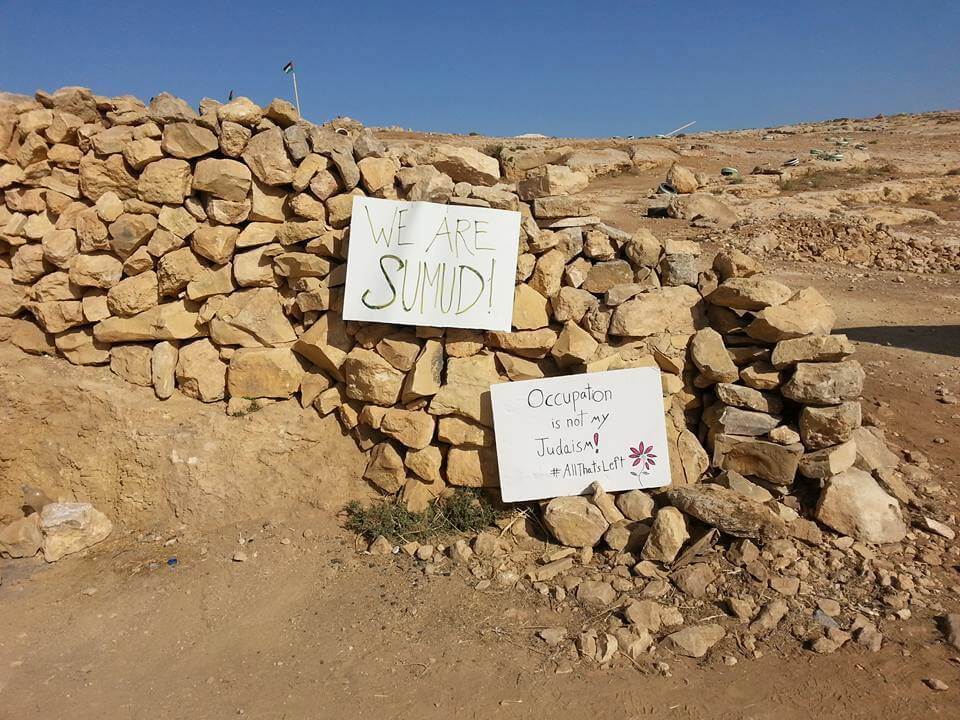
Charlie Zimmerman reflects on his time with the Center for Jewish Nonviolence during a work camp over the summer to rebuild a Palestinian village, “Maybe this struggle for the soul of Judaism is one reason why I have observed an increase in visibility of and support for Jewish anti-occupation organizations in the Diaspora. More and more of us, in addition to pursuing justice, are fighting for Jewish identities we can embrace proudly and to keep our tradition alive, compassionate, and meaningful. Diaspora Jews, for the sake of Palestinians, ourselves, and our tradition, must continue to raise our voices and insist that injustice being perpetrated in our name and on our dime must end.”
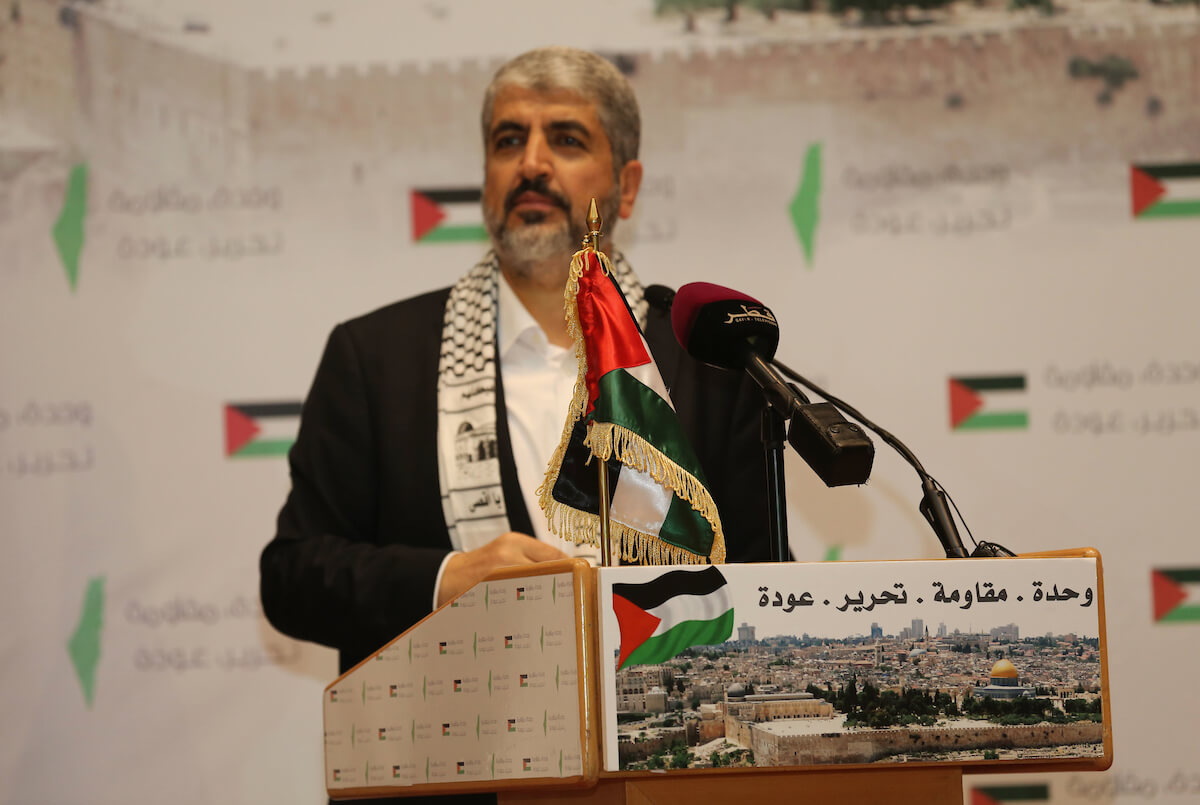
In the wake of the Gulf crisis, Hamas leaders left Qatar and are looking for a new base for their foreign headquarters. Al-Monitor reports, Algeria is likely the group’s next move, “The Saudi-backed Asharq Al-Awsat newspaper reported July 17 that Hamas is searching for a foothold in Algeria to shelter its officials who left Qatar in early June. Algeria received an official request from Hamas to establish a representative office for the movement on its territories, but it has yet to respond.”
Is there a connection between the Israeli occupation and the rise of antisemitism? Tony Klug asks in London speech. Of course. And the identification of Jews around the world with policies so widely regarded as unjust and oppressive is making the Jewish position “increasingly precarious.” The way to normalize Jewish-non-Jewish relations is to enable Palestinian freedom.
Marc Ellis writes, “Tisha B’Av is upon us, a fast day for Jews, commemorating the destruction of the ancient Temples in Jerusalem. With the accumulation of events of destruction in Jewish history, though, Tisha B’Av has become a time to mourn subsequent calamities that befell the Jewish people. Through most of our history, mourning occurred in a context where most Jews lived on the margins of power or suffered under it. Today Jewish mourning takes place within the context of Jewish empowerment. Like mourning, Jewish empowerment is complex and entangled. Still, one things is abundantly clear: Jewish power, enabled by our mourning on Tisha B’Av, is oppressing the Palestinian people.”
American educator Solomon Schecter accepted Zionism as a bulwark against Jewish assimilation in the west. The twin menaces were acceptance of Jews and hostility toward them. Zionism still serves this purpose. The Israeli State ensures that its Jewish citizens are “safely hated.”
In a scene reminiscent of Jim Crow, Israeli forces fire percussion grenades on a peaceful demonstration of 30 men after evening prayers at a Hebron checkpoint. Palestinians fear that Israel wants to follow the Hebron model in Jerusalem, exercising sovereignty over the al-Aqsa mosque as it has done with the Ibrahimi mosque.
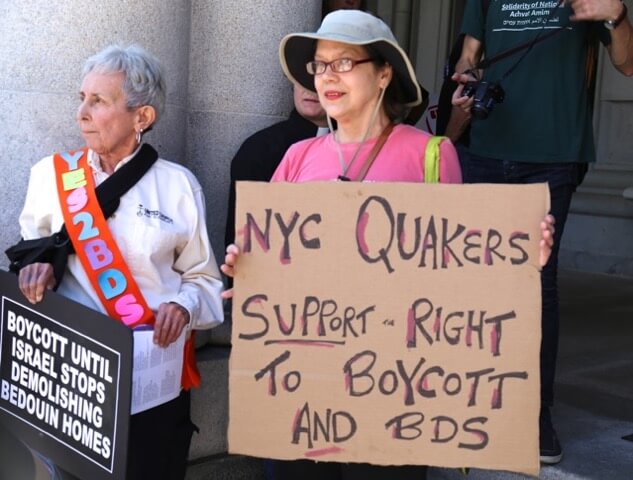
There are two claims one hears from people opposed to any serious action taken in favor of Palestinian rights. Anti-Zionism is anti-Semitism. And BDS unfairly singles out Israel and therefore (you guessed it) is anti-Semitic. Here are the short answers those claims deserve.
Times columnist David Brooks says what’s “disturbing” about an interview with President Trump is his confused train of thought: “Spasms about what Napoleon was doing, then we go off to some other issue and some other issue. I thought – and especially compared to the transcripts of Donald Trump 15 years ago, there’s a totally different conversational style, the explanation for which I do not have.”
Tithi Bhattacharya and Bill V. Mullen write, “a watershed that has created both a set of tactics, and as importantly a confidence, among reactionary forces in the U.S., that U.S. university faculty, including tenured faculty, can be harassed, trolled, smeared and bullied—even out of a job— for daring to act as public advocates for social justice. We may call this trend the ‘Salaitification’ of higher education in reference to Steven Salaita. It takes the special form of a new, emboldened ‘alt-right’ who have taken to emulating tactics first deployed by Zionists and defenders of Israel to stalk and attempt to destroy the careers of American academic dissidents”