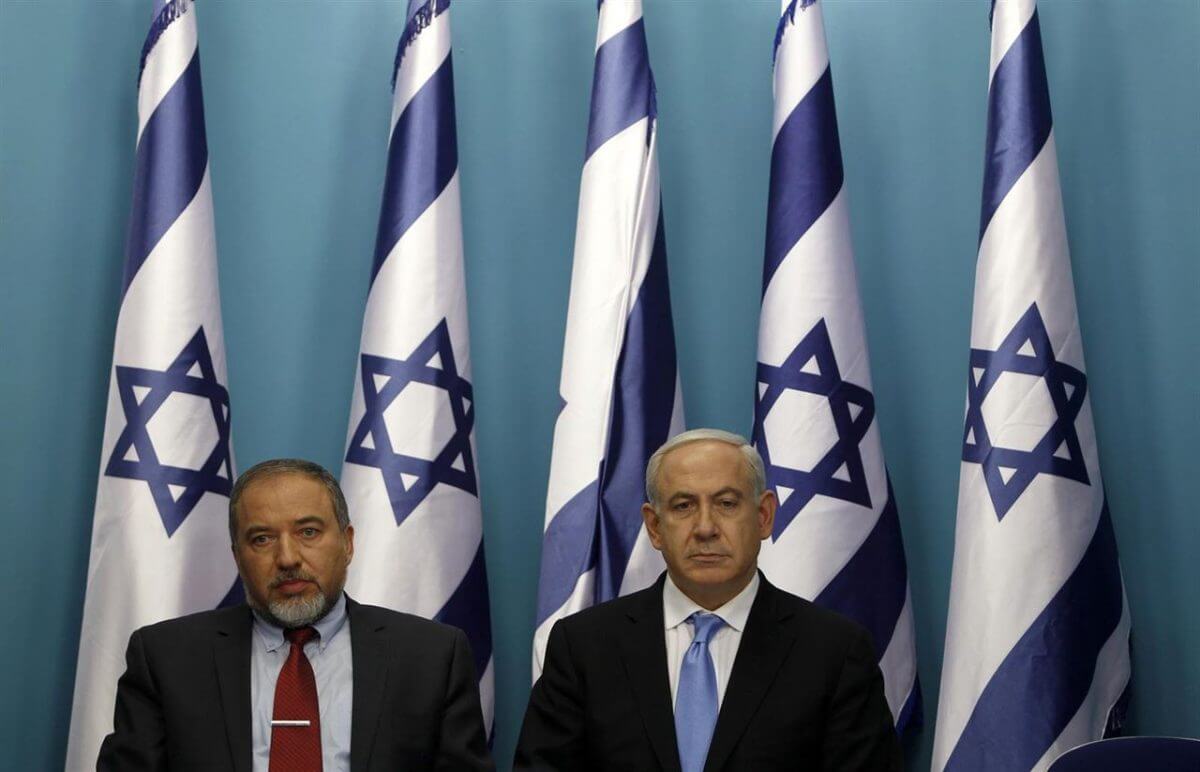
Netanyahu has reportedly adopted Lieberman’s ugly idea of stripping Palestinians in Israel of citizenship and transferring them to Palestinian sovereignty under a peace deal. American Jews have been outraged by this ethnic-religious citizenship proposal in the past. Will they speak up now?
Haaretz profiles women from the former USSR who married men from Gaza and moved to the besieged Strip to raise families, Elena Hamida, from the Ukraine, tells Haaretz, “she loves Gaza. ‘I’ve gotten used to it, as far as I am concerned everything here is fine. The only thing I don’t like is that it’s impossible to leave [the Gaza Strip].” What about the electricity? “You can live without electricity. It used to be hard, now it’s alright. But I don’t want to return to Ukraine. There’s a war there, too, and I have children, I worry. There are those gangs there I am afraid that my boy would become a junkie, or start drinking. There, I simply would not be able to keep an eye on them. If it’s one child it’s possible, but not three. One of them for sure would find himself in bad company.’ And in Gaza that can’t happen? ‘Here it’s possible to keep an eye on them. There, I would not be able to do that.”

The State Department’s terrorism report for 2016 says Palestinians “lack of hope” in achieving statehood has fostered terrorism, and pro-Israel groups have pushed back against the statement calling it “anti-Semitic” and “pro-Palestinian.”
Palestinian human rights activist Issa Amro faces a possible lengthy prison sentence for a laughable set of charges Israel has lodged against him. Efforts to ethnically cleanse Hebron do not change the essentially Palestinian nature of the city, he says.
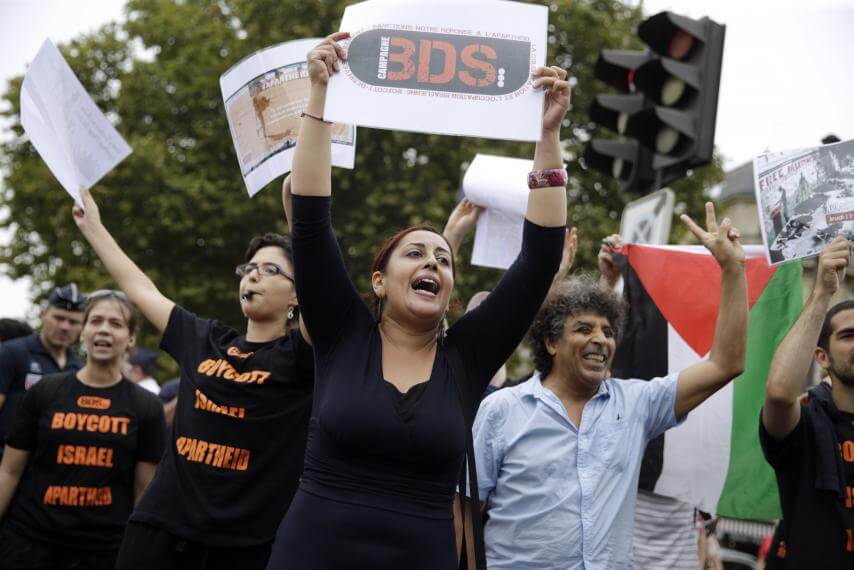
Israeli activists submitted a FOIA request to unearth the details behind Israel’s apparent blacklist of BDS activists that was given to a German airline earlier this week. Eitay Mack writes, “According to an Israeli law passed in March banning the entry of foreign BDS activists is indeed legal by Israeli rules, but there are grave questions raised by the process in which the decisions on who to ban was made. As well, it is alarming that Israel gave a blacklist to a foreign airline, in this case, Lufthansa, who then prohibited the boarding of U.S. passengers in a U.S. airport. Meaning, the Israeli law to ban BDS activists was actually imposed in the U.S., not in Israel.”
Wednesday morning, Ariel Gold was broadcasting a live feed through her Facebook, in the midst of an assault on her by settlers in Al-Khalil (Hebron). It’s another glimpse into the reality wherein the settlers essentially run the game, and the soldiers are only there to protect them, and no one else – certainly not anyone who is not “standing with the Jews”, as it were, even if they are Jewish.
Senator Lindsey Graham wonders if AIPAC should be a foreign agent: “They come up here in droves lobbying Congress to do things in their view good for the US Israel relationship. I know they have a lot of contacts in Israel. Should somebody like that be a foreign agent?” But no, the AIPAC model is a “good thing,” he concludes.
Jonathan Cook writes: “The passage, and now the enforcement, of laws prohibiting entry for BDS advocates are part of the effort to silence voices from outside Israel/Palestine. But Israel is fighting a losing battle, due to the persistence of Palestinian journalists, the slow opening of cracks in the mainstream media, and the new opportunities for freelance journalists like myself through electronic media such as Mondoweiss. The existence of Mondoweiss and other online outlets means that I can report honestly what I learn from witnesses and documents—information that ‘established’ media have been too cowardly to publish.”
Jodi Rudoren promoted the Israeli Zionist narrative as bureau chief for the New York Times in Jerusalem. Now she’s the newspaper’s guide in Israel to wealthy visitors for three days during a first-class round the world tour in a private jet next year, 26 days and 9 countries for $135,000.
Veteran Australian journalist John Lyons says that reporters from the New York Times, The Economist, Agence France-Presse, and Reuters told him that they censor themselves in reporting from Israel lest they be “savagely targeted” by Israel. Reuters even has a list of special words that won’t “upset” Israeli authorities, he said. These pressures are levied by Israel’s friends overseas, to the point that they tie up reporters “for months” when they write critical investigations of Israel.