

Today’s dispatch comes from Asmaa Tayeh. Asmaa lives in the Jabalia Refugee Camp in the north of the Gaza Strip, and works as the Operations Manager for We Are Not Numbers (WANN), a citizen journalism project for Palestinian youth in Gaza.
I start by asking her how she’s feeling, and if she’s scared with the coronavirus now in Gaza:
“For at least two months, we’ve been hearing news about the whole world suffering from COVID-19. When we first started hearing the news about it from China, I was sure it wouldn’t be a problem for us, because China is so far away, and it would take so much time to get here. Maybe by then there will be a cure.
Then the whole world started to suffer from the coronavirus, and people started to envy us, saying that the Gaza Strip is one of the only places with no reported cases. They started to say that maybe this is an advantage of the Israeli blockade. I really hated this notion, because the whole world was thinking we were safe, while we’re actually not. Just because you’re in an enclosed place doesn’t mean you’re safe. Because if we have any cases inside the Strip, our enclosure will help the virus spread even more.
We live in a very crowded area, especially in my camp, Jabalia. In each building or flat, there are a minimum of five to 10 people living there. This helps the virus to spread. The world thinks we’re safe, but I really don’t. It means that if we get one case, we could all die.”
She says this with a laugh, which I imagine is a coping mechanism in these grim times.
“We don’t have the capacity or equipment to keep us safe from this virus,” Asmaa continues. “It will spread very easily, and we will start to see the numbers here that we’ve been seeing in Italy and Spain. And after the world thought of us as the luckiest people on Earth, they will think of us as the unluckiest. Because all these other countries at least have emergency plans, the technology and the medicine to fight it.”

“So I was in fear, to be honest. But I kept going to work, and tried to convince myself that we are going to be safe. Most of us are religious people. We thought, ‘God is merciful. He won’t make us live under two things at once: the Israeli blockade and the coronavirus.’ One problem at a time!
I actually wanted to stay home, to be honest, but it’s so hard. We’re not used to this. The Gaza Strip is the only area where we can go. We can’t go outside of it. So how can we cope with not moving around inside of it? We can’t just lock ourselves inside our rooms and get used to it. I know it’s hard for other people around the world right now, but it’s much harder for us.”
It’s hard for many of us to imagine life in Gaza – being confined to a territory 365 square kilometers in size. That’s smaller than Toronto or the Island of Montreal. Many have called Gaza the world’s largest open-air prison.
At some point in the interview, she mentions casually that today is her birthday.
“I just turned 24 today, and for 24 years, I have never been outside of Gaza. I have never seen the world beyond. So it’s gonna be much harder for me to stay home rather than those in the West who are used to getting around and then have to stay in one place. It’s different.”
Asmaa said that she celebrated her birthday today with a friend who came over to her place, although her friend said they would soon be quarantined. Her sister did go out and get a birthday cake, and they managed to have a little celebration in the evening.

I asked her if any protective measures are being taken in Gaza. For example, are people being asked to not leave their homes?
“To be honest, before the first two cases were reported, most people in Gaza used to think about the coronavirus like me: this is far away from us, we’re safe, and we don’t need to go crazy with protective measures. But after these first cases were reported, we can see some people getting serious about it. We see some people wearing medical masks, using hand sanitizer, or not going to work. But there are still huge amounts of people who are still going out because they think the virus is a lie. I’m trying to understand their psychology. Maybe it’s because they’re used to being unsafe for so long. Maybe they’re numb. They have no feelings of fear because they are just used to this.”
Gaza has been under blockade for over a decade, and it’s been such a struggle for people to meet their daily needs. I ask Asmaa how she has dealt with the blockade.
“We have this proverb in Arabic that says, loosely translated in English, ‘Dying with others makes death easy.’ So when you live in these hard circumstances and everything is deteriorating around you, you have to think that you’re living with two million other people [in Gaza] who are also experiencing this, so you have to cope like they do.
“I don’t like thinking that people around the world are suffering. It sucks, and I don’t want this for anyone. But to be honest, a part of me is happy that maybe after we’re done with the Coronavirus, people will understand us more.”
“What saddens me though is also that once this is over, each country will try to come to the aid of its citizens. Maybe through economic aid, and they will again have the ability to move around, buy things, and get on with their daily lives. But we in Gaza will still suffer because nothing will change. The blockade will stay in place, the high unemployment rate will remain, there will be less goods and the prices will be higher.”
The last question I ask is her advice to people in other parts of the world who are facing isolation and quarantine.
“People need to seize this opportunity to be better people. Quarantine is giving us more chances to sit with ourselves, to understand ourselves, and to try to figure out what we need to develop or change so that we can be better people. It’s a really good chance to get in touch with the people we have quarrels or problems with, and make up with them. It’s also a chance to develop better relationships with our families, because at the end of the day, it makes you realize how important your family is. So sit with your family, understand them, and develop your relationships with them.”
“Finally, it is a good chance for you to study more, and learn more about the world. If you’re in quarantine right now and have access to the internet, you can seize the opportunity to learn and read more about other people who are suffering. But we must think of them as humans. Because once this is over the whole world is going to need to work together to solve these problems.”
“For me, I’m going to read more. I’m going to learn a lot, and study! It’s a chance from God to do the things I have delayed,” she says with a good laugh.
“I also really love writing. For me, it releases stress. So I would advise everyone to write something. Some people might think that they don’t know how to write, but if you just try to write what’s on your mind, it can be a great way to release stress, make you feel better, and discover some new things about yourself.”
Indeed, Asmaa is an amazing writer. You can find many of her wonderful writings on the WANN site, or follow her on Twitter. She also participated in a webinar for IJV with her colleague Issam Adwan from WANN in December, 2019, which you can watch here.
This article was originally published by Independent Jewish Voices Canada on March 25, 2020.

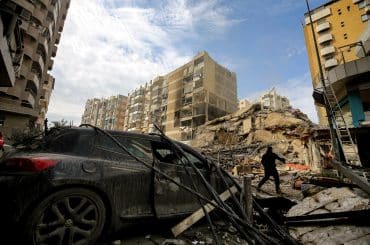
Ah yes, another shining example of “Israel, a light unto nations [NOT.!!]”
https://www.haaretz.com/opinion/.premium-israel-trading-in-ventilators-for-helpless-gazans-is-inhumane-1.8768709
“Israel Trading in Ventilators for Helpless Gazans Is Inhumane”
Haaretz, April 15, 2020, by Gideon Levy
“If Israel had even a hint of human feeling toward the inhabitants of the Gaza Strip, at least during the coronavirus pandemic, it would immediately lift all the bans and allow unlimited medical and economic aid into the enclave. If it showed more generosity and less haggling, it could also achieve a prisoner exchange with Hamas.
“But in Israel, where the coronavirus has turned everything upside down, only one thing remains as it was, cruel and hermetic: the Gaza blockade. The entire world has changed except for the biggest prison of all, which anxiously awaits an outbreak with only 65 ventilators, without testing kits for over 2 million people and with shuttered gates whose key is in the hands of the Israeli jailer.
“The height of the humiliation: Early this week, Haaretz reported that Hamas may give Israel information on the two Israeli civilians and the remains of two soldiers held in Gaza in exchange for ventilators. Israeli sources were quick to deny the mere contemplation of such a delivery, prompting Hamas to issue its own denials. Still, there’s no escaping the historical allusion suggested by the headline.
“To me the headline recalled the deal struck by Israeli (Rudolf) Kasztner with the Nazis, military trucks for Jews. No, it’s not the same, not even close. Gaza does not face a holocaust, only a humanitarian disaster whose scope is magnified by the pandemic. But if anyone in Israel even considered negotiating over supplying breathing machines to the Strip and attaching any conditions to their delivery, that harsh comparison is unavoidable.
“Gaza has just 65 ventilators because it has been imprisoned by Israel for nearly 15 years. It is intolerable that an Israeli general decides what, and above all what will not, be allowed in. It’s nothing short of evil. By what right does an Israeli general decide how many ventilators Gaza will have? What’s the source of this evil?
“When Turkey wants to aid the Strip, Israel puts up obstacles. Instead of rushing to bring in a few of the ventilators that the Mossad stole from the rest of the world, as the espionage agency’s leaders have bragged, and instead of calling on the world ‘Don’t forget Gaza,’ the Strip is left to choke with 65 ventilators, which are only a symbol of its distress.
“In the background is the possible prisoner exchange. Someone thought an agreement could be extorted under the cover of the coronavirus. Gaza has held its fire since the outbreak of the pandemic. They aren’t even sending over incendiary balloons. Israel should have responded with a goodwill gesture. But in Israel, a gesture is a sign of weakness.
“The question of who is more humane, Benjamin Netanyahu or Yahya Sinwar, is still open. The Israeli prime minister, like all his predecessors, is responsible for the abuse of many more people. The only asset the Hamas leader in Gaza has is two civilians and two bodies. Sinwar wants to obtain the release of a few of the thousands of his people who are in Israeli prisons, some of whom are political prisoners or are serving draconian sentences.
“First, he seeks the release of the old, the sick, the women, the minors and the 55 prisoners that Israel scandalously rearrested after freeing them in the Gilad Shalit exchange, in vengeance for the abduction and murder of the three Israeli teens in 2014 and in surrender to pressure from the settlers.
“A humane country would have released all of them without conditions, as a coronavirus gesture. So far, Israel is unwilling to free them even as part of a deal. After all, we have to show Hamas who is stronger and whose is bigger.
“All we can do is think in horror about the helpless people of Gaza. About their terror of the pandemic, which the Strip is ill-equipped to fight, and about the growing economic and mental despair. At the beginning of the month the Israeli general prohibited computers and communications equipment, so critical during a pandemic, from being brought into Gaza on the grounds that similar goods had been stolen in the territory.
“Also, once again, Israel has sprayed crops near its border from the air. The wind carries the toxic materials to the refugee camps and, along with Israel’s even more poisonous intentions, to the provinces of desperation, distress and fear.”