

Growing up, I learnt about the true extent of American bombing in Vietnam at school, in museums, and on TV. I routinely watched news reports of unexploded bombs being discovered and defused in the Central and Southern regions, namely Quảng Trị and Quảng Bình, as well as in neighbouring countries of Laos and Cambodia. Stories about dormant explosives would flood TV and radio channels for a week, only to be concluded by the heroic deployment of anti-bomb units keeping the imminent danger at bay. Nevertheless, every now and then, we witnessed more devastating stories about children stumbling upon cluster bombs and dying from the blast.
Meanwhile, seemingly operating in a parallel reality, American imperial airpower continued to devastate Afghanistan and Iraq with horrific scenes of the annihilation broadcast during the daily 7:00 pm television news. This was, of course, in addition to American financial and military contributions to the ongoing massacre of Palestinians in Gaza. I remember my younger self glued to the screen, helplessly witnessing explosions on the other side of the globe. Bombs on the news anchor’s lips, bombs in camera lenses, bombs in houses, bombs falling from the sky, unexploded bombs in schoolyards, bombs and debris injuring children’s bodies. There were bombs everywhere, at home and abroad.
Palestine, Afghanistan, and Iraq have been on my mind for a long time, yet I lacked the intellectual complexity and the knowledge to understand them. At the same time, there is a lingering and ineffable sense of familiarity in these otherwise foreign contexts.
Family accounts of the American war in Vietnam run like water from my grandparents’ to my parents’ memories. I grew up listening to my mother’s war stories; instances of bomb sirens, evacuations, and hiding in bomb shelters were almost a routine for her family and their village neighbors, especially during the US’s intensive bombing of Northern Vietnam in December 1972 to force the Democratic Republic of Vietnam (DRV) to negotiate at the Paris Accords the following year. During the same period, my father’s hometown welcomed evacuees from Hải Phòng, a major port city in North-Eastern Vietnam undergoing heavy American bombardment.
In the capital city Hà Nội, residents had to create make-shift bomb shelters in a hurry. Eventually, the North Vietnamese forces emerged victorious despite imperial intimidation, as the anti-bombardment campaign was dubbed the “aerial Dien Bien Phu” campaign (in Vietnamese, Chiến dịch Điện Biên Phủ trên không). Hanoians still showcase their historic resistance with great pride, by permanently displaying the remnants of a downed B-52 at lake Hữu Tiệp in the capital’s Ba Đình district.
But, why all this bombing of Vietnam? What are the parallels with Palestinians’ suffering?
It all started with a series of lies.
America lies, the Vietnamese die
The Cold War theater in Vietnam was part of the American global strategy of Containment, aiming to fight against the growing influence of Communism. The American imperialist production of fabricated narratives about the “Communist Other” set a precedent for how the West would come to treat not only Muslims in the “War on Terror” discourse and Palestinians and Gaza in the US’s unwavering support for Israel, but also indoctrinate the American public with myths and deceit.

The US bombing campaign of Vietnam is the longest and largest mission in aerial bombing history. Vietnam was bombed from North to South, and the bombing also spilled into Laos and Cambodia, where the US attempted to uproot guerrilla warfare, leaving a trail of deaths behind with present-day consequences on landscapes and civilian lives.
Top US officials, including then-Secretary of Defense Robert McNamara, knew that the American effort in Vietnam was doomed from the start. McNamara commissioned a study on the US involvement in Vietnam, which was leaked to the New York Times in 1971 by Daniel Ellsberg. Labelled the “Pentagon Papers,” the leak shed light on the magnitude of the US government’s lies regarding its involvement in Vietnam. The Papers revealed that the Eisenhower presidency had already promoted American intervention in Vietnam based on the “domino theory.” This ideology suggested that the failure to prevent Communism’s spread in one country would lead to others being captured by Communist doctrine, like collapsing dominoes.
The Pentagon Papers also disclosed the real reason for invading Vietnam: to contain the influence of Maoist China. Because of Vietnam’s strategic proximity to other US allies, such as South Korea, Japan, India, and the Philippines, a capitalist subjugation of Vietnam would isolate China in East and South-East Asia. To achieve its goals, the US played a direct role in the intensification of violence between North and South Vietnam. It encouraged the creation of autocratic rule in South Vietnam and supplied arms and money to the Sài Gòn regime – two flagrant violations of the 1954 Geneva Accords which had put an end to France’s colonization of Vietnam and created a provision for Vietnamese unification through electoral means.
Although the US government kick started a full-scale war on Vietnam following the 1964 Gulf of Tonkin incident, the Pentagon Papers unfolded pre-1964 plans for American escalation in Vietnam, which comprised of bombing operations using unmarked jets with non-US crew onboard – meaning South Vietnamese pilots – to plausibly deny any American responsibility for the massacre of Vietnamese civilians.
The US government saw aerial bombardment of Northern Vietnam as a quick winning strategy in 1965 with Operation Rolling Thunder. Its aims were (1) to destroy supplies going into and out of the DRV, especially along the Central coastline and the Hồ Chí Minh trail, as well as shrinking the DRV’s manpower; (2) to break Hà Nội’s “will,” which, in other words, meant enacting psychological warfare; and (3) to raise the Sài Gòn regime’s morale following a series of coups destabilizing the South Vietnamese political landscape. Using indiscriminate bombing as an assertion of the US military-industrial complex and superiority, American imperialists were hoping to deter Vietnamese civilians from joining the resistance.
Such a lack of concern for civilian lives was embodied in the personality of General William Westmoreland, who believed in the reduction of the DRV’s manpower by any means. For him, there would be fewer Communist sympathizers and soldiers within the ranks of the North Vietnamese army as a result of gratuitous violence. US forces regularly used incendiary weapons, such as napalm and white phosphorous, against Vietnamese civilians and North Vietnamese combatants, and Nick Út’s famous photograph of Phạm Thị Kim Phúc is a painful reminder of the level of impunity with which the US government endowed (and still endows) itself when it comes to war crimes.
In the face of imperial terrorism, the DRV remained resilient and coordinated the 1968 Tết Offensive, which consisted of surprise attacks against the South Vietnamese army and US forces. Even though the imperialists and their collaborators militarily defeated the North Vietnamese army, the offensive was considered a turning point in the American public’s perception of US actions in Vietnam. By means of a massive propaganda campaign, the US government had lured American citizens into believing the DRV’s military inferiority. Nevertheless, the more losses US forces recorded as a result of the offensive, the more draft calls the American government ramped up, forcing the American public to question its leaders’ treachery and deceit regarding US conduct in Vietnam. In the Spring of 1969, domestic protests against the war escalated in the US, pushing the new president, Richard Nixon, to begin withdrawing troops from Vietnam. Yet, Nixon broadened the scope of aerial bombardment in Vietnam, Laos, and Cambodia, as heavy bombers, such as the B-52, callously murdered defenseless civilians. It was in 1973 that the US, North Vietnam, and South Vietnam agreed to the Paris Accords, which laid the groundwork for a ceasefire, the withdrawal of US forces, the release of prisoners of war, and the peaceful reunification of North and South Vietnam.
In 1975, the year of Vietnamese reunification, Gerald Ford extended Lyndon Johnson’s initial 1964 embargo on Northern Vietnam to all of Vietnam, and forced the newly reunified country to carry the debts of the Sài Gòn regime. Vietnam became ineligible for any international loan to reconstruct its economy and rebuild its destroyed villages and cities, and was isolated on the international scene by American allies. This isn’t to mention the trail of deaths and suffering that Agent Orange left behind, the subsequent border war with China, and the overthrow of Pol Pot’s genocidal regime by Vietnamese forces in 1979.
In addition to the US-led collective punishment of Vietnam, the newly liberated country was amongst the poorest in the world at that time. Vietnam had to further rely on Soviet aid to survive and was often at the mercy of the state of the Soviet economy. The two decades following Vietnamese reunification came to be known as Thời bao cấp, or the subsidy period. The Vietnamese government chose to mould the country’s economy in the image of the Soviet command economy, yet began experiencing difficulty almost immediately. My childhood stories included my family’s teaching about the privilege of my time to live in better conditions than theirs. Because of scarce resources and capital, they had to live on rations, food stamps, and goods coupons provided by the state. Poverty was widespread, and reliable sources of electricity and clean water were nowhere to be found.
Israel lies, Palestinians die
Similar to the US’s pattern of underhandedness to ravage Vietnam, the Israeli government and army’s mythomaniac delusions of Palestinians and Hamas have led to the killing of Palestinian civilians in Gaza. Self-proclaimed as the “most moral army in the world,” the Israeli military has repeatedly affirmed its “right to self-defense” through heavy aerial bombardment of the Gaza Strip with impunity and without any concern for civilians – impunity provided by the same government who used similar tactics against the Vietnamese.
Following the Six-Day War in 1967, Israel occupied the West Bank, East Jerusalem, the Syrian Golan Heights, and Gaza. As per the 1993 Oslo Accords, Gaza fell under the Palestinian Authority’s jurisdiction, while its airspace, waters, and border crossings was under Israeli control. In 1994, Israel built a barrier around Gaza to besiege Palestinian residents of the strip, making Gaza the world’s largest open air prison. Through a draconian system of permits and checkpoints, Israel regulates entrances into and exits from the territory, stripping Gaza Palestinians of all freedom of movement.
Hamas’s role as the only political actor capable of building up social welfare and community organization networks is a result of the 2006 election. Hamas was a product the Palestinian Authority’s corruption, failure to improve Gazans’ material conditions, and collaboration with the Occupation. Although the majority of Gaza Palestinians voted for Hamas, Israel saw Hamas’s influence as a threat and initiated Operation Summer Rains shortly after Hamas had assumed leadership in Gaza. Israel aimed to break Hamas by carrying out assassinations of its leaders, most notably Jamal Abu Samhadana, and by baselessly claiming that Hamas was planning an attack on Israel. In response to Israel’s provocation and extrajudicial killings of Gaza’s government officials, Palestinians in Gaza took up arms to resist Israel’s intimidation. The Geneva Conventions stipulate that armed resistance be a protected and essential right of occupied people everywhere, rendering Palestinians’ right to resistance completely legitimate.
Israel retaliated with relentless and massive bombardment of Gaza. The Palestinian casualty toll far exceeded the Israeli toll, with many Palestinian children amongst the victims. The subsequent 2008 Operation Cast Lead, 2012 Operation Pillar of Defense, 2014 Operation Protective Edge, the 2018 Great March of Return, and the May 2021 assault on Gaza are all repeated proofs of Israel’s continual incitement to violence, as it relies on the “War on Terror” discourse to justify its indiscriminate maiming of Palestinian bodies. Israel simply does not allow Palestinian lives to exist, and qualifies all types of Palestinian resistance as “terrorism.”
Akin to the US’s economic suffocation of Vietnam during and after the war, Israel is also keen on keeping Gaza’s economy on the brink of collapse. Under the Israeli blockade, Palestinians in Gaza do not have any reliable source of electricity or potable water. They also don’t have any defense system nor any bomb shelters in the event of an air raid. Gaza has one of the highest unemployment rates in the world, as Palestinians in Gaza cannot trade with other parts of the globe, nor do they have any resource sovereignty over their fisheries and offshore natural gas. Moreover, Gaza is the 3rd most densely populated place in the world, meaning that any aerial bombing will necessarily come with civilian casualties and destruction of basic and economic infrastructures. In its numerous airstrikes, Israel has deliberately targeted Gaza’s roads to prevent merchandise from being transported to families in need and ambulances from rescuing bombing victims.
The degree of Israel’s fabrication about Hamas has also cost Gaza its best doctors, medics, and other healthcare workers. In 2018, Palestinians in Gaza mobilized for the Great March of Return, demanding the Palestinian right of return and an end to the Israeli blockade. Nevertheless, Israel accused protesters of being “Hamas human shields,” and proceeded to snipe civilians, journalists, and medics, amongst whom was Rouzan al-Najjar, a nurse who was treating injured protesters. Israel’s latest assault on Gaza also killed two of Gaza’s most experienced physicians at Al-Shifa hospital: Dr. Ayman Abu al-Ouf, head of Internal Medicine, and psychiatric neurologist Dr. Mooein Ahmad al-Aloul. Both died as a result of Israel’s bombing of their homes. Seeing Israel’s killing of doctors is profoundly distressing for me, as many members of my family exercise medicine with honor and pride. What if they were the victims in a different context and time?
Not only does Israel’s mythomania implicate Palestinians, but it also smears international human rights organizations and press agencies. In the summer of 2014, the Israeli military accused the UN Reliefs and Works Agency for Palestinian Refugees in the Near East (UNRWA) of being weapon storage compounds for Hamas. Israel then proceeded to shell several UNRWA facilities, including schools and shelters. More recently, Israel claimed that “Hamas was hiding” in Al-Jalaa tower and gave its owner and occupants an hour to vacate the site in order to raze it to the ground. This sinister bombing of the tower, where press agencies such as the Associated Press and Al Jazeera tenanted, was the Occupation’s endeavor to prevent the world from witnessing its crimes.
Similar to the US’s Red Scare propaganda, Israel weaponizes its colossal propaganda industry, or hasbara, to spread falsities and conduct psychological and cyber warfare. It is a sophisticated network of government and military officials, academics, public personalities, and even private citizens working to whitewash Israel’s image on the international scene, by branding the country as the “only democracy in the Middle East.” Furthermore, hasbara campaigns actively tailor falsehood in the media, namely the use of fake images and doctored montages to justify Israel’s massacres of Palestinians. For example, Benjamin Netanyahu’s spokesperson recently used a video from the Syrian civil war as a footage of “Hamas firing rockets into Israel,” or former Minister of Defense Naftali Bennett included a picture of Al-Shifa medical college in Islamabad, Pakistan in a YouTube video to illustrate Al-Shifa hospital in Gaza as a “Hamas headquarters.”
Aerial bombardment of Gaza is the assertion of Israel’s military-industrial complex and superiority, as the Occupation seeks to deter Palestinians in Gaza from resisting, in addition to transforming the besieged territory into a testing site for the latest Israeli military technology. Parallel to the US decimation of Vietnam, Israel’s bombing of Gaza might be a quick winning strategy to uproot Hamas in the Occupation’s eyes, but it will only further fuel Palestinian resistance.
Despite the May 20th, 2021 ceasefire, Israel is still deliberately provoking Palestinians by allowing settlers to violently dispossess Palestinian residents of Sheikh Jarrah neighborhood in Jerusalem and in the West Bank. A few hours after the ceasefire announcement, the Israeli army was still firing tear gas canisters into Al-Aqsa mosque whilst prayers were being performed. A ceasefire means nothing if the occupation of Palestine is still here, if the apartheid wall is still standing, and if racist laws are still costing Palestinian lives. Palestinians will continue resisting for as long as Israel maintains the status quo.
The role of Vietnamese-Palestinian solidarity
With the American war being dubbed the “first television war,” the US and international media played an important role in enticing American support for the war, but also in swaying American public opinion. The broadcasting of the 1968 Tết Offensive events culminated in an American moral defeat and a growing domestic opposition to imperialism to end the war in Vietnam.
As twentieth-century history has shown, international solidarity significantly benefited Vietnam and propelled the country to the forefront of the fight against imperialism. International support for the Vietnamese revolution was distinctive and unmatched in history in terms of its scope, diversity, and effectiveness. From the Black Panthers’ anti-war, anti-racist, and anti-imperialist activism, to the backing of socialist and communist countries, workers’ movements, and other national liberation struggles, international solidarity contributed to the ultimate Vietnamese victory in an unequal fight against the most powerful imperial power in the world. Yet, Vietnam was also a crucial contributor to numerous anti-imperialist struggles around the world, both materially and spiritually, amongst them the historically documented comradeship between the DRV and the Palestinian national liberation struggle.
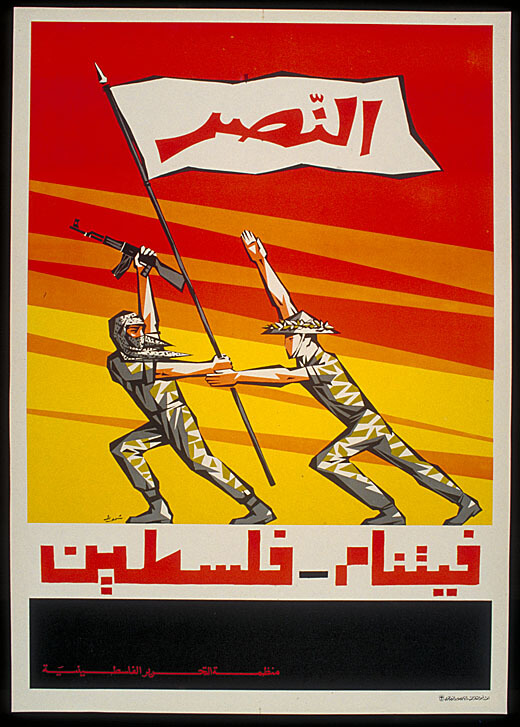
I have the honor to have met many Palestinians and their advocates from all walks of life who hold tremendous respect for my country’s revolutionary past. They expressed their admiration of Hồ Chí Minh, as well as Vietnam’s bravery in the face of oppression. Our conversations reminded me of the deep-rooted friendship between North Vietnam and Palestine. For example, several Palestinian leaders, such as Yasser Arafat and George Habash, looked at the Vietnamese revolution for new strategies in their battle against Zionist colonialism. Following the Six-Day war in 1967, the Palestine Liberation Organization (PLO) started exploring different alternatives to liberate Palestine, as its research center produced many studies on international armed struggles against colonialism, using the experiences of Algeria and Vietnam as models.
Yasser Arafat even sent Palestinians to Vietnam to study guerrilla warfare tactics. In the PLO’s 1968 Palestinian National Charter, the Organization mentioned in Article 10 a form of a Palestinian popular liberation war, asserting Palestinians’ rights to self-determination and struggle against imperialism. Inspired by the newfound military knowledge, the PLO encouraged the working classes and peasantry to take up arms and defend their homeland, which came to a crescendo with the 1968 battle of al-Karamah where Palestinian fighters launched guerrilla attacks against Israel from Jordan.
In 1969, the International Conference for the Support of Arab Peoples took place in Cairo. Hồ Chí Minh couldn’t attend the event in person but sent a message to the conference proclaiming that the ‘‘Vietnamese people vehemently condemn the Israeli aggressors’’ and that they ‘‘fully support the Palestinian people’s liberation movement and the struggle of the Arab people for the liberation of territories occupied by Israeli forces.” Hồ Chí Minh’s declaration of solidarity with Palestinians and Arabs echoed many Palestinians’ reading of the interconnectedness of the Vietnamese and Palestinian struggles. The Vietnamese example is a testament to the impact and legitimacy of resistance when facing imperial powers with disproportionate military capabilities and deep pockets.
In 1973, the Paris Peace Accords stipulated that the Americans had to withdraw from Vietnam, signalling the imminent Vietnamese victory against the USA. On the occasion of the accords, Palestinian poet and director of the PLO Research Center Mahmoud Darwish reflected: “The torch has been passed from Vietnam to us.” In a similar fashion, the PLO’s Research Center held a roundtable discussion on the Paris Accords in June 1973, praising the success of the Vietnamese revolution in the face of American imperialism.
Vietnam was one of the first countries to recognize the state of Palestine in 1988, following the Palestinian Declaration of Independence proclaimed by Yasser Arafat in November of the same year. Shortly after, the Palestinian embassy was inaugurated in the Vietnamese capital Hà Nội. At the United Nations, Vietnam has historically supported all resolutions for the rights of Palestinian people at the General Assembly.
Nevertheless, my encounters have also led me to reflect on Vietnam’s rapprochement with Israel, as well as the disconnect between the Vietnamese government official’s stance on the question of Palestine and its foreign policy. Due to Vietnam’s current need for economic development, geopolitics, and threats from imperialism, notably American capitalist violence and Beijing’s expansionism, Vietnam has to cooperate with unlikely actors, such as Israel. Vietnam strives to collaborate with Israel in the fields of defense, agriculture, and high tech – all of which are founded upon the violent dispossession and slaughter of Palestinians. On the international scene, the Vietnamese government’s performative solidarity with Palestinians and neutral calls for peace from “both the Israeli and Palestinian sides” should not erase the historical and ongoing friendship between the Vietnamese and Palestinian people. In understanding this collective history and organic solidarity, Vietnamese people can empathize with the Palestinian plight, potentially leading a joint project to seek justice for victims of Agent Orange and for Palestinian victims of Israel’s war crimes. Besides, at a larger scale, Vietnamese people can realise that white supremacy is the root cause of anti-Blackness in their communities, anti-Asian hate in North America, and the continual impoverishment of the Majority world at the hands of colonial powers.
If televised images partly contributed to the growth of international awareness of the Vietnamese struggle, today’s technology and social media have enabled Palestinians to share their stories and realities under the Occupation with the world to see. With more world citizens now able to witness crimes of the Occupation, a wave of mobilization campaigns and protests in support of Palestinians swept country after country on the weekend of May 15th. Protesters denounced Israeli apartheid and called for BDS – Boycott, Divestment, Sanctions – a Palestinian-led initiative inspired by the South African boycott campaign to target the apartheid economic system and advocate for international sanctions against the white supremacist regime. Across Canada, protesters drew parallels between Canada’s settler-colonial regime and complicity in crimes against Palestinians, namely the Canadian government’s unwavering support for Israel politically, economically, and militarily.
Finally, the power of strike to target the Occupation’s economic core must not be underestimated. On May 18th, 2021, Palestinian workers across occupied Palestine organized a general strike to condemn Israel’s assault on Gaza and to shut down the Israeli economy. Forty-eight hours after the general strike, Israel and Hamas agreed to a ceasefire due to the temporary economic damage. Elsewhere in the world, Italian dockers in Livorno declined to load an arms shipment to Israel, whilst South African dockworkers at Durban harbor refused to offload an Israeli cargo ship and mobilized for a strike in solidarity with Palestinians. By refusing to be complicit in war crimes, mass unrest amongst workers sends a powerful message of resistance to capitalist exploitation and imperialist violence, thus forming needed friendships and solidarity bonds in a larger struggle for justice.
As Vietnamese, we must educate ourselves and practice ethical allyship to stand with Palestinians. We must listen to their stories and support their many anti-colonial initiatives. In times where interracial solidarities are being revived, most prominently Black-Palestinian solidarity via a mutual understanding of anti-Black and anti-Palestinian racism, Vietnamese and Palestinians ought to look within ourselves and our histories, and hopefully we can see the common struggles that once united us and will reunite us in the present.
Đồng Bảo Ngân Hà
Đồng Bảo Ngân Hà is a graduate student at the McGill Institute of Islamic Studies. Their non-academic writings have appeared in The McGill Daily and at the “L’Amour is Love” exposition, whilst their academic publications can be found in the Columbia Journal of History and Michigan Journal of History. A non-binary queer Vietnamese person occupying the unceded territory of Tiohtià:ke on Turtle Island, Hà spends their pastime hoarding knowledge and decolonising their mind.
References
The Associated Press. “Vietnam: The Real War.” https://www.ap.org/explore/vietnam-the-real-war/
Barghouti, Omar. BDS: Boycott, Divestment, Sanctions: The Global Struggle for Palestinian Rights. Chicago, IL: Haymarket Books, 2011.
Chamberlin, Paul Thomas. The Global Offensive: The United States, the Palestine Liberation Organization, and the Making of the Post-Cold War Order. Oxford: Oxford University Press, 2012.
Congressional Research Service. “US-Vietnam Economic and Trade Relations: Key Issues in 2018.” Published April 16, 2018. https://www.everycrsreport.com/files/20180416_R45172_da991d55c12fe09afeb13ad53dde5ce8fb658a86.pdf
Espiritu, Evyn Lê. (2018) “Cold War Entanglements, Third World Solidarities: Vietnam and Palestine, 1967–75.” Canadian Review of American Studies. 48 (3): 352-386.
Frankum, Ronald Bruce. Like Rolling Thunder: The Air War in Vietnam, 1964-1975. Lanham: Rowman & Littlefield, 2005.
Kocher, Matthew Adam, Thomas B. Pepinsky, and Stathis N. Kalyvas. 2011. “Aerial Bombing and Counterinsurgency in the Vietnam War.” American Journal of Political Science. 55 (2): 201-218.
Lock, Sharyn, and Sarah Irving. Gaza: Beneath the Bombs. London: Pluto, 2010.
Shultz, Richard. 1978. “Breaking the Will of the Enemy during the Vietnam War: The Operationalization of the Cost-Benefit Model of Counterinsurgency Warfare.” Journal of Peace Research. 15 (2): 109-129.
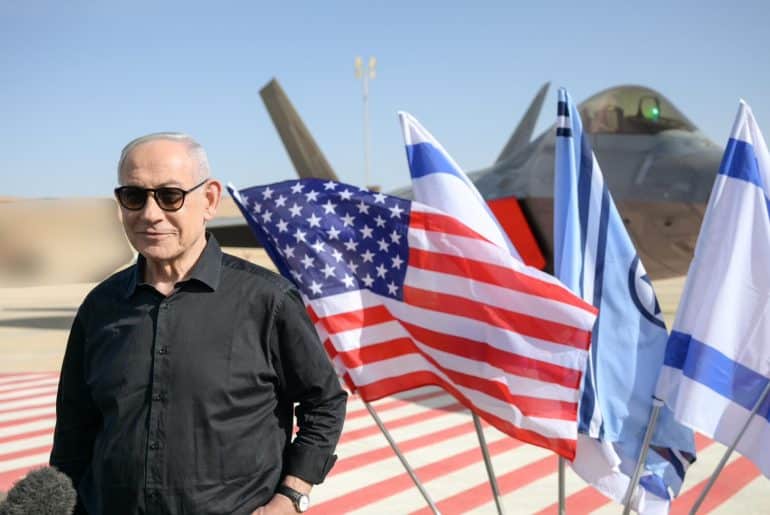
In 2016 Israel was the largest arms exporter as a proportion of GDP in the world and the 7th largest arms exporter in the world in dollars:
https://www.shirhever.com/wp-content/uploads/2018/01/Crisis-of-the-Israeli-Security-Elites.pdf
Furthermore, “Defence firms in Israel have carved out a technological niche in weapon system upgrades for which they are gaining worldwide renown. For a fraction of the cost of new platforms, Israeli firms would take any aging system and give it more reach. Israeli defence firms are also delivering essential subsystems for some of the world’s most advanced platforms including German tanks, US Army armed reconnaissance helicopters and Dutch artillery command and control systems…..”
https://ciaotest.cc.columbia.edu/olj/sa/sa_00naf01.html
Gaza and the West Bank are testing labs for Israeli weapons. It’s about the guns, baby – see Jeff Halper’s book “War Against the People: Israel, the Palestinians and Global Pacification”. From the Amazon review:
“Eventually, Halper shows, the integration of militarized systems—including databases tracking civilian activity, automated targeting systems, unmanned drones, and more—becomes seamless with everyday life. And the Occupied Territories, Halper argues, is a veritable laboratory for that approach.”
Yes, there are many similarities. In both cases the bombing was apparently intended to induce the victims to blame and overthrow their own government — an absurd goal that defied historical experience and revealed amazing ignorance of the culture, psychology, and political system of the targeted population.
In purely military terms both the US and Israel rely too heavily on airpower. High-altitude bombing never succeeded in paralyzing the ‘Ho Chi Minh Trail’ (actually a shifting network of trails) but it could have been blocked by driving a wedge across it on the ground. But that would have cost the lives of many US soldiers, and it was necessary to minimize US casualties to placate the US public. The Israeli public is likewise very sensitive to Israeli casualties.
In some respects though Gaza is worse off than Vietnam was. There were areas in Vietnam with little or no bombing and children, schools, even government offices could be evacuated there. China was a much more supportive rear for Vietnam than Egypt is for Gaza. And Gaza, unlike Vietnam, has no anti-air defenses.
Hamas a convenient monster with Imad Alsoos of the Max Plank Institute, his English isn’t great but he is all context and you’ve got to start somewhere, only 15 minutes or so, enjoy
https://youtu.be/pAksUesy6og
I keep forgetting that younger people don’t remember the Vietnam war – or, as Vietnamese call it, the American war.
A friend once said, “The Vietnamese have forgiven us. The Arabs will NEVER forgive us.” I think he was wrong on the first statement; the Vietnamese manage to live with the US and its allies, because they have to, but that’s not the same as forgiveness.
The author offers a fascinating parallel of the American War On Vietnam with the Israeli War On Palestine; as a Vietnamese person, he accurately recounts the War as it is taught in Vietnam–and I have no doubt that it is a reliable account. He then shows how the Palestinian cause was aligned with the Vietnamese resistance from early days, with Palestinians even studying guerrilla war in Vietnam.
I learned the sordid truth about Vietnam in 1965 and spent the next years resisting the War until the triumph of Vietnam’s soldiers and the ignominy of America’s.
Đồng Bảo Ngân Hà allows me to see how my support for the Palestinian cause relates closely to my previous support for Vietnam.