
Between July 26 and 30, three Palestinian teenagers were killed by Israeli forces. During the same week, a fourth died of gunshot wounds suffered some weeks before. These four children were among the many killed in the West Bank so far in 2021, along with 66 children killed by Israel’s attacks on Gaza in May. Within hours, punctuating that week of unabashed violation of international law, human rights and morality, Israeli forces raided the Ramallah offices of Defense for Children International – Palestine in the dark early morning hours of July 29, forcing entry and confiscating computers and confidential client files. On August 16, four Palestinian young men, two of them teenagers, were murdered by Israel forces in Jenin.
More killings of Palestinians without reason, without remorse, without punishment or responsibility. No chance for families to grieve or mourn properly while scrambling to protect other children and waiting for the next assault on their neighborhood or village or city.
Then, this – a report from The Electronic Intifada of Palestinians prevented from visiting Mediterranean beaches despite proper permits and vaccinations. Amid all those deaths, why did this report catch my attention and evoke yet more sadness? Perhaps it was imagining the reactions of the people just wanting a day at the beach – the anger and exasperation at being denied a bit of pleasure, identities slammed in even the most ordinary setting, the efforts to follow the separatist rules thwarted by whim and the insult and indignation of that. That day in Akka, there were no shots fired, no deaths occurred, but there were wounds inflicted. And those wounds can kill.
I remembered standing on a hilltop with my friend Hamza near his village in the West Bank. We could see the Mediterranean, but he told me he had never been allowed to go there. Within sight but mamnu’ (forbidden).
I remember a visit to the Dead Sea with my friend Ahmad. Anxious to start our day we stopped at the first beach we came to, one controlled by Israel. There was a paid entrance and an attendant who told us we could not enter while he clocked my friend as Palestinian. I wanted to leave (a kind of boycott, I suppose), but Ahmad persisted and insisted on his right to go to the beach. It was a weekday morning, practically no visitors there, so the attendant relented and let us in. I still have photos of Ahmad covered in Dead Sea mud, grinning, having the time of his life. Ahmad lived in Balata refugee camp, his grandparents had lived in caves near Nablus after fleeing their homes in ’48 Palestine while the camp was being built. Decades later, he made his first visit to the Dead Sea but only after demanding his personhood. I wondered what that cost him?
One day when Palestinians are liberated – and that day will come – when birthrights are at last claimed, when beaches are freely enjoyed, when potentials are realized, when lives flourish and not just endure, how will we account for the toll of these decades?
Once visiting my surgeon friend Dr. M. in Gaza, I asked him how things were going for him and his family. He did not tell me of the bombs and missiles, the destruction all around. He told me of the electricity shortages that made his kids miss their cartoons, the clothes left soaking in the washing machine, and the family rancor and discord that results. It’s not enough to have bombs dropped on us, we can’t have cartoons or clean clothes, either?
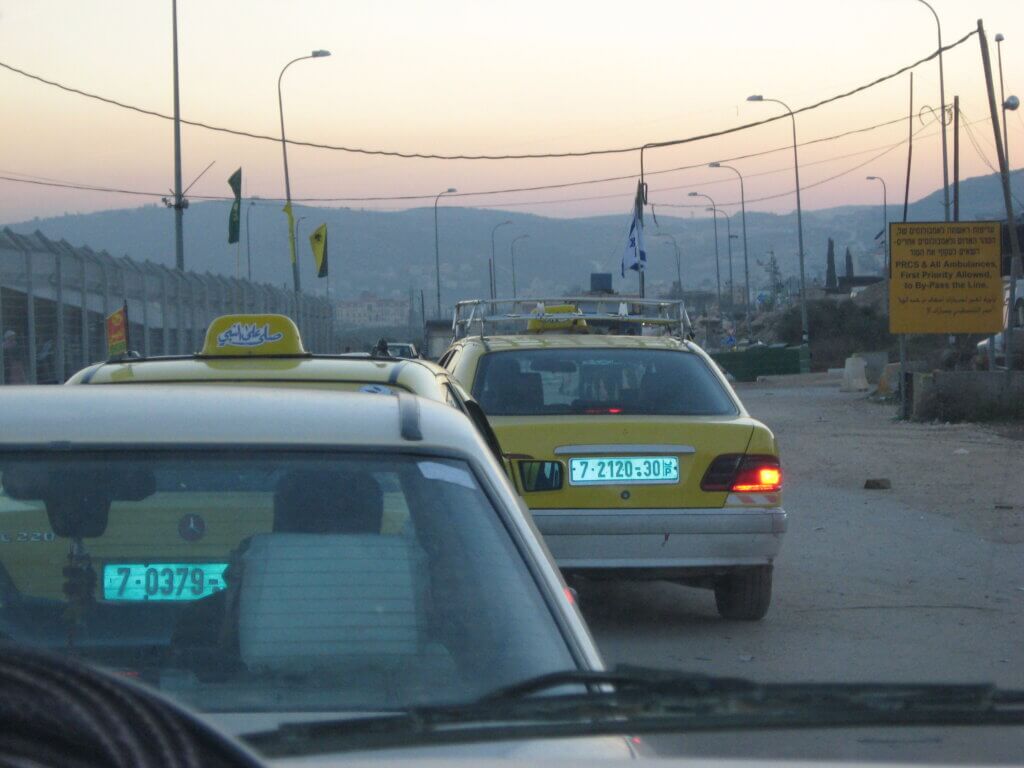
This is not death by 1000 cuts. These wounds are bloodless, invisible. But like pieces of shrapnel lodged in the chest, they will eventually find their way to pierce the heart. I frequently traveled from Ramallah to Zebabdeh, usually in my friend Saliba’s cab. In the morning as we started out there was always a big smile and “Sabah al kher! Shu akhbarak? Kullshi tamam?” By the end of the day, after hours at checkpoints, searches of car and person, and the insolence of soldiers, Saliba was quiet, angry – aged immeasurably within a single day.
One day when Palestinians are liberated – and that day will come – when birthrights are at last claimed, when beaches are freely enjoyed, when potentials are realized, when lives flourish and not just endure, how will we account for the toll of these decades? Yes, we will know the numbers of dead and injured, the number of homes destroyed, and hectares of land stolen. But how will we calculate and honor the misery of despair, the emptiness of careers lost because of forbidden opportunities, the sadness of unrealized dreams, the ruin of relationships? How will we know who died of wounds?
Hamza died several years after we stood on that hilltop. He was chased by border police in Turkey, lost his way in the dark and fell off a cliff. Near the Mediterranean where he hoped to find a way to Europe, his wounds had caught up with him. Ahmad is in Canada now with some liberties he’s never known before, but he hasn’t seen his family in nine years, and lives in a world of a foreign language and a culture that is not his. Dr. M. is still locked in Gaza, still hoping for power, and still binding up wounds.
1 of 2
Ugly “Israel,” up close:
https://www.haaretz.com/israel-news/.premium-high-court-rules-body-of-palestinian-won-t-be-returned-to-family-1.10131027
“Israel’s Top Court Rules Body of Palestinian Won’t Be Returned to Family”
“The body of alleged attacker Ahmad Erekat has been held by Israel for more than a year, despite a cabinet decision in force at the time of his death.”
Hagar Shezaf, Haaretz. August 18, 2021
“Israel’s High Court of Justice on Wednesday denied an appeal seeking the release of the body of Palestinian Ahmad Erekat, which has been held by the government for more than a year.
“Erekat, aged 26, was shot to death in June 2020 after the army said he committed a car-ramming attack in Abu Dis in the West Bank.
“The appeal, which was filed by the Erekat family, was denied – despite the fact that his body has been held in violation of a 2017 security cabinet decision that was in force at the time of the incident involving Erekat.
“Under that decision, only the bodies of Hamas militants who committed attacks, or others who committed an exceptionally brutal attack, could be held. However, three months after the appeal was submitted to the court, the cabinet decision was amended to include the bodies of any Palestinian engaged in any terror activity and/or in possession of a weapon regardless of his or her affiliation.
“The High Court decision was supported by two justices – Neal Hendel and David Mintz. Hendel wrote in the majority opinion that the revised cabinet decision ‘grants a greater weight to security considerations or the exchange of prisoners over the dignity of the dead terrorist [sic} and his family, but I was not convinced that the military commander’s decision to retain the body of the late Erekat is – in the current reality – beyond the bounds of reasonableness and proportionality.”
“Israel claimed that Erekat – nephew of the late Saeb Erekat, the Palestinians’ senior diplomatic negotiator – was shot to death because he threatened the lives of the border policemen at the checkpoint. An investigative report published this February by the London-based Forensic Architecture organization, in conjunction with the Ramallah-based human rights group Al-Haq, cast doubt on this, with its reconstruction showing that the vehicle was traveling at a speed of 15 kilometers (9.3 miles) an hour and never accelerated.” (cont’d)
2 of 2
“Reacting to the High Court decision, lawyers Sawsan Zaher and Hassan Jabareen of the Adalah Legal Center for Arab Minority Rights in Israel, who represent the family, called the Israeli policy an inhumane and a blatant violation of international law.
“Israel ‘should immediately return the dozens of bodies that it is holding,’ they demanded. ‘Today the High Court of Justice has approved the continued commission of this war crime, which among other things violates the Rome Statute that permits putting those responsible for it to be tried at the International Criminal Court in The Hague.’
“According to Adalah, Israel has been holding the bodies of 81 Palestinians since 2015. Government representatives who appeared in March at a High Court hearing on the case, told the court that since the new decision of the security cabinet, the grounds for continuing to hold 31 of the bodies in accordance with the new criteria was being reexamined. It has since been decided that 10 of the bodies are from cases that meet the new criteria. The other 21 cases are still under consideration.”
When I was there – with Christian Peacemaker Teams! you don’t have to be a Christian! who knew? – I was impressed by the way the Palestinian families we met were doing their best to bring up their children normally, in very un-normal circumstances. But there’s only so much you can do. And anger – perpetual, justified anger – corrodes the soul