
As the dust clears after the 2022 Midterm elections in the United States, control of Congress remains up in the air, but the anticipated “red wave” turned out to be, at best, a red sprinkle. While the very mention of Palestine was virtually impossible to find during this election, the outcome still had some interesting implications.
Michael Arria has an excellent round-up of the races and events that will affect the struggle for Palestinian rights. As Michael highlights, Summer Lee, whom AIPAC made its primary target in both the primary and the general election, won despite the massive amounts of money and smears the pro-Israel lobbying group hurled at her.
AIPAC’s inability to defeat Lee was highlighted even further by its inability to save one of its most reliable voices in the Democratic House caucus, Elaine Luria of Virginia. Luria, a conservative democrat on many issues (she was backed by the tobacco and arms sales lobbies. She was the only Democrat who opposed repealing the 2002 Authorization for the Use of Military Force in Iraq last year and supported Donald Trump’s border wall, among other examples of her right wing views) lost to an election denier, Jen Kiggans. This is not a positive development, but the silver lining is that Luria is precisely the sort of radically right-wing Democrat the party needs to be rid of. Several similarly awful candidates—most notably and surprisingly, Sean Patrick Maloney of New York, whose machinations not only cost Democrats his seat but also that of progressive Congressman Mondaire Jones—also lost their jobs.
Luria’s loss weakens AIPAC’s hand among Democrats, and, while AIPAC can certainly count on some of the newly elected Democrats—most notably Bob Menendez, Jr. of New Jersey, who is very much expected to follow in his father’s footsteps as a vocal supporter of Israeli apartheid—several progressives will also be joining Summer Lee in Congress next year.
Where will progressives stand on Palestine?
Meanwhile, progressives won a few races around the country and most of the newcomers are fairly blank slates on foreign policy in general and Palestine in particular. Becca Balint of Vermont, for instance, is the daughter of a Holocaust survivor, yet in two separate articles about her in the Times of Israel there is no mention of her views on foreign policy at all. Jasmine Crockett of Texas has been similarly silent on foreign policy. There is a good deal of grey area in the views of some of the elected progressives, such as Delia Ramirez in Texas and Val Hoyle in Oregon (who was supported by the right-wing Democratic Majority for Israel, but the endorsement came late in the race, and Hoyle herself has said little on Israel in public).
Incoming members of Congress are going to be learning the terrain. It’s going to be crucial that the lessons they learn on Palestine point them to maximizing equal rights and understanding that what Israel is practicing is apartheid, even if they don’t feel ready to state that in public yet.
Jonathan Jackson of Illinois, for example, has been hailed as a supporter of the Palestinian people, and certainly must have learned a great deal about Palestine from his father, the Reverend Jesse Jackson. But he has also come out against BDS and supports continuing U.S. aid to Israel.
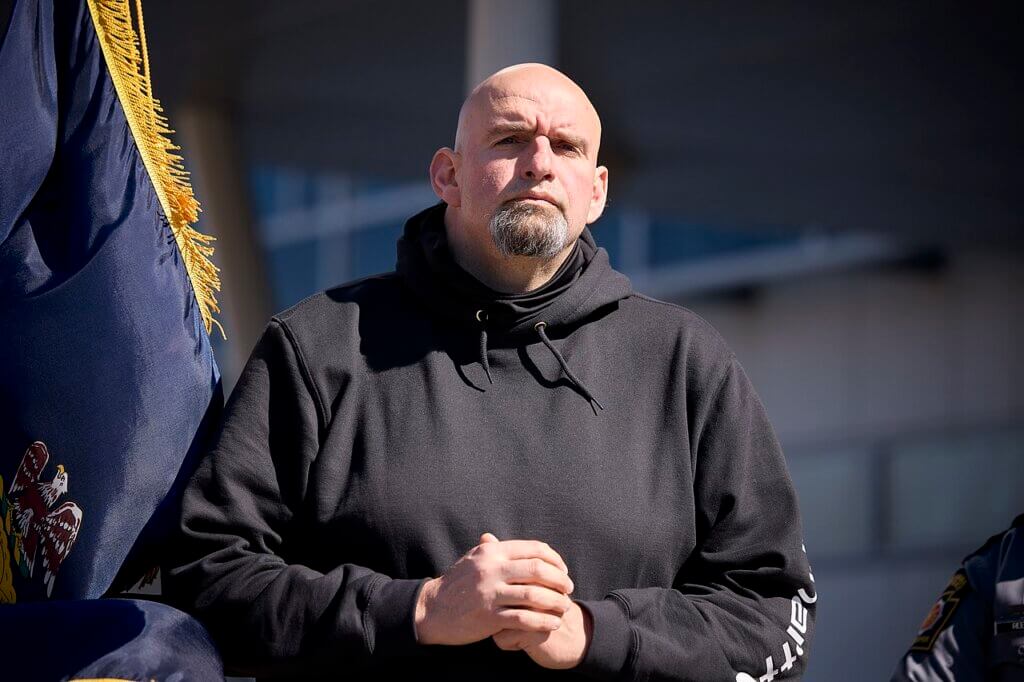
The two most potentially important newcomers to Congress have already raised some concerns yet might still be reached with the realities of Palestinian dispossession and Israeli apartheid: Senator-elect John Fetterman of Pennsylvania and Rep.-elect Maxwell Alejandro Frost of Florida. Both newcomers seem like the sort of people who should be open to supporting equal rights, yet both have turned in the opposite direction on Palestine during their campaigns.
Supportive voices in Congress
The voices new members of Congress need to hear are, of course, those of Palestinians who are harmed by their timidity in the face of Israeli apartheid and its advocates in Washington. But on a more regular basis, they need to hear from constituents and, most of all, their colleagues. The math is simple: the more members of the House and Senate are willing to back each other in criticizing Israel, in naming Israel crimes, and, ultimately in a future that remains too far away, to actually enact policies meant to support Palestinian rights and rein in Israeli crimes, the more each member is willing to be a part of moving that process forward.
That’s one reason that it’s encouraging to see that every one of Jewish Voice for Peace Action’s endorsees won their races. It’s a short list, eleven candidates, but it’s still important that JVPA candidates won every November race in this cycle. Those candidates were: Abdelnasser Rashid (D-IL), the only newcomer in the bunch; Cori Bush (D-MO); Andre Carson (D-IN); Chuy Garcia (D-IL); Raul Grijalva (D-AZ); Pramila Jayapal (D-WA); Betty McCollum (D-MN); Alexandria Ocasio-Cortez (D-NY); Ilhan Omar (D-MN); Mark Pocan (D-WI); and Rashida Tlaib (D-MI).
Summer Lee (D-PA) will join them in supporting Palestinian rights, and it’s quite possible that some of the others will as well. But Fetterman, being a senator, is the most important figure, while Frost, as the first member of Generation Z to make it to Congress who brings with him a strong, progressive reputation, will be a marker for future young members of Congress.
Engaging Frost and Fetterman
I’ve discussed both candidates before. Fetterman doesn’t seem very well-versed in foreign policy in general, which is to be expected from a newly-minted senator who has spent his whole career in local politics, climbing from the mayor of a small city in Western Pennsylvania to Lieutenant Governor of that state. Given that background, it is not surprising that he stayed close to the common script on Israel, telling Jewish Insider, “Whenever I’m in a situation to be called on to take up the cause of strengthening and enhancing the security of Israel or deepening our relationship between the United States and Israel, I’m going to lean in…We have to be committed to strengthening Israel’s security and reject any attempts to delegitimize Israel’s right to exist.”
In that context, Fetterman has hewn to the party line on BDS, aid to Israel, the Abraham Accords, and a general disregard for Palestinian rights. Yet, while Fetterman presents himself as an independent thinker who, while holding many progressive positions is not averse to departing from any party line if he thinks it’s right (he supports fracking, for example), his every word on Israel—including the ubiquitous omission of even the word “Palestinian” when discussing the issue—seems to come straight out of the Democratic Majority for Israel playbook.
When paired with the scant attention he pays to foreign policy in general both on his web site and in his campaign, this suggests a candidate who can be moved, but one who is going to be very careful about taking any risks on foreign policy when his overwhelming priority is domestic policy. He’s someone to cultivate while working to promote human rights and equality as the core principles in our foreign policy and demonstrating just how directly Israel departs from those values and how our support for their abuses undermines the effort to promote human dignity and justice.
Maxwell Alejandro Frost presents a different set of issues, but he’s no less important. Frost brings a lot of youth and energy to Congress, and he’s on the right side of most progressive issues. What makes Frost so concerning is that when he first set out to reach Congress, he was very supportive of Palestinian rights. He had declared solidarity with a Nakba remembrance in 2021, and had promised Palestine solidarity activists who worked on his campaign early on that he would oppose military aid to Israel and support BDS. But once his campaign really got rolling, he put out a position paper that was very far removed from such positions.
The paper, which Mondoweiss reviewed here, pays mere lip service to Palestinian rights, without naming any specific policy positions to support those rights. Yet Frost is very specific in the paper about positions on a variety of issues affecting Israel.
Where one might think that Fetterman needs education, Frost clearly knows the Palestinian experience. He compromised on it, likely in fear of attracting the sort of spending against him that Summer Lee faced. But in this case, he seems to have overreacted.
When Frost started out, he was not seen as the likely replacement for Val Demmings, who was challenging Marco Rubio for the Senate. Demmings, a former police chief is a moderate political liberal. The more progressive Frost was thought to be too far to the left.
That turned out to be a misguided assessment. Frost emerged from a crowded field in the primary and won by just over ten points. He easily defeated his Republican opponent Tuesday by twice that margin.
There is no reason to believe that a more progressive position on Palestine would have damaged his standing in his district. More likely, though, Frost feared the tactics AIPAC shamefully employs: attacking candidates on issues having nothing whatsoever to do with Israel and Palestine.
Frost needs to be convinced that he will continue to hold his seat and be able to fight for his domestic agenda even if he takes a more balanced and progressive stance on Palestine.
The opportunities to push new members of Congress like Frost and Fetterman is there. So is the chance to embolden those who are already working to support Palestinian rights, as their number increase with the addition of Summer Lee and maybe some of the other new progressive representatives.
This is the time for the hard work, for making our case directly to members of Congress, to let them know we have their back if they take steps to support Palestinian rights, and to help them come together to support one another. Israel’s own elections recently gave advocates for Palestinian rights more tools to work with, as their extremism is now more visible. Opportunities are still scant, but they are growing. It will be necessary to seize each one if we are to accomplish the laborious task of changing the course of U.S. policy in Palestine.
https://www.haaretz.com/israel-news/2022-11-11/ty-article/.premium/un-votes-to-bring-israeli-occupation-of-palestinian-territories-before-intl-court/00000184-6791-d779-a5bc-fff7c9420000
“UN Votes to Ask International Court’s Opinion on ‘Legal Status of Israel Occupation'”
Palestinian President Mahmoud Abbas has for years warned Israel that if Palestinian statehood is not on the horizon, it would press charges at The Hague
By Jonathan Lis, Haaretz. Nov 11, 2022
“‘At the request of the Palestinian Authority, the United Nations voted to ask the International Court of Justice for an opinion on the legal status of Israel’s prolonged occupation, settlement & annexation of the Palestinian territory occupied since 1967.'”
“The United Nation’s Special Political and Decolonization Committee convened to debate whether to ask the ICJ to provide an opinion on ‘the legal status of the occupation [of the West Bank & Gaza,’ ultimately passing with 98 votes in favor, 17 against & 52 abstentions.
“Israel’s Ambassador to the UN Gilad Erdan denounced the vote, calling on nations to ask themselves whether they support negotiations & reconciliation or not. The U.S. representative at the plenum also voted against the proposal, making it clear that the Biden administration opposes unilateral decisions.
“Palestinian President Mahmoud Abbas has for years warned Israel that if Palestinian statehood is not on the horizon, it would press charges at The Hague, culminating in a fiery speech at this year’s UN General Assembly when the leader threatened to bring Israel to the international court.
“Abbas’ threats follow last year’s ruling by the International Criminal Court that it has jurisdiction to prosecute war crimes in the West Bank & East Jerusalem. The ICC Didn’t rule that Israel was guilty of war crimes; it merely responded to an earlier request from prosecutor Fatou Bensouda, who asked the pretrial chamber of judges to rule on the fundamental question of the court’s international jurisdiction. Unlike the ICJ, which prosecutes nation states, the ICC prosecutes individual perpetrators.
“In it’s 2021 ruling, the ICC noted that it is ‘not constitutionally competent to determine matters of statehood that would bind the international community,’ explaining that its ruling on jurisdiction is ‘neither adjudicating a border dispute…nor prejudging the question of any future borders.'”
EXCERPT:
Are liberal American Jews becoming afraid to talk about Israel? (972mag.com)
972 Magazine, Nov. 10/22, by Shaul Magid
“Are liberal American Jews becoming afraid to talk about Israel?” Many Jews in the U.S. have grown uncomfortable voicing implausible defenses of Israel, yet cannot let go of their Zionism. Denial won’t solve the dilemma.”
“Some years ago, I was in a ritual committee meeting at the synagogue where I serve as the rabbi.A congregant was dissatisfied with a sermon I had given about Israel (the contents of which I no longer remember), & told me: ‘Rabbi, please don’t talk about Israel from the pulpit. And make sure its pro-Israel.’
“Since then, I have largely heeded the first part of that congregant’s advice. But recently, while delivering a Yom Kippur sermon at the same synagogue exploring the relationship between antisemitism & oppression, I broke this rule.
“My sermon considered three very different contexts of antisemitism. First is the classical European case where antisemitism was an extension, or expression, of animus toward Jews who lived in a state of oppression or persecution of varying degrees. There, antisemitism was a natural byproduct of social, & in some cases legal, persecution.
“The second is the United States, where antisemitic acts still exist, even though Jews in America are not an oppressed people. There is no legal or social barrier that prevents Jews from living their lives freely in the country as Jews, & if such resistance should exist, one has legal recourse to bring the perpetrator to justice. In Shaare Tefila Congregation v. Cobb (1987), for example, the Supreme Court determined that vandalizing a synagogue with antisemitic graffiti constituted racial discrimination under the law.
“Still, Jews can certainly be victimized by antisemitic acts: the 2018 massacre at the Tree of Life synagogue in Pittsburgh is the most egregious example. More recent visible instances were the antisemitic remarks made by hip hop artist Kanye West & basketball player Kyrie Irving. Nevertheless, antisemitic acts are not the same as social tolerance for antisemitism: when West & Irving espoused such bigotry, they were summarily punished at great expense to both of them. The real problem would have been if there were no consequences at all. It was in this context that I reneged on my commitment not to talk about Israel, raising it as the third of my examples…”
This is the time for Americans to do the hard work of educating the educable. (I think Fetterman may be educable!) And of making them understand that AIPAC doesn’t represent all American Jews. Even Jews who won’t say so in public, or in front of the goyim, but can no longer even try to defend Israel. I know people like that.
Fetterman…. “is someone to cultivate while working to promote human rights and equality as the core principles in our foreign policy and demonstrating just how directly Israel departs from those values and how our support for their abuses undermines the effort to promote human dignity and justice.”
________________________________________________________
If equality is the consideration, not security of Israeli civilians, Fetterman may well speak up.
Timely article!
Why are some of us pro-Palestinians reluctant to describe the establishment of illegal Jewish / Zionist-only colonies in occupied Palestine as the clearest example of ethnic cleansing that one could or could not wish for? “Apartheid” doesn’t really cover it.
“Dispossession”, leaving the dispossessed with nowhere to go but away from their ancestral homes is blatant ethnic cleansing, so why don’t we name it as such? Nothing could be as effective as a clear concerted accusation of ethnic cleansing in getting people of conscience to speak out against the perpetrators of this Crime Against Humanity and their supporters – and this needs to be done in a timely fashion: colonial Zionists and Jewish supremacists in the Knesset are already talking of “expelling” Palestinians from Palestine and even from Israel.