Adam Horowitz speaks to Lana Tatour about the Amnesty International apartheid report and the need to understand Israeli apartheid in the context of settler-colonialism.


Adam Horowitz speaks to Lana Tatour about the Amnesty International apartheid report and the need to understand Israeli apartheid in the context of settler-colonialism.

The death of 14-year-old Osama Sarsak reflects the perilous conditions in which many Gazans find themselves.

As global powers make progress toward a renewed Iran deal, the Israeli Prime Minister is objecting to it, the Foundation for Defense of Democracies, an Israel lobby organization, is calling a new agreement “a surrender pact,” and the New York Times, characteristically, has published a biased article that raises objections to the proposed deal without giving its supporters much space to defend it.

The story of the Bedouin village Sa’wa in the Naqab is the story of Palestine, from the West Bank to Jerusalem and beyond. Palestinian homes are being demolished and Palestinian families are being expelled to make way for the Israeli settler population.

Church leaders in Jerusalem have expressed their “gravest concern and unequivocal objection” to an Israeli plan to extend the Jerusalem Walls National Park to include the Mount of Olives, one of Christianity’s holiest sites.
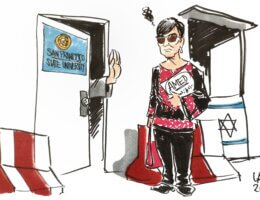
A faculty panel unanimously sided with Professor Rabab Abdulhadi in a grievance against San Francisco State University, vindicating Abdulhadi, AMED, and Palestine Studies.

Palestinians in Hebron call on the international community to join in the Dismantle the Ghetto campaign and take action to evacuate Israeli settlers from the city.

The new book “A Land With A People: Palestinians and Jews Confront Zionism” shares voices and visions rarely heard on the question of Zionism’s impact on Palestinians and Jews.

The New York Times sets the media agenda inside the United States. If the paper had published at least one single story, or run just one opinion piece, the Amnesty report on Israeli apartheid would not be fading from view.

Amnesty International’s failure to recognize apartheid within the context of settler colonialism is not only an inaccurate description of the situation on the ground, but also disregards the root cause of the denial of Palestinian rights for over a century.