Vera Tamari’s intimate story of her family’s life before 1948 allows us to dream of how life might have been in Palestine if the Nakba had never happened.
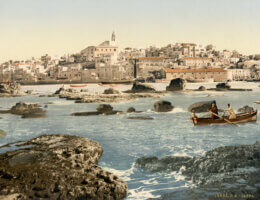

Vera Tamari’s intimate story of her family’s life before 1948 allows us to dream of how life might have been in Palestine if the Nakba had never happened.
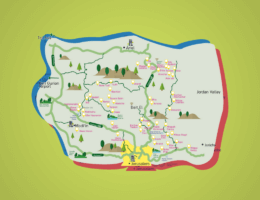
An Israeli government body that represents 72,000 Jewish settlers in the occupied West Bank has published a map of its jurisdiction that shows only Jewish settlements– simply removing scores of Palestinian villages and the cities of Ramallah and al-Bireh. The map was published by the Binyamin Regional Council on a webpage titled “Build Your Future With Us” that is designed to attract American Jews to move to “northern Jerusalem suburbs.”
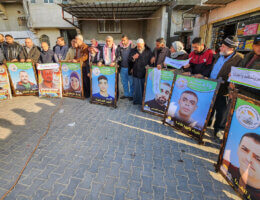
In the aftermath of the Gilboa Prison break, Palestinian prisoners have faced harsh punitive measures by the Israeli Prison Service. They are now fighting back as the Gilboa escapees stand trial.

The State Department was asked multiple times whether or not the Biden administration was prepared to do anything to impede Israel’s new West Bank settlement plans– legalizing Jewish outposts– beyond the customary condemnations. Ned Price’s answer was “No,” but he used many words to get there.

Israel is putting its commitment to Jewish supremacy above the functioning of its healthcare system, proposing rejecting graduates of Palestinian universities in favor of “Jewish purity.”

My friend the late writer Yossi Gurvitz was an apikoros in the best sense of the word, the Jewish term for a freethinker. His heresy led him to support BDS. Educated in yeshivas, he broke out as a teen when he discovered Plutarch, reading real not bible history. That independence led him in time to become “Israel’s first serious anti-occupation blogger” and to point out the vicious ethnocentrism in the basement of Jewish religiosity that Israel was awakening– “and every demon that was pushed into the basement is up and has an M16.”
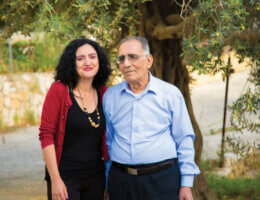
Fida Jiryis’s narrative of exile and return weaves together her reflections on Palestinian identity, the pain of loss, and the ongoing Nakba.

Mark Ruffalo, Susan Sarandon, Angela Davis, and Peter Gabriel are among the public figures who have praised Barcelona’s mayor for cutting ties with Israel.
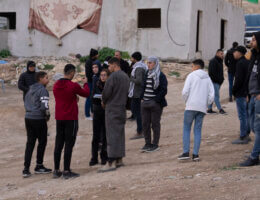
In covering developments in Palestine, as reporters on the field, we are inevitably exposed to the more intimate details of an incident, event, person. We enter the homes of killed fighters, and stand outside the courts of families waiting to see their teenage child in handcuffs. We learn the stories of entire families, sometimes we notice a similar echo across cities and towns, we cluster information into numbers and infographics. We take what can be ugly and vast, and are tasked with making it easy to consume.
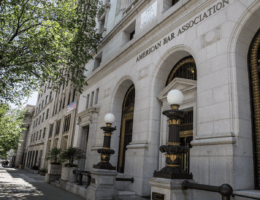
The American Bar Association passed a resolution condemning antisemitism but removed a reference to the controversial IHRA definition from its text.