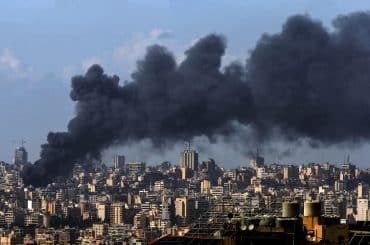
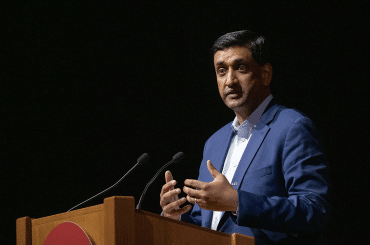
On Tuesday, the American president, Joe Biden welcomed his latest guest, the Israeli president, Isaac Herzog. Herzog will be speaking to Congress on Wednesday, to make an appeal to the American representatives to prove Israel’s democracy amid increased riots, protests, and strikes within the Israeli population.
Herzog’s visit also comes amid increased international criticism of Israel’s right-wing reality which, at once, has turned the Palestinian population into a captive within what is de facto an open-air prison – meant for controlling the Palestinian demographic amid continued settler annexation.
Back home, Herzog’s army of settlers (those in military uniform or those in suits like himself) is ravaging Palestinian lives, lands, resources, and hopes of change and defiance.
Just this week, Israeli forces and undercover intelligence units conducted more than 1,800 search-and-arrest operations in the West Bank. That translates into more than 257 search-and-arrest operations per day. That is more than 257 families terrorized, with the average household in Palestine being 5.5 members. This is more than 1,413 people being directly terrorized. And this doesn’t even include the community members that will necessarily be in the midst of the military operations.
In the last seven months, more than 190 Palestinians have been killed. Of those, almost 20 percent are children and the large majority are non-combatants. Even the combatants are mostly young men and boys who are fourth-generation refugees with handmade guns and a life’s worth of experience with Israel’s torture dungeons and abusive practices.
I have covered a wide variety of the killings in Palestine in the last year. This ranges from teenagers like Fulla Musalma, to 28-year-olds like Nidal Khazem. I have worked previously in qualitative and quantitative data analysis. As I covered every death and followed up on every killing, imprisonment, or injury it became clear to my scientific mind that the only trend I could find is that everyone is a target it has nothing to do with confrontation.
Musalma was teenager killed just before her birthday as she was having a late-night shawarma sandwich during an Israeli search-and-arrest operation in Ramallah, an area that is conceded by Israel to be out of its legal jurisdiction. On the other hand, Khazem was a senior Palestinian Islamic Jihad resistance fighter in the Jenin Brigade, who was eventually assassinated on March 16th.
Yet what has bothered me, continues to bother me, and takes over my thought is the fact that I share all of this information as I sit in a cafe downtown Brooklyn, in a hipster area called “Williamsburg.” What I learned about Brooklyn this past month were two things. First, Brooklyn has almost the same population as the Gaza Strip. The second is that it’s south of Manhattan.
I learned one thing about Manhattan this past month. Manhattan is the name taken from the Native American tribes indigenous to the area. It was “Man-hatta.” At the ripe age of 30, I learned that Manhattan is the same as Atarot which is the name of the settlement en route to my village, Aboud. The settlement had stolen the name from the village in which it was built upon, Attara.
Perhaps it’s the intensity of the ethnic cleansing and repression back home that further pushed me to see it more visibly than previous visits and trips to New York City. Over here, the erasure not only happened but has masked itself so well that Manhattan is not the testament to a massacre but a glorious skyline and a model for cities around the world, like, for instance, Tel Aviv.